
What Is Scuba Fabric? How It Differs from Neoprene, Plus a No-Hem Pencil Skirt (Free Pattern)
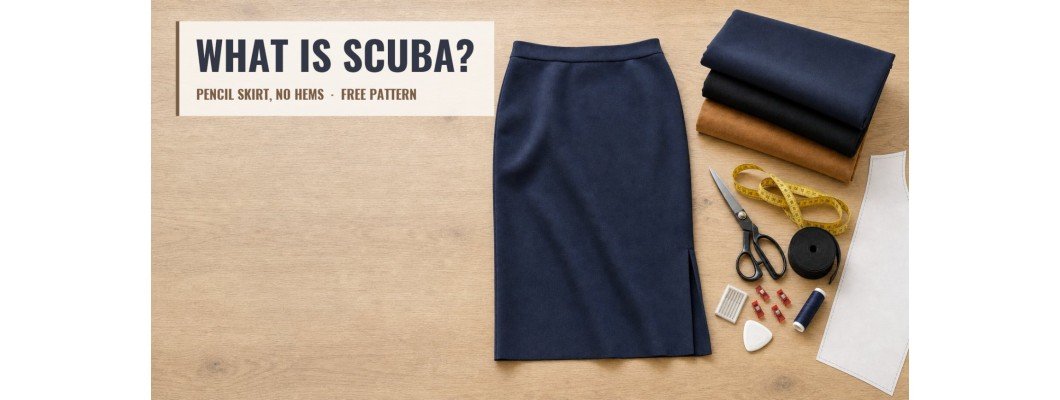
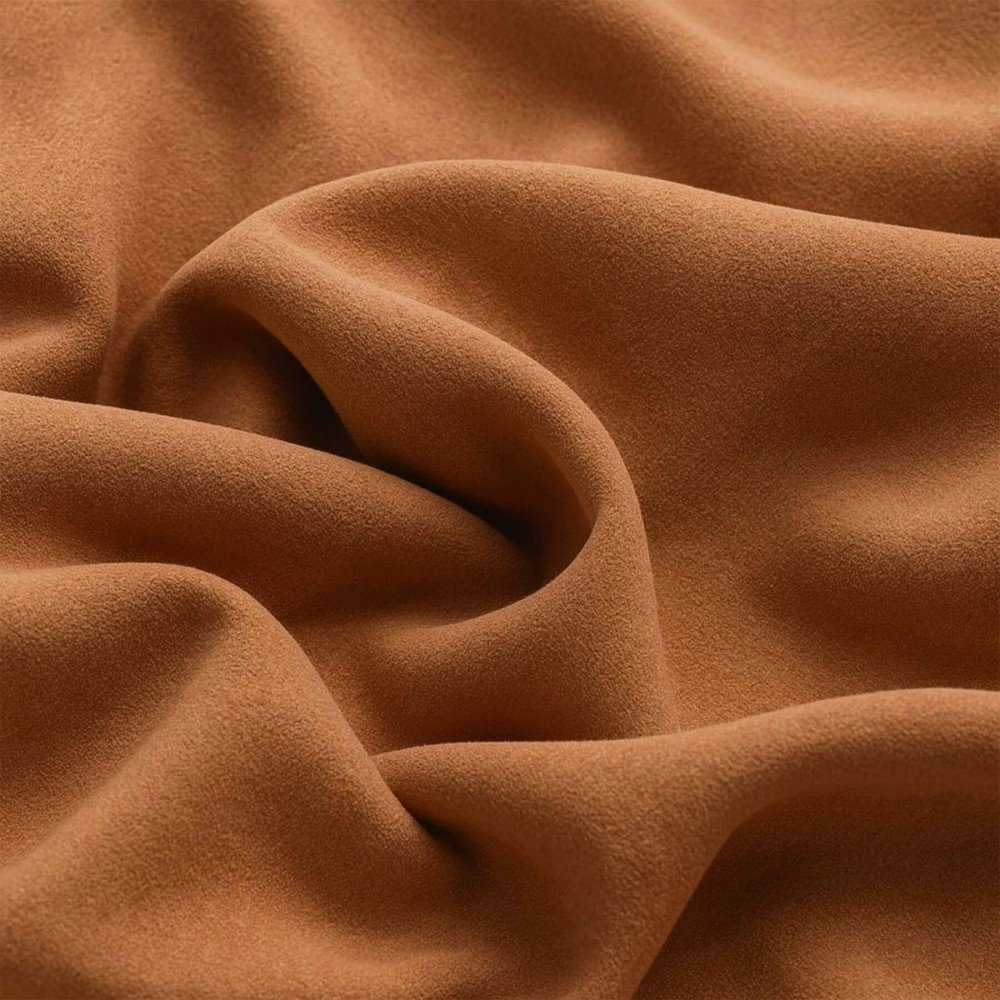
Scuba fabric is a thick, firm knit made of polyester with a little elastane. It's named after the diving suit, because it feels just as thick and springy as neoprene, but there's no rubber in it: it's simply a densely knitted jersey. Scuba holds its shape, barely creases, isn't see-through and doesn't fray. In this post you'll find out what scuba fabric actually is, how scuba crepe differs from scuba suede and how to sew with it. Then you'll make a pencil skirt with no hemming in about an hour, using the free pattern in six sizes.
Download the free pencil skirt pattern (PDF)
What is scuba fabric?
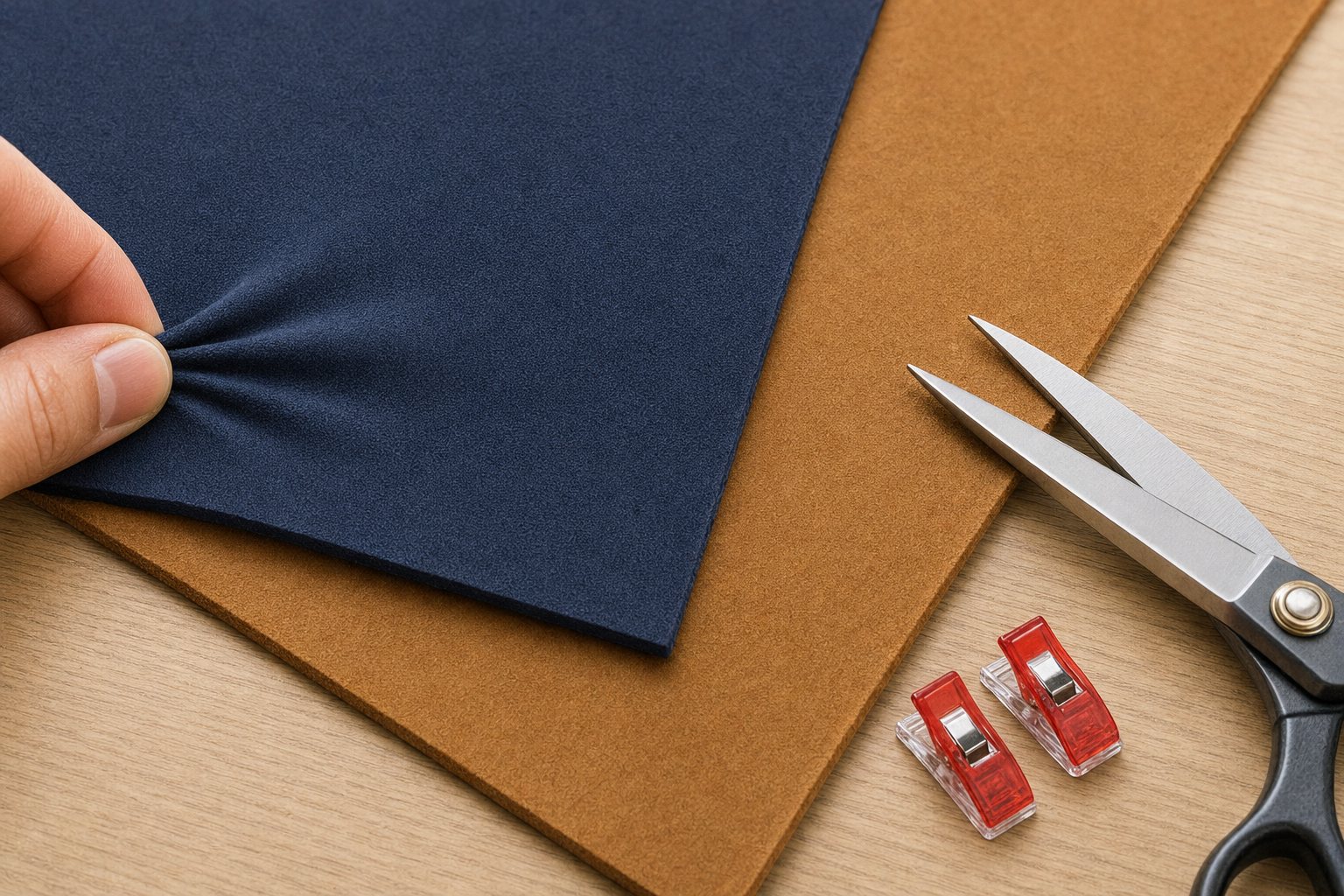
Scuba is a knit, not a woven fabric. The yarns are looped through each other, as in a T-shirt, but far more densely and thickly. That gives scuba body: it doesn't hang limply against you but stands slightly away from the body and keeps a crisp line. The name comes from scuba diving. Scuba looks like the neoprene of a wetsuit, but it's a textile you simply wash and wear like any other garment.
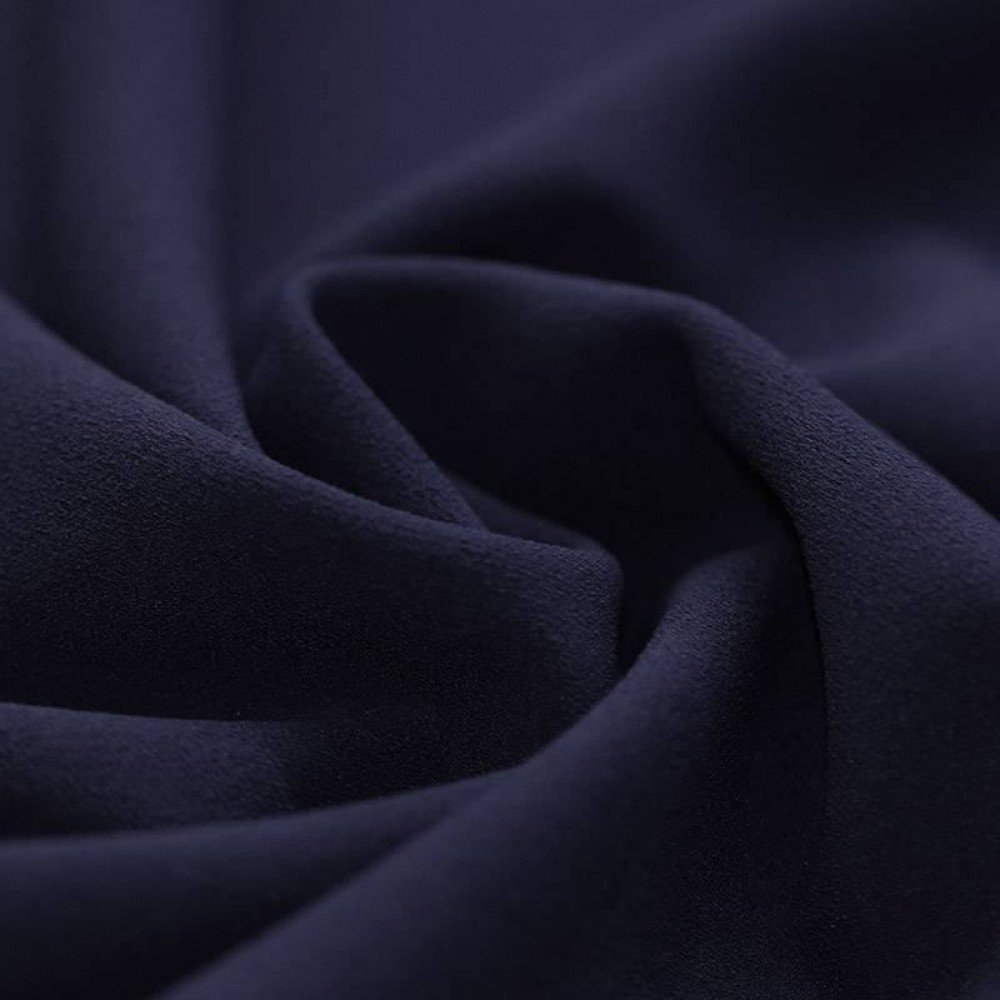
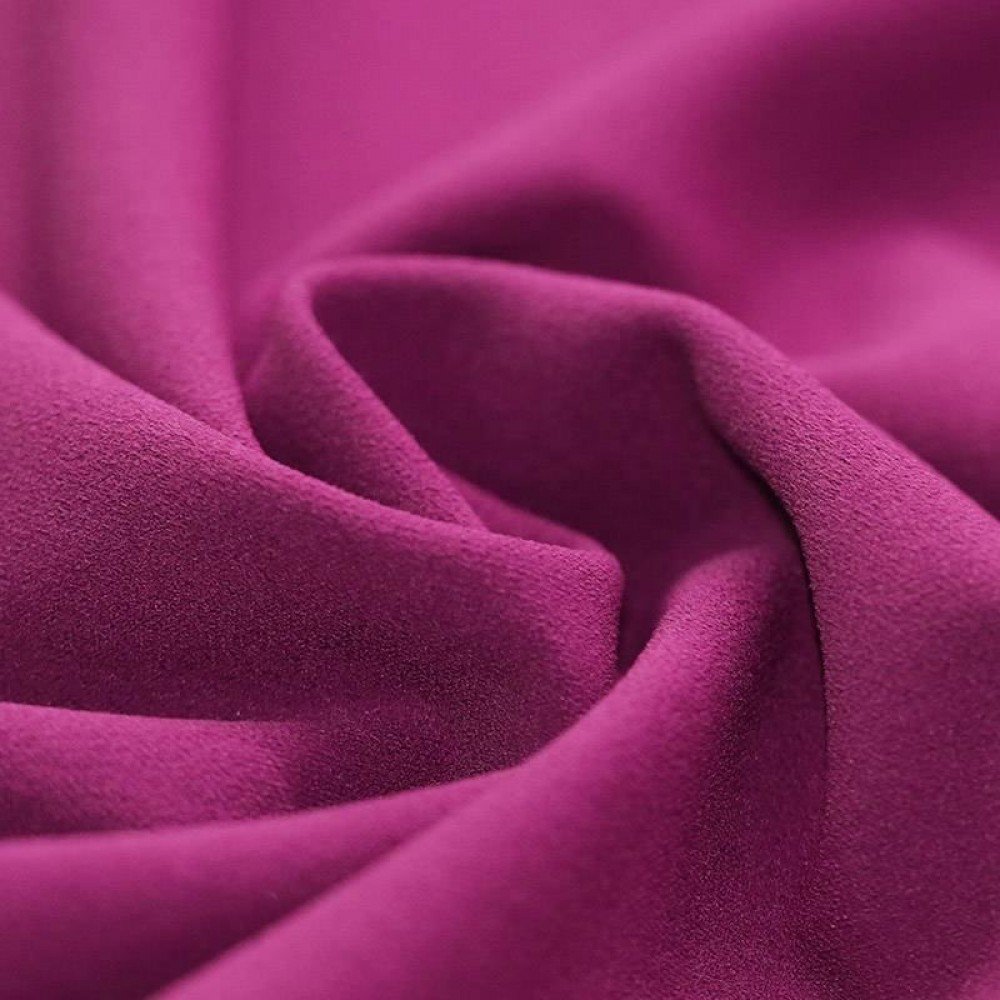
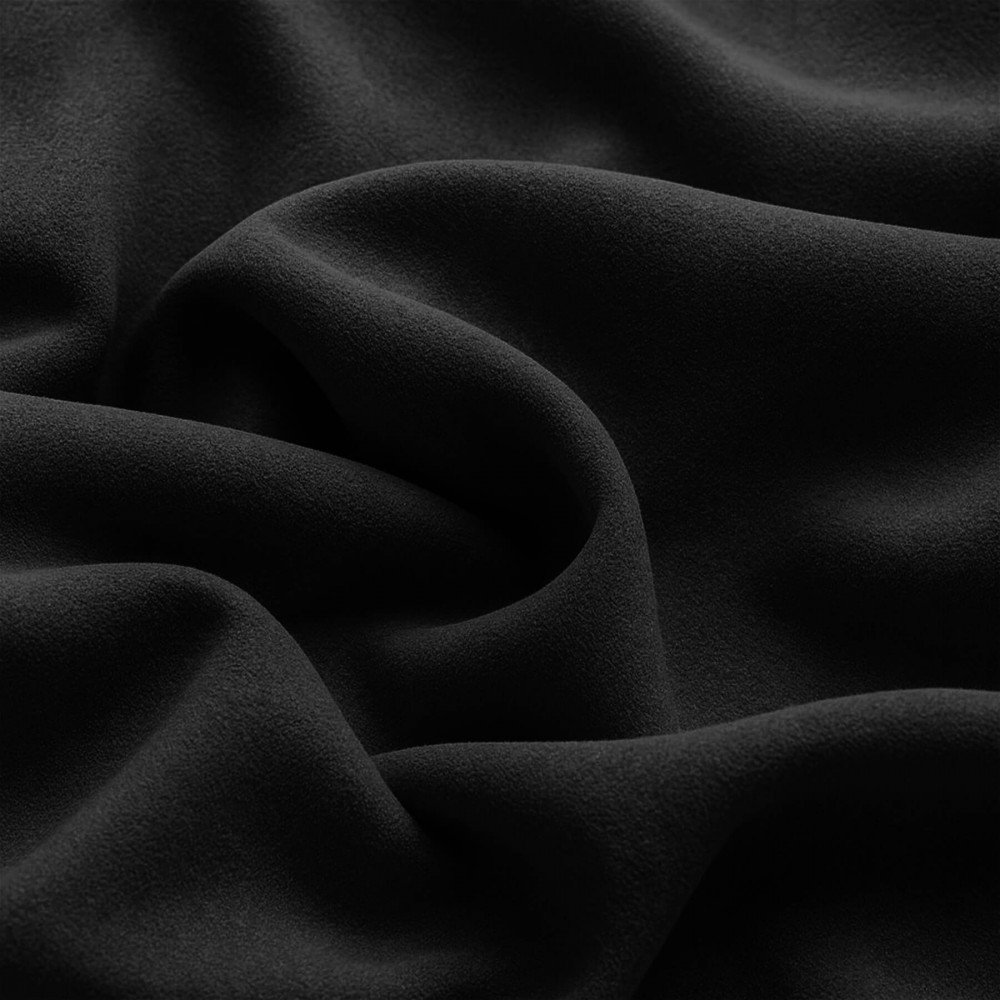
At Rijs Textiles we stock two types of scuba. Both are 94% polyester and 6% elastane, 150 cm wide, with 4-way stretch: they stretch both lengthwise and widthwise.
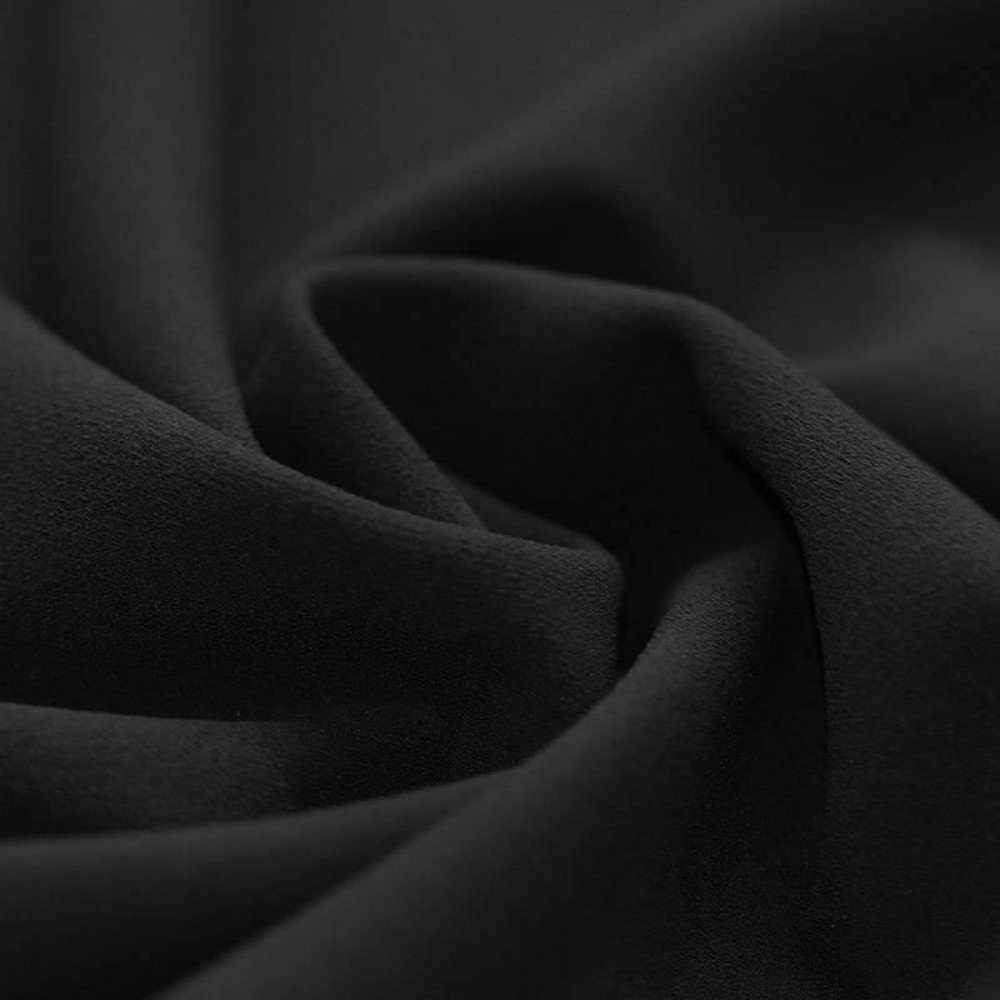
- Scuba crepe jersey weighs 240 g/m² and has a fine, grainy crepe surface on the right side. Matt, smooth and smart. You can iron it on a medium setting.
- Scuba suede jersey weighs 280 g/m² and has a soft, brushed face that feels like suede. It's heavier and warmer, and it must not be ironed or tumble dried.
Scuba vs neoprene: what's the difference?
The two names are often used interchangeably, but they're very different materials.
| Scuba fabric | Neoprene | |
|---|---|---|
| What is it? | densely knitted jersey made of polyester and elastane | synthetic rubber foam, often with a layer of fabric bonded to it |
| Wears like | clothing: soft, reasonably breathable, moves with you | a wetsuit: warm, close-sealing, barely breathes |
| Washing | machine wash at 30 °C | usually hand wash only |
| Sewing | on an ordinary sewing machine with a stretch needle | tricky: often glued or sewn on a special machine |
| Used for | skirts, dresses, trousers, blazers, tops | wetsuits and surf suits, protective sleeves |
In short: if you want that sleek neoprene look in everyday clothes, scuba is what you're after.
Scuba crepe or scuba suede?
| Scuba crepe jersey | Scuba suede jersey | |
|---|---|---|
| Weight | 240 g/m², medium weight | 280 g/m², heavyweight |
| Surface | finely grained, matt | softly brushed, suede look |
| Season | all year round | autumn and winter |
| Ironing | medium heat | do not iron |
| Washing | 30 °C, tumble dry on low | 30 °C, do not tumble dry |
| Price per metre | €4.95 (incl. VAT), currently on offer | €8.95 (incl. VAT) |
For a first project we recommend scuba crepe. It's lighter, you can iron it and it comes in lots of colours, from black and navy to fuchsia. Looking for a winter skirt or dress, or a blazer that looks expensive? Then go for scuba suede. Want to try out a few different colours? The surprise box with 10 × 1 metre of scuba crepe now costs €40.00 (incl. VAT).
What can you make with scuba?
Scuba is at its best in clothes that are meant to have a defined shape:
- Skirts: a pencil skirt, an A-line or a skater skirt with a nice flare.
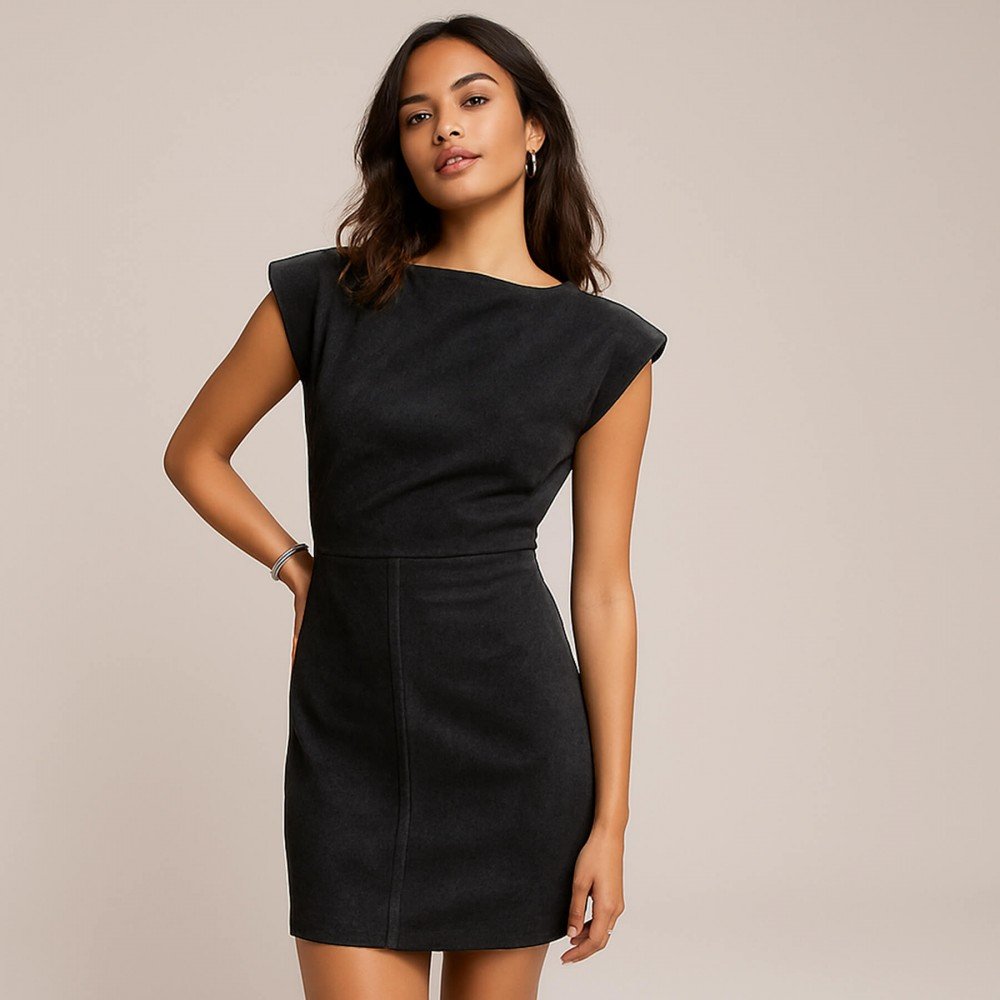
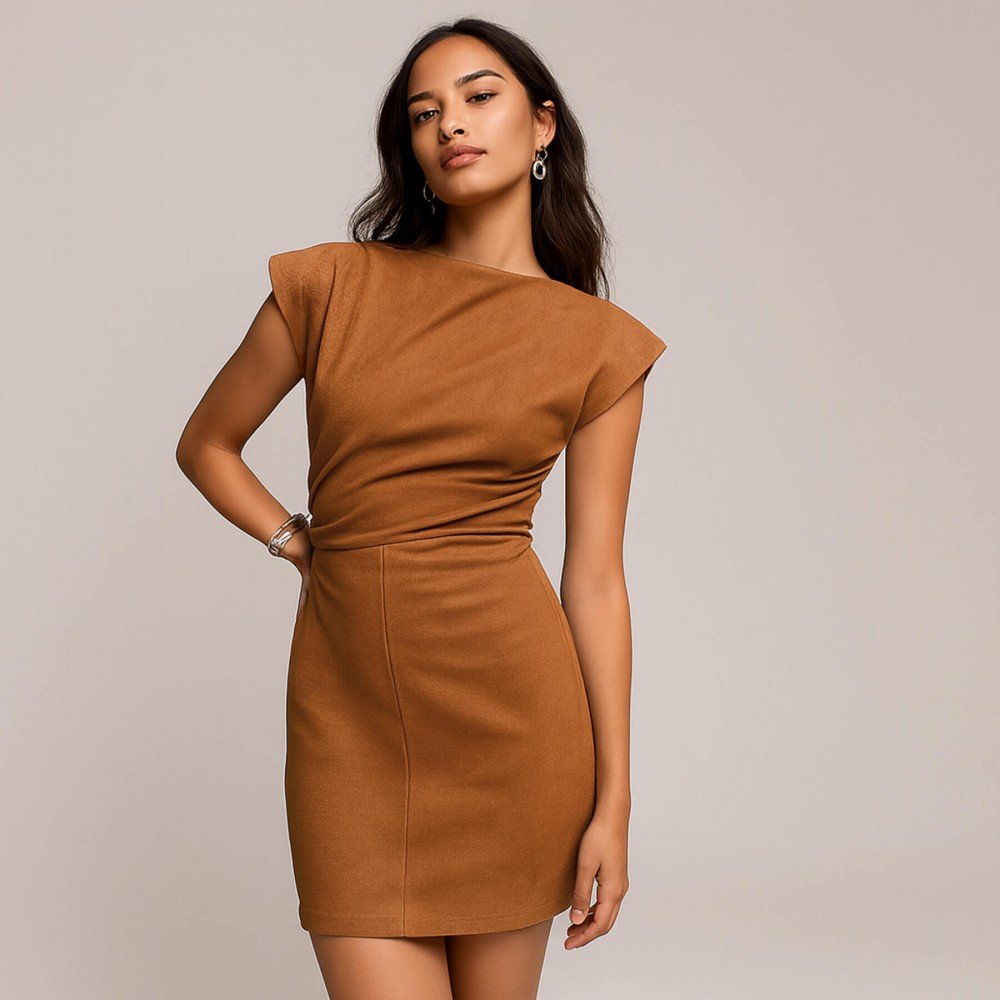
- Dresses: a fitted dress with no lining, since scuba isn't see-through.
- Trousers: smart trousers with an elasticated waist that still don't look like joggers.
- Blazers and jackets: the thickness gives you structure on its own, without interfacing.
Scuba is less suitable for clothes that need to drape softly, such as a loose blouse, and for hot summer days: its breathability is only average. For those, a thinner jersey fabric is a better choice. Want to know more about knits in general? Read what jersey fabric is or the difference between jersey and interlock.
Sewing with scuba: six tips
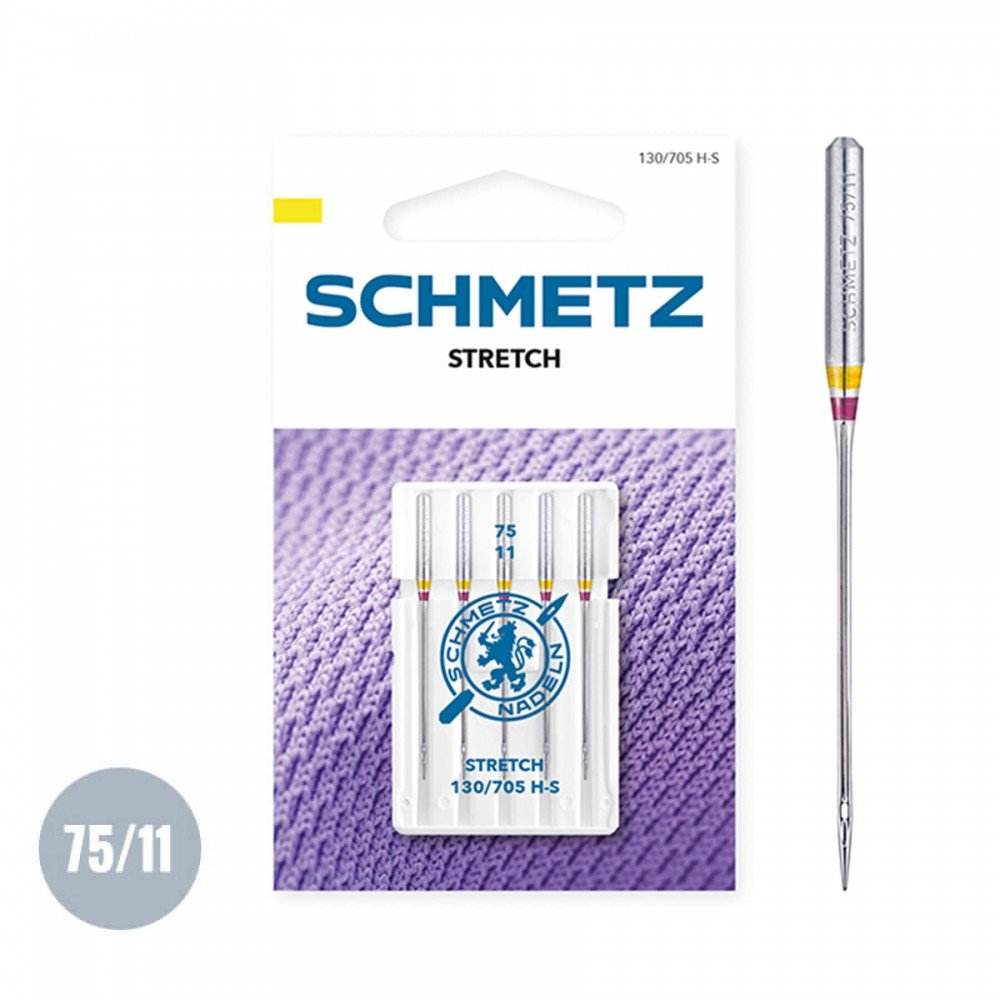
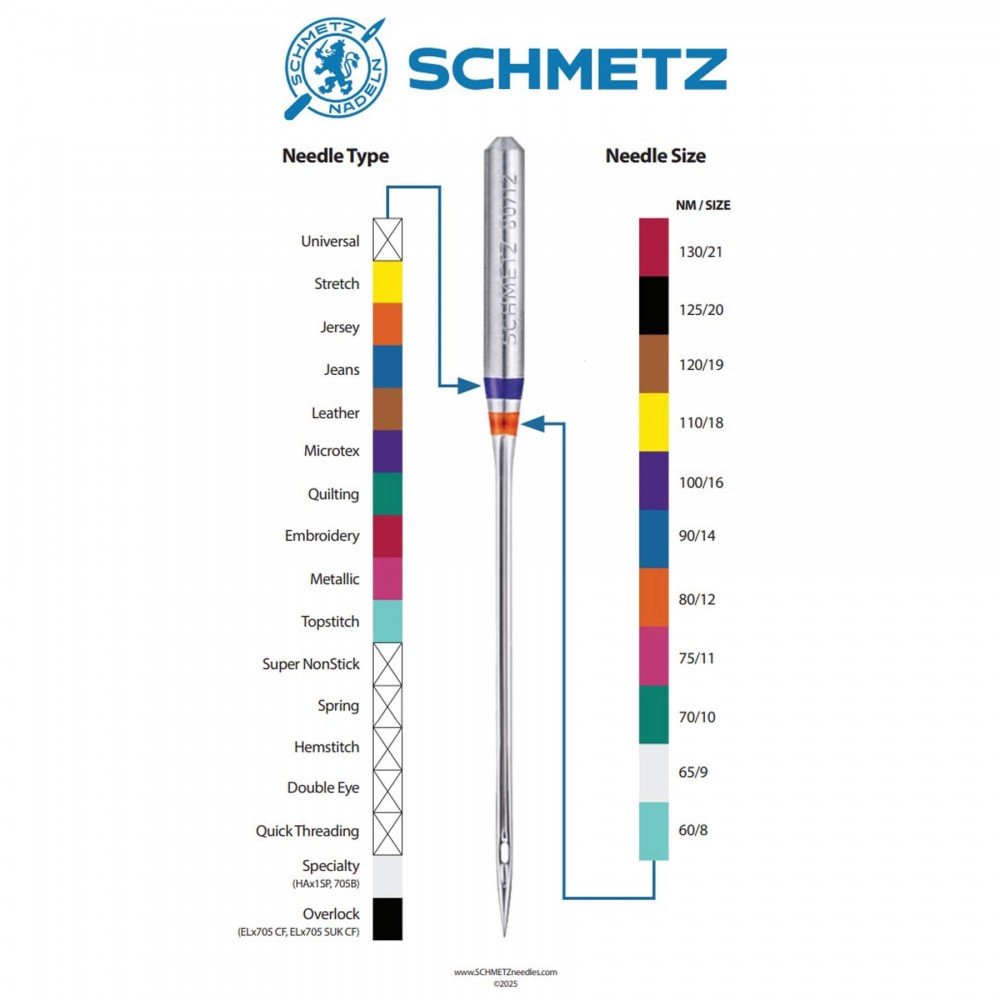
- Needle: use a stretch needle, size 75/11 for crepe or 90/14 for suede. A regular needle can skip stitches. We sell Schmetz stretch needles 75/11 for €3.95 (incl. VAT); for suede there's the 90/14. You'll find more in our needles section.
- Stitch: a stretch stitch or a narrow zigzag (width 0.5–1, length 2.5–3). A straight stitch will snap as soon as the fabric stretches. An overlocker works too.
- Thread: ordinary polyester sewing thread to match the fabric.
- Holding layers: sewing clips work better than pins. Pins can leave small holes in thick scuba.
- Cutting: place the greatest stretch around the body, so across the width of the fabric. Sharp scissors or a rotary cutter give a clean edge that you can leave as it is.
- Test seam: sew a few centimetres on a scrap first. Does the seam stretch without snapping, and does it lie flat? Then you're good to go.
Pattern: pencil skirt with no hemming
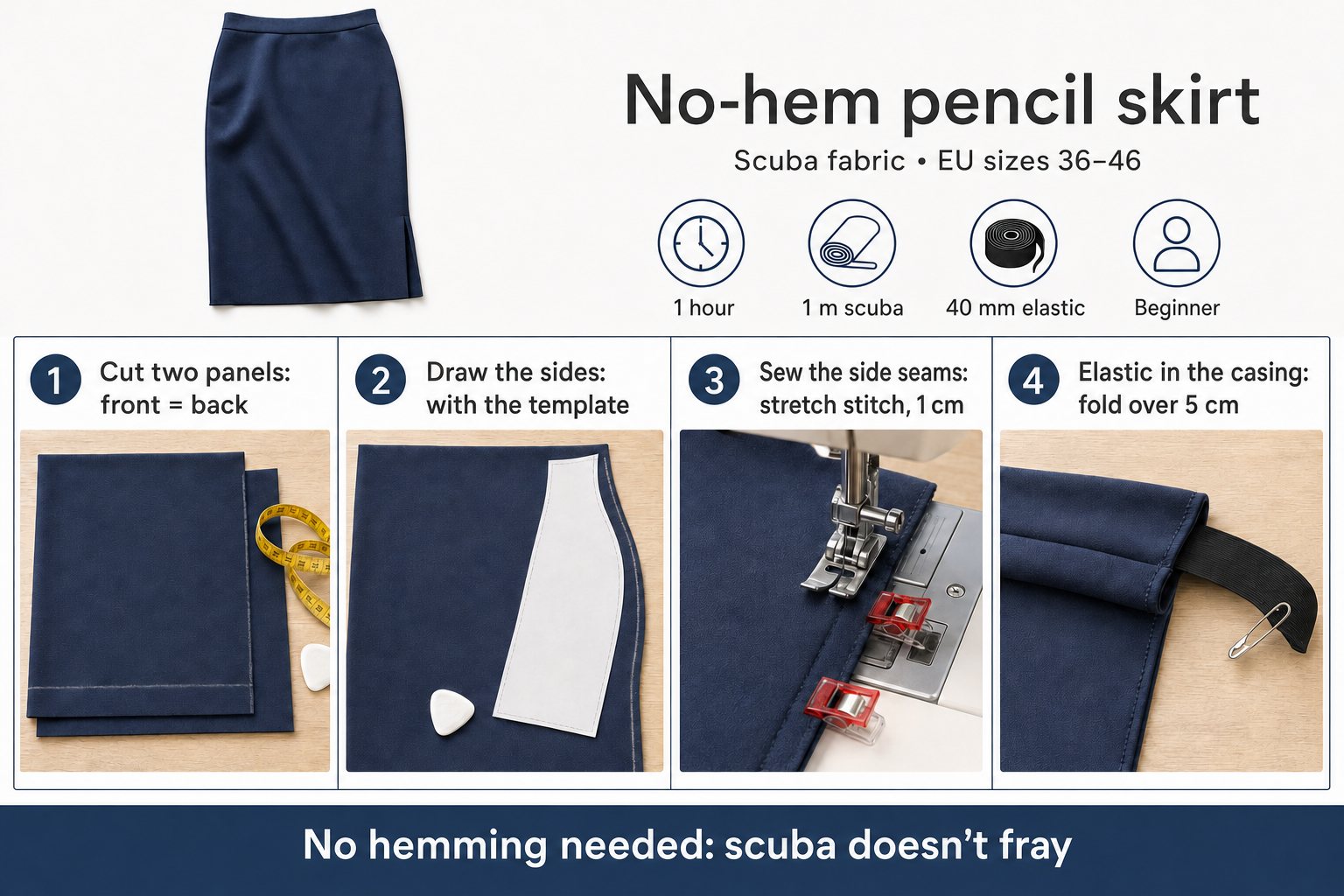
Because scuba doesn't fray, you can simply leave the bottom edge of a skirt raw. It looks clean and modern, and it saves you the fiddliest part of the job. This pencil skirt has no zip and no button: you just pull it on, and a 40 mm elastic band in a casing keeps it in place. The front and back are identical, so you cut the same piece twice.
What you need
- 1 metre of scuba crepe or scuba suede (150 cm wide). That's enough for all sizes, up to a skirt length of 90 cm.
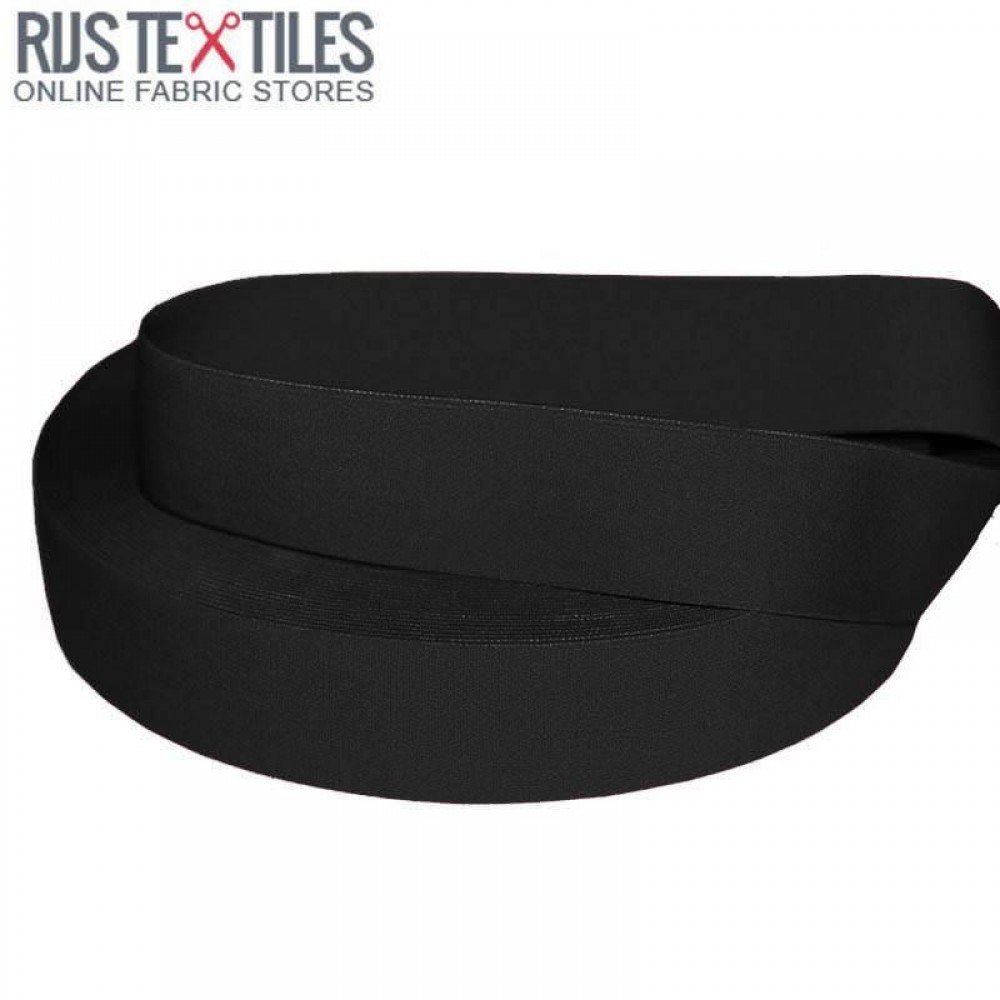
- 1 metre of 40 mm elastic band, €2.50 (incl. VAT)
- stretch needle, polyester sewing thread, sewing clips, tailor's chalk, ruler, safety pin
- the side template from the free pattern (page 2, actual size)
Size chart
| EU size | Waist | Hip | Panel at waist | Panel at hip | Panel at hem | Elastic |
|---|---|---|---|---|---|---|
| 36 | 72 cm | 94 cm | 43 cm | 47 cm | 45 cm | 70 cm |
| 38 | 76 cm | 98 cm | 45 cm | 49 cm | 47 cm | 74 cm |
| 40 | 80 cm | 102 cm | 47 cm | 51 cm | 49 cm | 78 cm |
| 42 | 84 cm | 106 cm | 49 cm | 53 cm | 51 cm | 82 cm |
| 44 | 90 cm | 112 cm | 52 cm | 56 cm | 54 cm | 88 cm |
| 46 | 96 cm | 118 cm | 55 cm | 59 cm | 57 cm | 94 cm |
The panels include a 1 cm seam allowance on each side. At the hip the skirt is 4 cm smaller than your hip measurement: scuba stretches, and this gives the pencil shape a nice close fit. Between two sizes? Choose the size that fits your hips. You decide the length yourself: measure from your waist to where you want the skirt to end (just above or just below the knee is often 55–62 cm) and add 5 cm for the casing.
How to sew the pencil skirt
- Cut two rectangles using the "panel at hip" width and the length you've just worked out. The greatest stretch runs across the width. Place the two rectangles right sides together.
- Mark the lines. Draw the waistline 5 cm below the top edge, and the hipline another 20 cm lower.
- Draw the sides with the template. Place the side template from the pattern along the side edge: 2 cm in at the waistline, curving out to the hipline. Above the waistline, continue the line straight up to the top edge. Below the hipline, the side runs straight down and ends 1 cm in. Do the same on the other side and cut through both layers.
- Sew the side seams with a 1 cm seam allowance and a stretch stitch. Leave the bottom 15 cm of one side seam open as a walking slit, and add a bar tack at the end of the seam: a few passes back and forth with a wide zigzag. Open the seam allowances out with your fingers.
- Make the casing. Fold the top 5 cm to the inside, hold it with clips and stitch all the way round 4.5 cm from the fold. Leave a 5 cm gap at one side seam.
- Thread the elastic. Cut the elastic to the length in the chart, thread it through the casing with a safety pin, overlap the ends by 2 cm and zigzag them together. Stitch the gap closed.
- Leave the hem as it is. If the cut edge isn't perfectly straight, give it a quick trim. Done.
Allow about an hour, including cutting. Want an even closer fit? Adjust it before you sew the casing: put the skirt on inside out and clip the side seams a little further in.
Download the free pencil skirt pattern (PDF)
How much does a homemade scuba skirt cost?
| Version | Materials | Cost (incl. VAT) |
|---|---|---|
| Scuba crepe pencil skirt | 1 m scuba crepe + 1 m elastic band 40 mm | €7.45 |
| Scuba suede pencil skirt | 1 m scuba suede + 1 m elastic band 40 mm | €11.45 |
| One-off | stretch needles 75/11 (Schmetz) | €3.95 |
These amounts are based on prices at the time of writing; scuba crepe is currently on offer. For a short skirt in a small size, a metre leaves enough over for a top or a second skirt for a child. To work out how much fabric you need for other garments, read our post how much fabric do I need. Like sewing without hemming? Then our carnival costume with no hemming is one for you too.
Frequently asked questions
What is scuba fabric?
Scuba is a thick, densely knitted jersey made of polyester and elastane. It looks like the neoprene of a wetsuit, but contains no rubber. Scuba is firm, barely creases, isn't see-through and doesn't fray. At Rijs Textiles it's 150 cm wide and weighs 240 to 280 g/m².
Is scuba fabric the same as neoprene?
No. Neoprene is synthetic rubber foam, used for wetsuits. Scuba is a textile: a knit of polyester with elastane that you machine wash and sew on an ordinary sewing machine. It only looks like neoprene because it's just as thick and smooth.
Does scuba fabric fray?
No. Scuba is a dense knit and the cut edge doesn't unravel. That's why you can leave the bottom of a skirt or dress raw, without hemming. Do cut it with sharp scissors or a rotary cutter, so the edge stays clean.
What needle should I use for scuba?
A stretch needle: 75/11 for scuba crepe and 90/14 for the thicker scuba suede. Use a stretch stitch or a narrow zigzag so the seam stretches with the fabric and doesn't snap.
How do I wash scuba fabric?
At 30 °C in the washing machine, without bleach. Scuba crepe can be tumble dried on low and ironed on a medium setting. Scuba suede must not be tumble dried or ironed: dry it flat.



Leave a Comment