
What is sherpa fabric? Sherpa vs teddy, plus a sofa throw, neck warmer and hot water bottle cover to sew
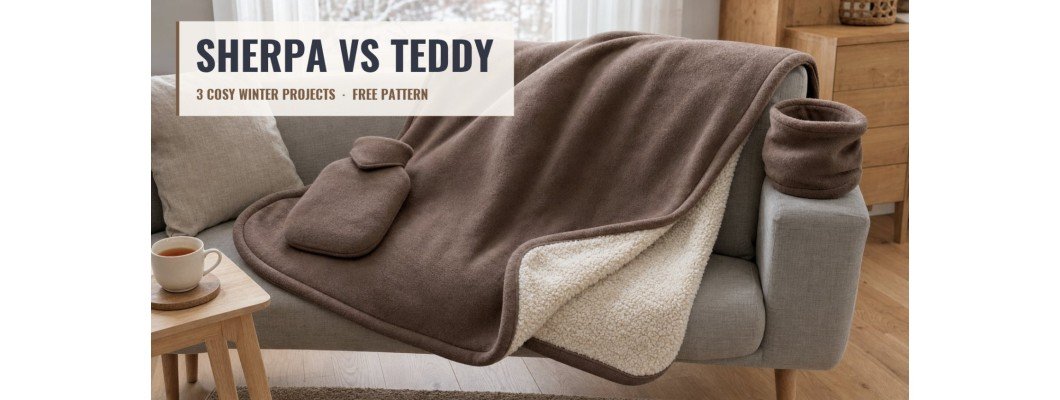
Sherpa is one of the most requested fabrics in winter, and also one of the most confusing. Some people mean a curly imitation sheepskin, others a soft, brushed fleece. In this post you'll find out what sherpa fabric actually is and how sherpa vs teddy compares, plus what you can sew with it. There are three winter projects for beginners: a sofa throw, a neck warmer and a hot water bottle cover. Including a free pattern with a corner template.
Download the free sherpa pattern (PDF)
What is sherpa fabric?
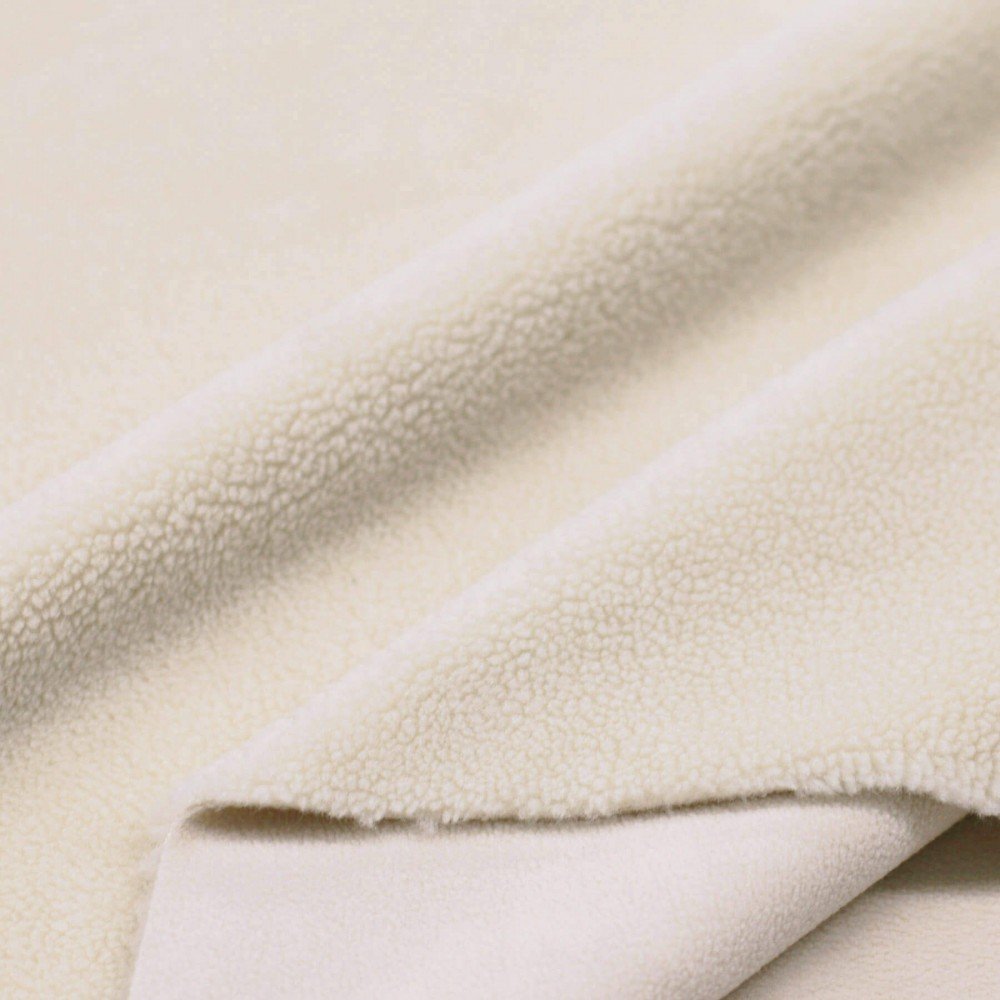
The name sherpa comes from jackets with a woolly lining, named after the Sherpa people of the Himalayas. In shops the word is used for two quite different fabrics:
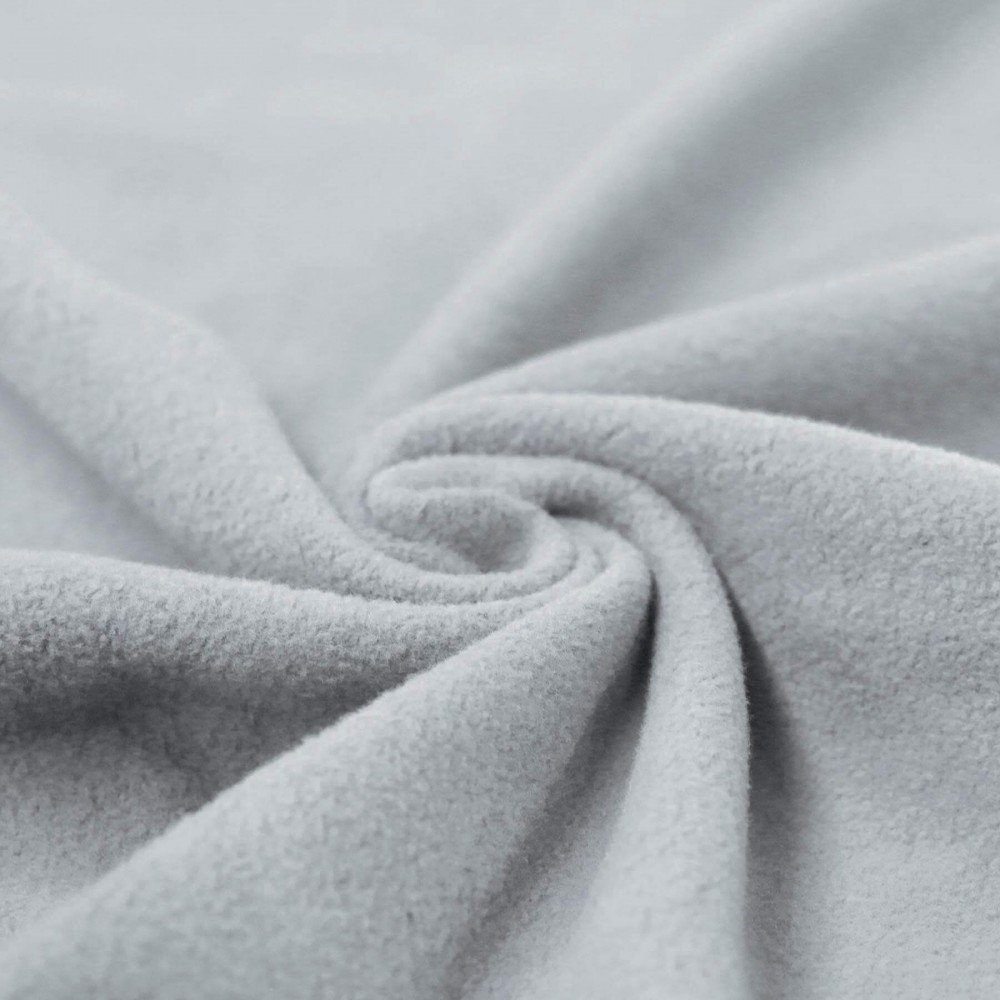
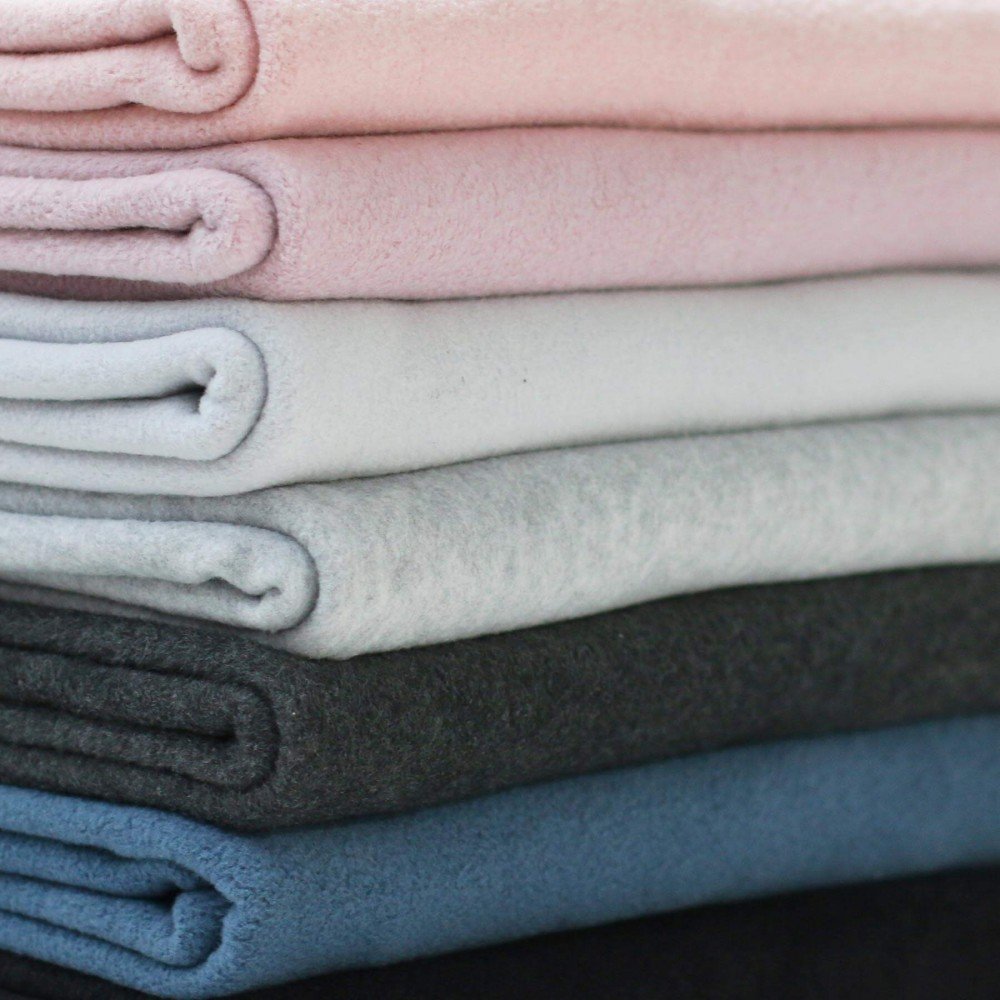
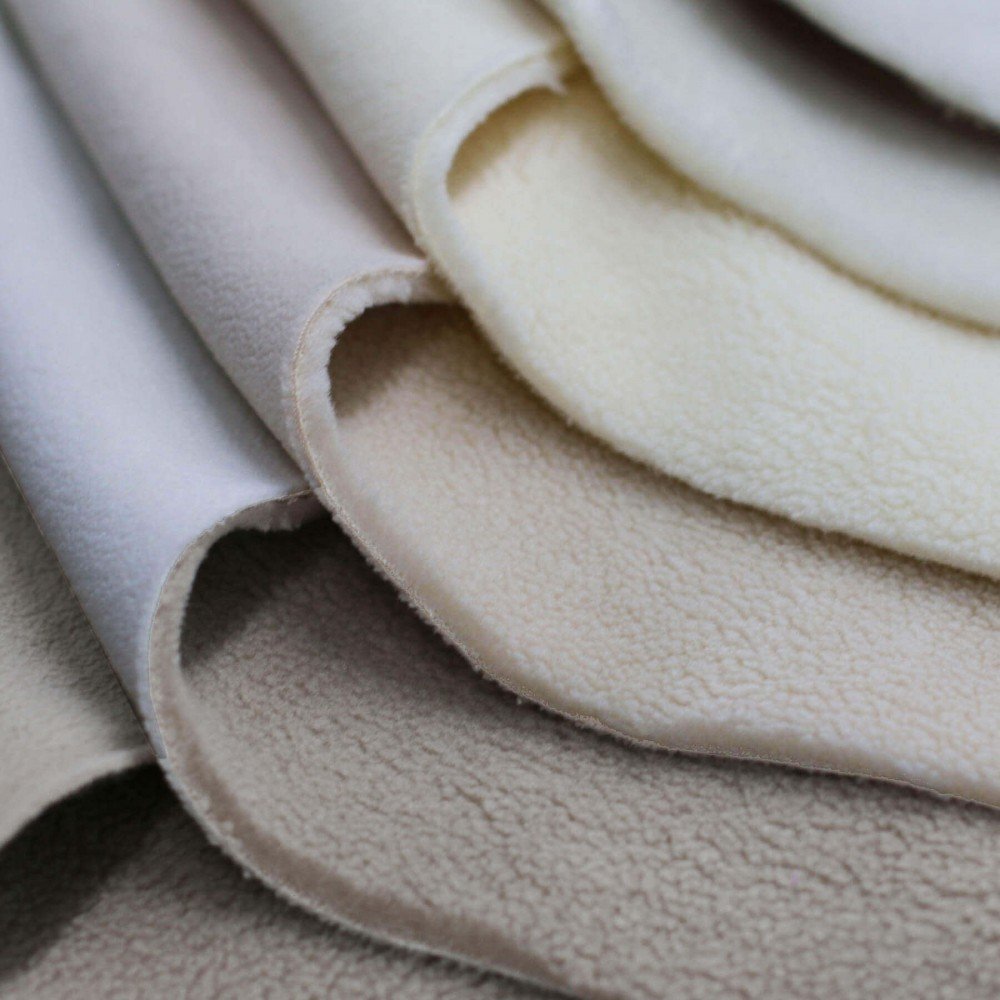
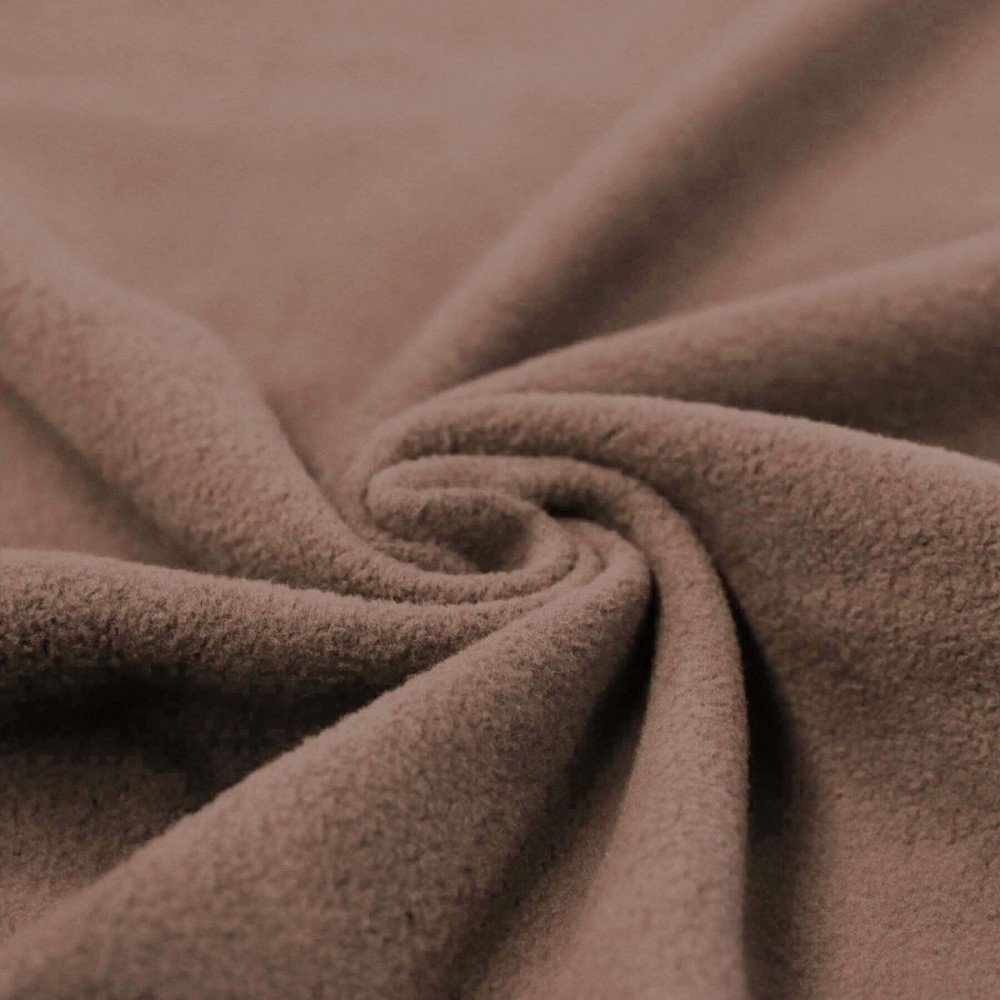
- Cotton sherpa: a fleece with a smooth cotton side and a brushed, fluffy side. This is what we call sherpa.
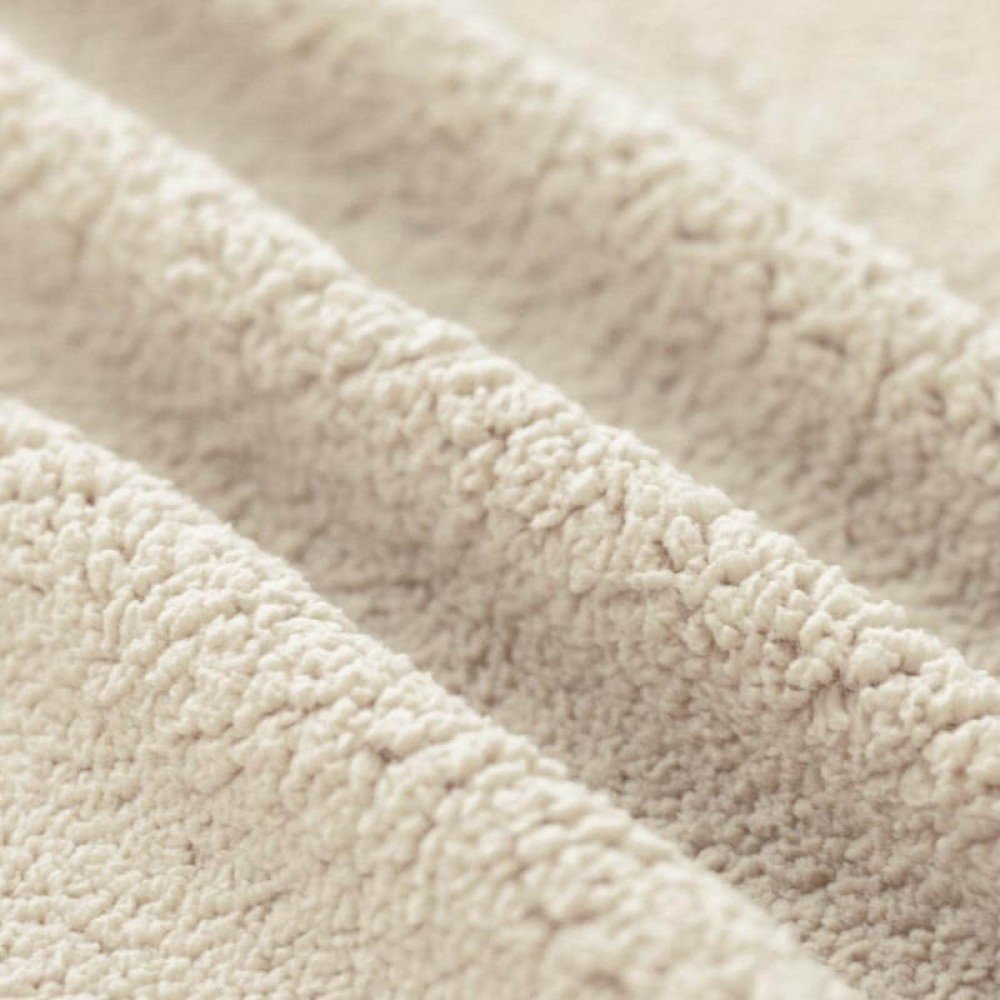
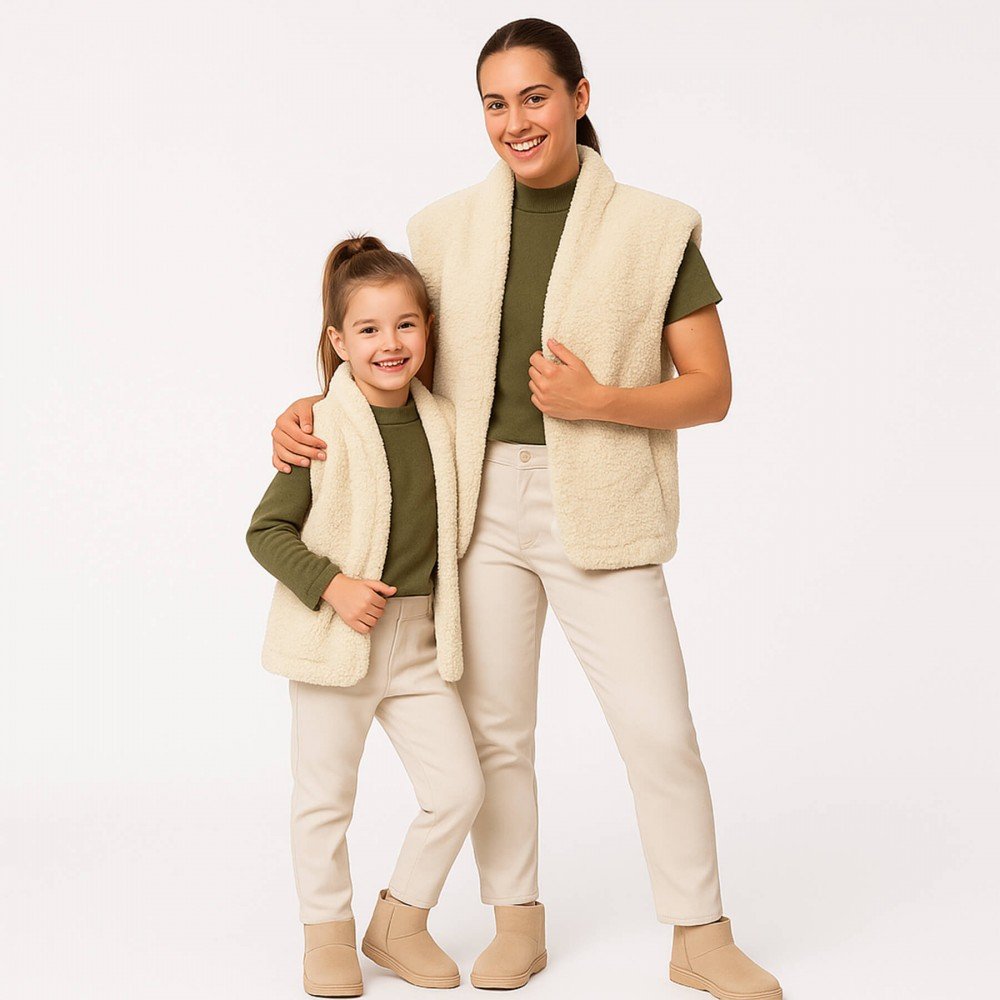
- Sherpa as faux fur: a polyester fabric with a dense, curly pile that looks like sheepskin. We sell that as teddy fabric.
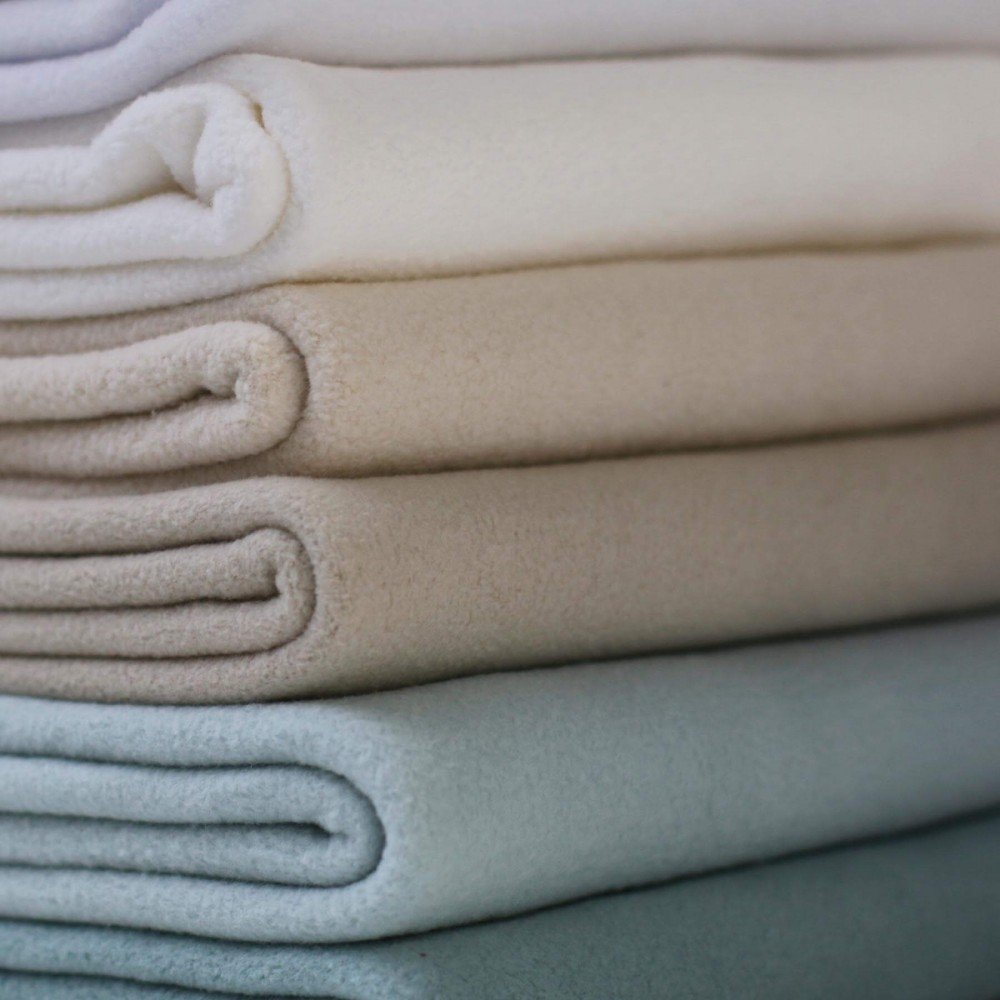
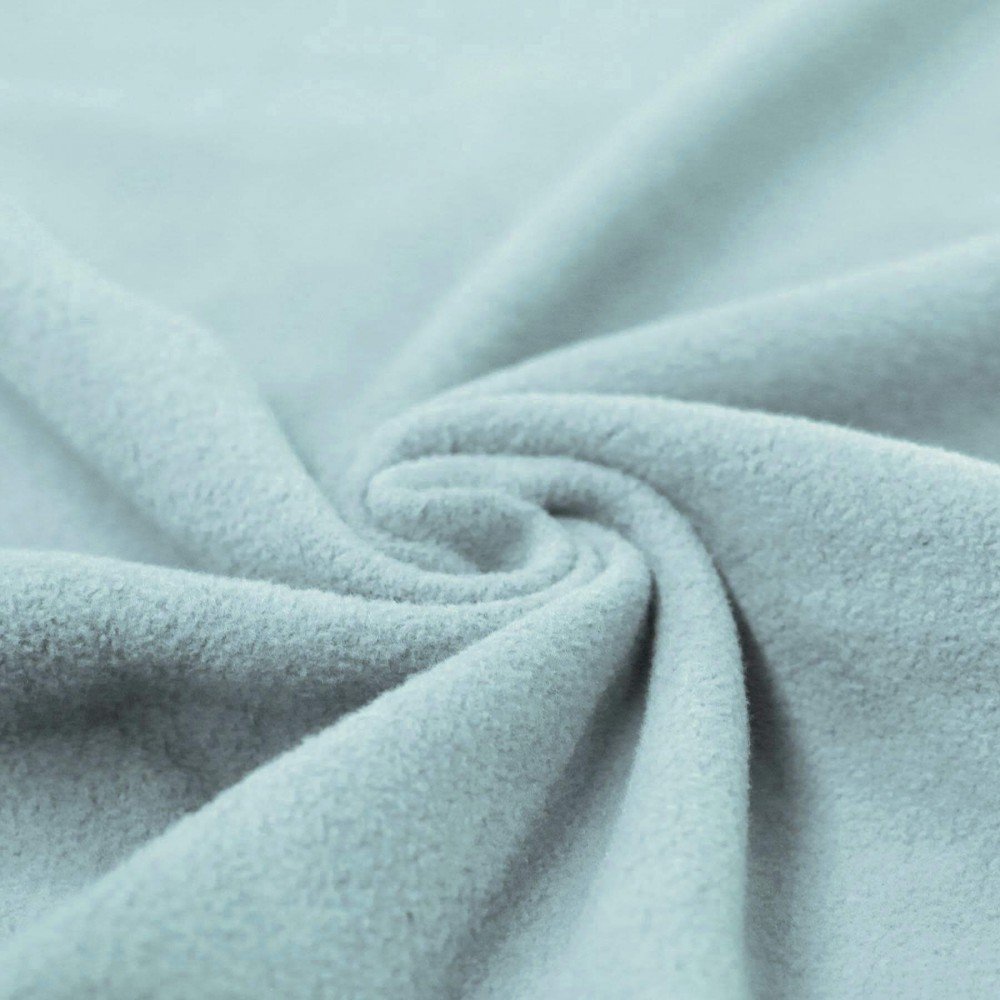
Our cotton fleece (sherpa) is 100% cotton, weighs around 300 grams per m², is 150 cm wide and has 4-way stretch. It is OEKO-TEX certified and costs €11.95 per metre (incl. VAT). The cotton side is breathable and feels lovely against the skin, while the fluffy side holds in the warmth.
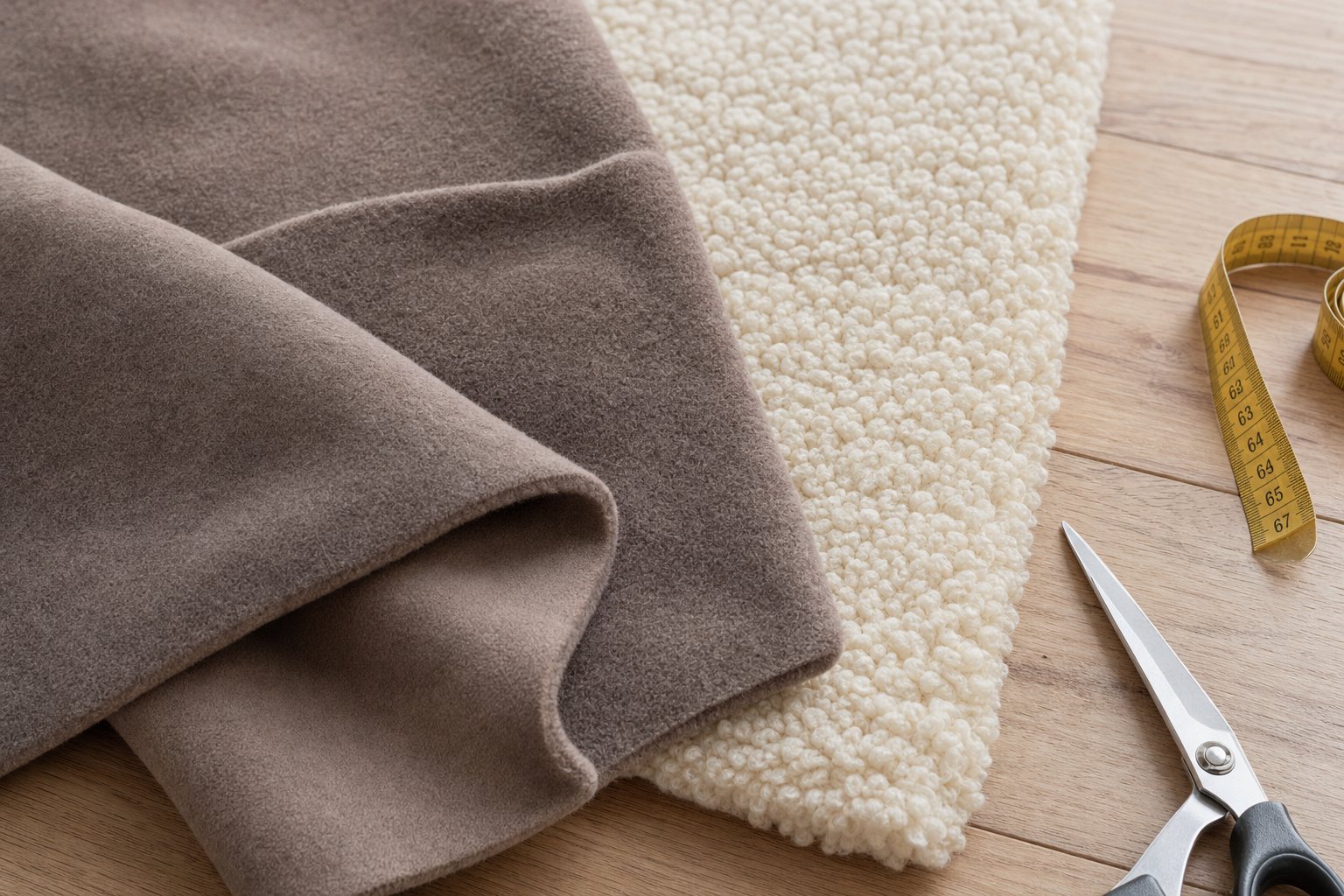
What is the difference between sherpa and teddy?
| Sherpa (cotton fleece) | Teddy | |
|---|---|---|
| Fibre | 100% cotton | 100% polyester |
| Weight | approx. 300 g/m² | approx. 210 g/m² |
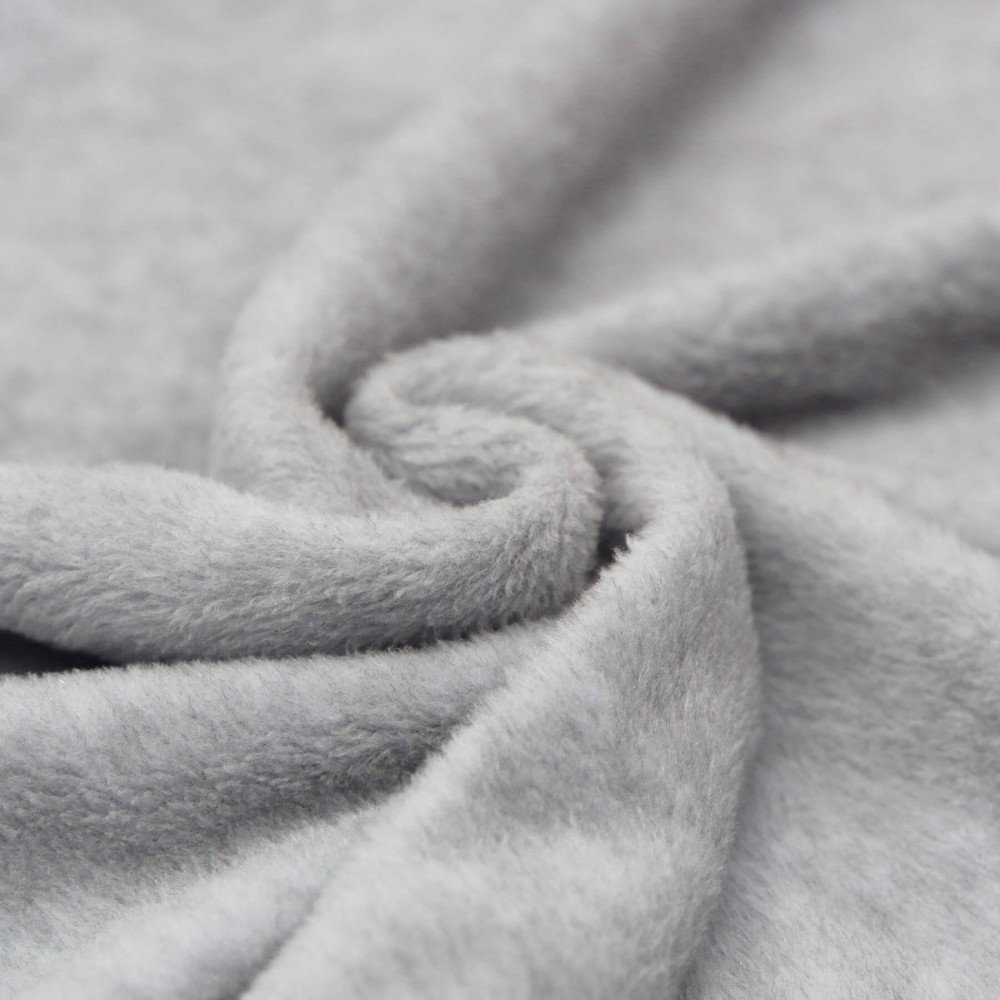
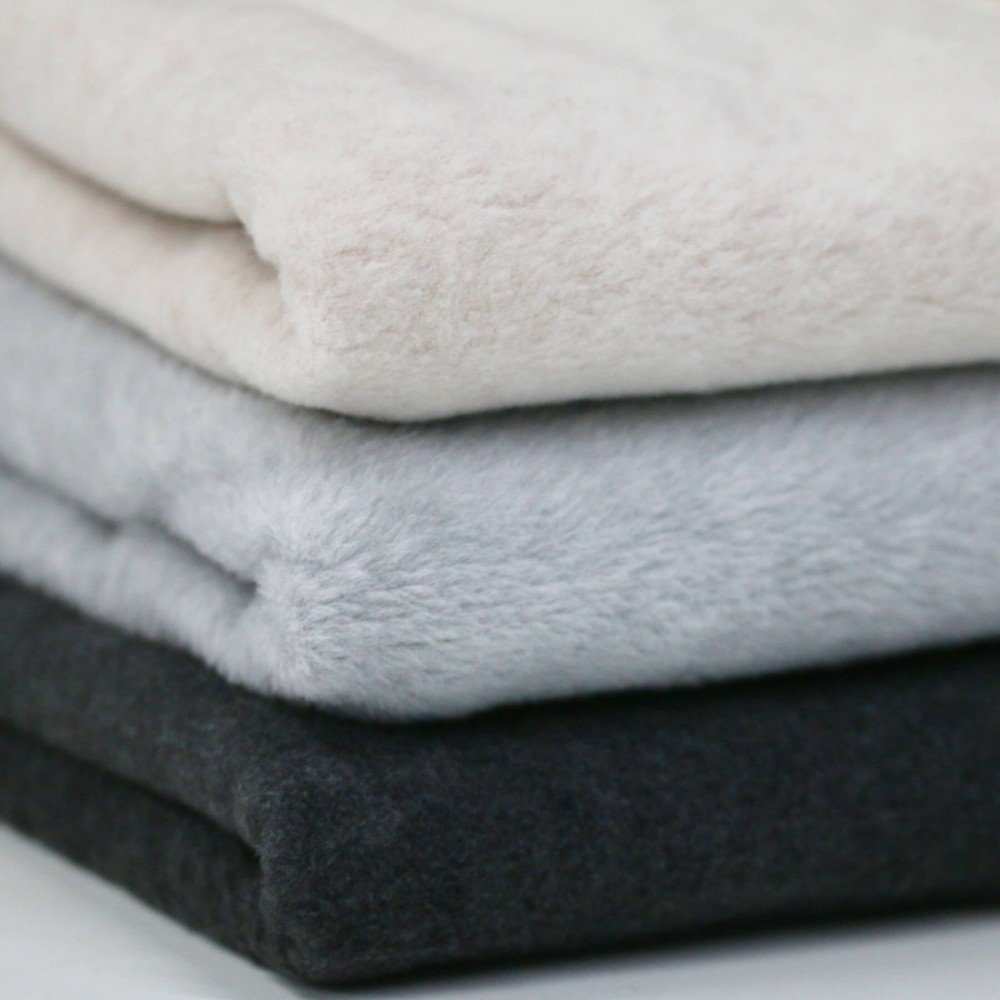
| Look | smooth on one side, softly brushed on the other | thick, curly pile, like a fleece coat |
| Stretch | stretches in all directions | firm, barely stretches |
| Breathable | yes | less so |
| Washing | may shrink slightly, prewash | does not shrink |
| Best for | blankets, neck warmers, linings, baby items | coats, cuddly toys, cushions, throws with a fur look |
In short: if you want the look of sheepskin, go for teddy. If you want something breathable that drapes softly and feels nice against your skin, choose sherpa. And the two work beautifully together, as you'll see with the blanket below. You can read all about teddy in our post what is teddy fabric.
Three winter projects with sherpa
| Project | Time | Fabric | Level |
|---|---|---|---|
| 1. Sofa throw | 1 to 1.5 hours | 2.2 m sherpa (+ 2 m teddy for a double-layer throw) | beginner |
| 2. Neck warmer | 20 minutes | 60 × 50 cm | beginner |
| 3. Hot water bottle cover | 45 minutes | 3 pieces of approx. 26 × 36 cm | beginner |
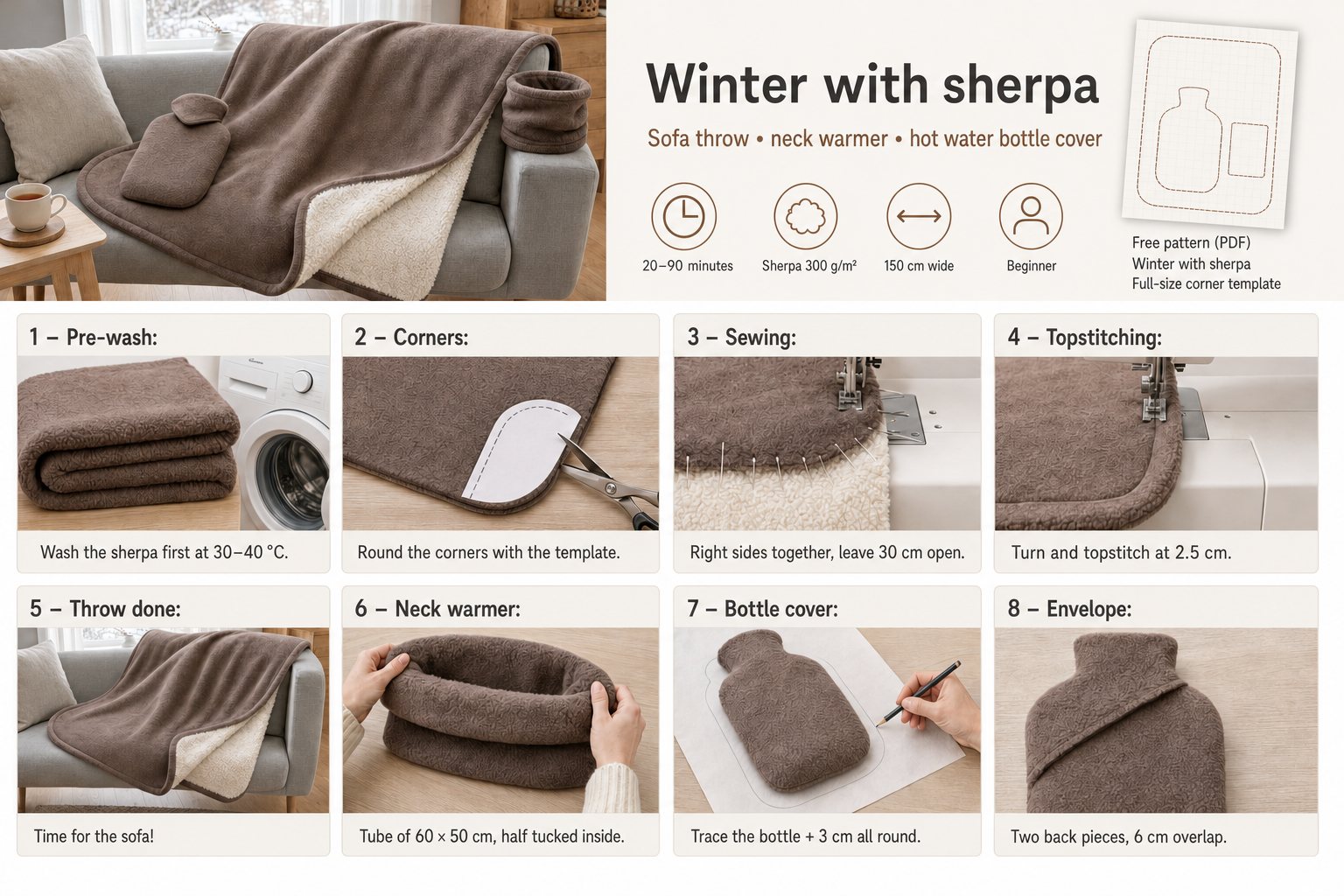
What do you need?
- Sherpa: 2.2 metres for the throw. Half a metre is enough for a neck warmer and a hot water bottle cover.
- For a double-layer throw: 2 metres of teddy fabric or teddy fleece doubleface
- For a single-layer throw: about 7 metres of 30 mm bias binding
- Strong polyester sewing thread and a stretch or jersey (ballpoint) needle (size 90)
- Plenty of pins or clips, a long ruler and tailor's chalk
Wash the sherpa first. Cotton may shrink a little in the first wash, and teddy doesn't. So wash the sherpa at 30 to 40 degrees before cutting, especially if you're combining it with teddy. That's also why we list 2.2 metres instead of 2 metres.
1. A sofa throw
The throw ends up about 150 × 200 cm: the full width of the fabric, so you only need to cut it to length. Round off the corners with the corner template from the pattern. A rounded corner is easier to turn than a sharp point and lies nice and flat after topstitching.
The double-layer throw: sherpa with teddy
- Cut both the sherpa and the teddy to 150 × 200 cm. Place the corner template on each corner and cut the curve.
- Lay the layers right sides together. Smooth the teddy pile inwards with your hand and pin every 10 cm.
- Sew all the way round 1 cm from the edge, with a stitch length of 3 to 3.5 mm. Leave a 30 cm opening on one long side.
- Turn the throw through the opening and push the curves out neatly.
- Topstitch all the way round 2.5 cm from the edge. This closes the opening at the same time and keeps the layers neatly in place.
Tip: sherpa stretches and teddy doesn't. Use a walking foot if you have one, or lower the presser foot pressure slightly, and don't pull the fabric. That way the layers won't shift and you won't get ripples.
The single-layer throw: with bias binding
If you want a light throw that's quick to make, use a single layer of sherpa. Round off the corners, fold the 30 mm bias binding over the edge and stitch it in one go. Thanks to the rounded corners you don't need to mitre anything: the binding simply follows the curve. Don't want binding? Zigzag the edge and fold it over by 2 cm.
2. A neck warmer in 20 minutes
- Cut a rectangle of 60 × 50 cm.
- Fold it in half, right sides together, and sew the short edges (the 50 cm ones) together. You now have a tube.
- Turn the tube right side out and tuck the bottom half inside. You now have a double tube 25 cm high, with the fluffy side both on the outside and against your neck.
- Sew the two raw edges together with a zigzag or stretch stitch. Done.
You'll get two neck warmers out of half a metre of sherpa. A lovely gift for the festive season – see also our handmade Christmas gifts.
3. A hot water bottle cover
Hot water bottles vary quite a bit in size, so you make the pattern yourself, based on your own bottle. The cover has an envelope closure, so no zip or buttons.
- Lay your hot water bottle on paper and trace around it. Add 3 cm all round: 1 cm seam allowance and 2 cm ease, because sherpa is thick.
- Cut the front once from sherpa.
- Cut the pattern straight across at half its height. Add 5 cm to both halves along the cut edge. Cut out these two back pieces.
- Fold the cut edges of the back pieces over by 2 cm and stitch them down.
- Lay the front right side up. Place the upper back piece on top, right side down, and the lower back piece over that. They now overlap by about 6 cm.
- Sew all the way round at 1 cm, leave the neck open and turn the cover right side out.
We use the same envelope closure on our cushion with an envelope closure.
Sherpa as a lining
Looking for a warm lining for a jacket, hood or bag? Then you have two options. If you want the familiar fur look you see on denim jackets with a "sherpa lining", choose teddy. If you want something breathable and less bulky, choose cotton sherpa, with the fluffy side facing in. Cut the lining from the same pattern as the outer fabric. Because sherpa stretches, it's easiest to sew with the sherpa underneath and the outer fabric on top.
How do you wash sherpa?
Wash sherpa inside out at 30 to 40 degrees, without fabric softener, so the fluffy side stays airy. Ideally dry it on the line. Wash teddy at 30 degrees and preferably keep it out of the tumble dryer too.
Download the free sherpa pattern (PDF)
Frequently asked questions
What is sherpa fabric?
Sherpa is a warm, soft fabric with a fluffy side. At Rijs Textiles, sherpa is a cotton fleece: 100% cotton, around 300 g/m², with one smooth side and one brushed, fluffy side. Elsewhere, polyester faux fur is also called sherpa; we call that teddy.
Sherpa vs teddy: what is the difference?
Our sherpa is made of cotton, is breathable and stretches in all directions. Teddy is made of polyester, has a thick, curly pile that looks like fur and barely stretches. Sherpa is ideal for blankets, neck warmers and linings; teddy for coats, cuddly toys and cushions.
How much sherpa do I need for a blanket?
For a 150 × 200 cm blanket you need 2.2 metres of sherpa. The fabric is 150 cm wide, so you use the full width. The extra 20 cm allows for shrinkage in the first wash.
Should you prewash sherpa?
Yes. Cotton may shrink a little in the first wash. Wash the sherpa at 30 to 40 degrees before cutting, especially if you're combining it with teddy, which doesn't shrink.
Which needle should you use for sherpa?
Use a stretch or jersey (ballpoint) needle in size 90 and polyester sewing thread. Set the stitch length to 3 to 3.5 mm and don't pull the fabric, and your seams will stay nice and flat.
Leave a Comment