Sew a Cushion: Free Envelope Cushion Pattern, No Zip
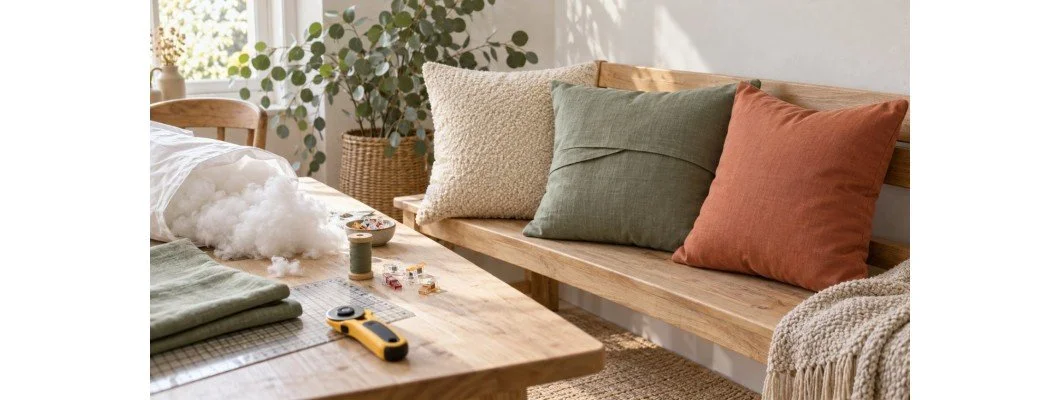
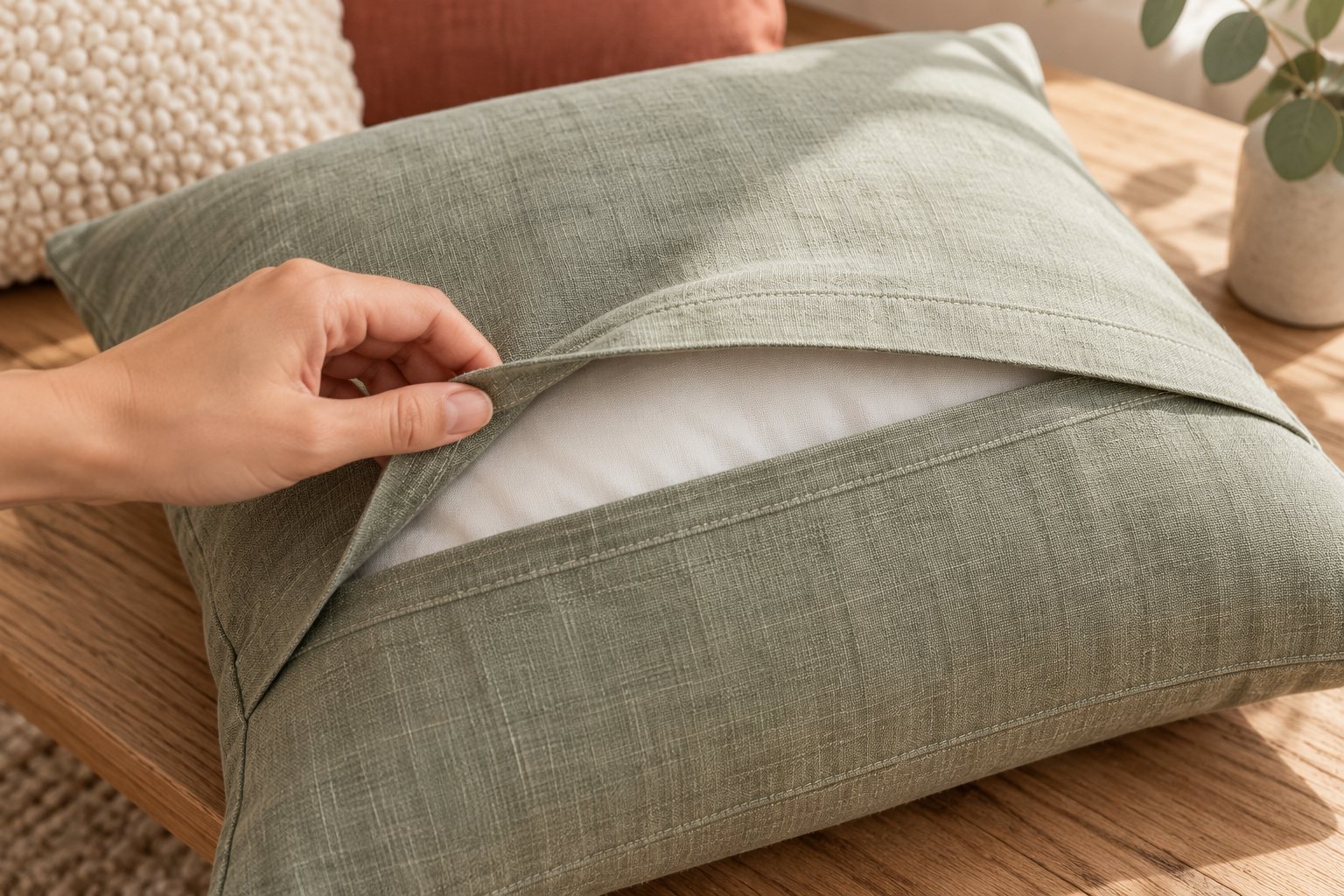
A cushion is the quickest sewing project there is. Three pieces of fabric, four straight seams, and you have something that goes straight onto the sofa or into a gift bag. With an envelope closure you don't even need a zip: two panels overlap at the back, and that's where you slide the inner cushion in. It also means you can take the cover off and wash it.
With the free pattern below you'll sew a 45 × 45 cm cushion, the size that fits almost any sofa. You need half a metre of cushion fabric, half a metre of cotton for the inner cushion and about 400 grams of polyester stuffing. And because it's always the question: further down there's a table showing how much stuffing you need for each cushion size.
Download the free pattern (PDF)
What you need
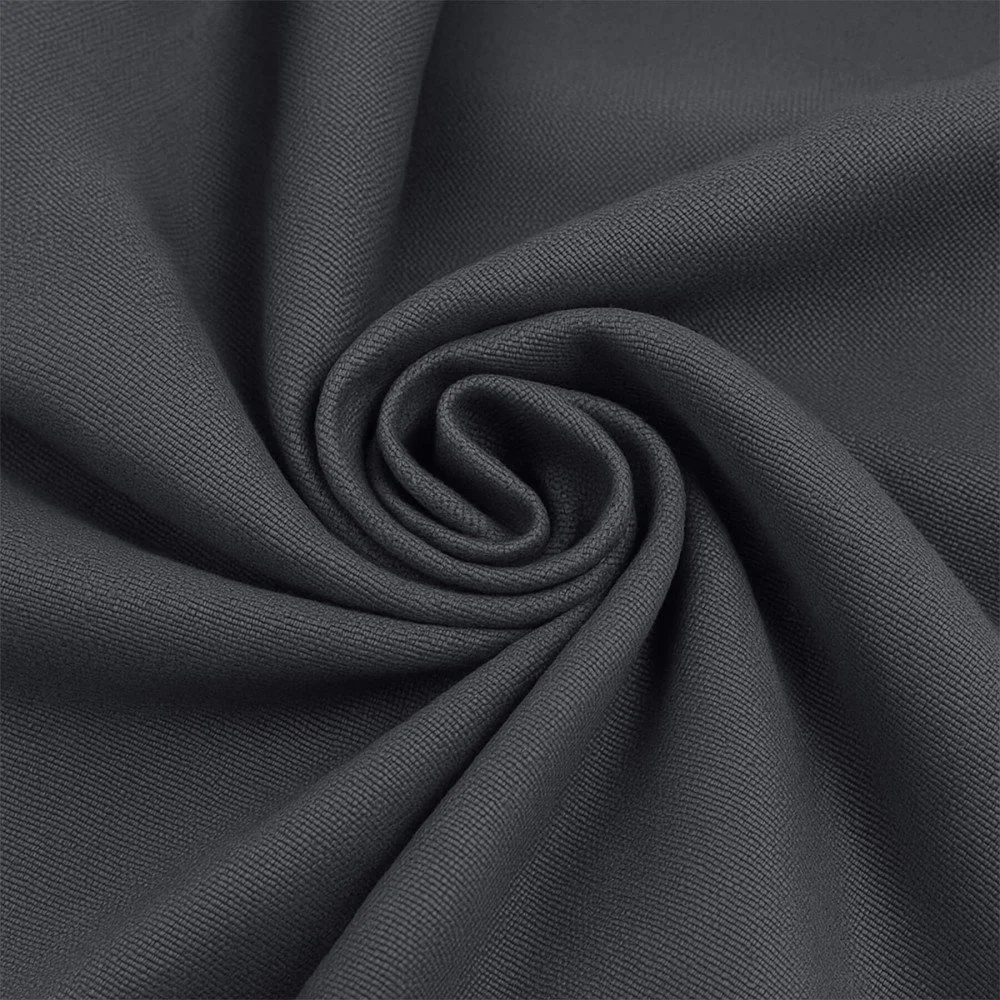
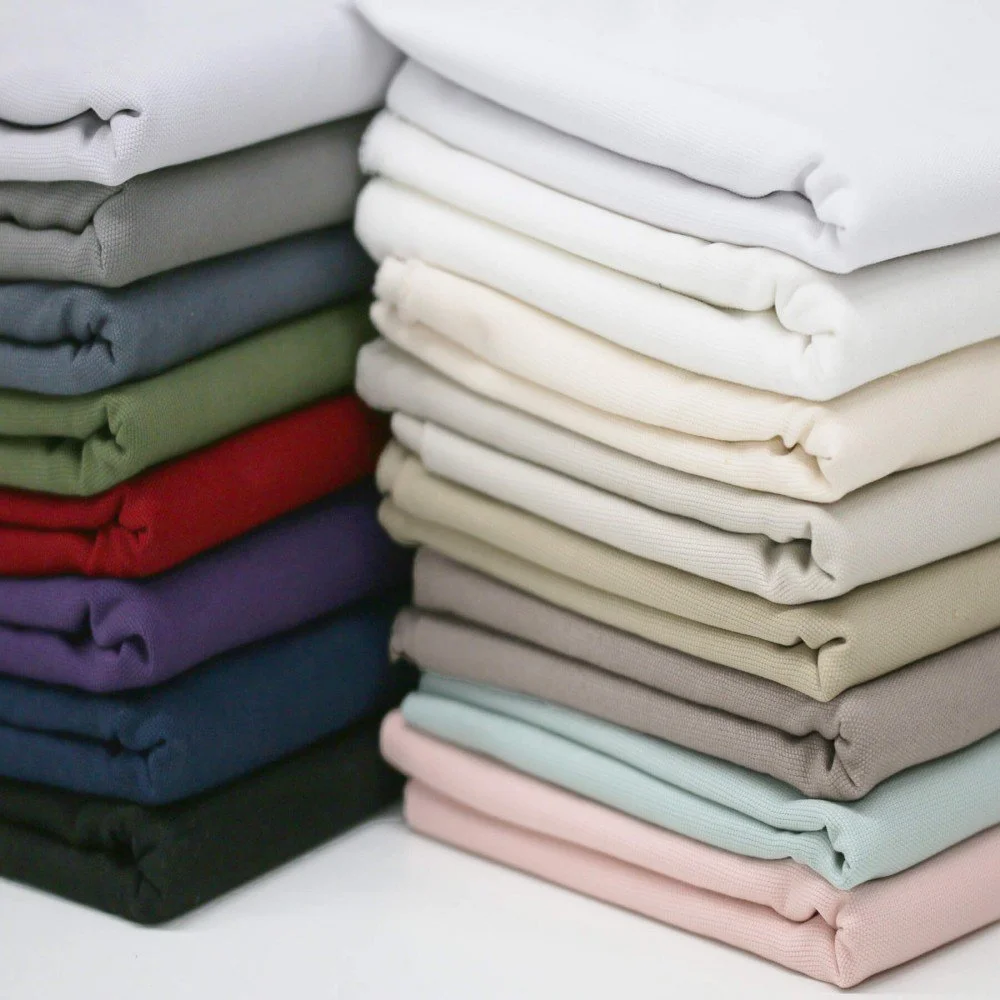
- 0.5 metre of cushion fabric, at least 115 cm wide, for example washed linen, bouclé or cotton canvas
- 0.5 metre of sturdy cotton for the inner cushion, for example canvas in ecru or white
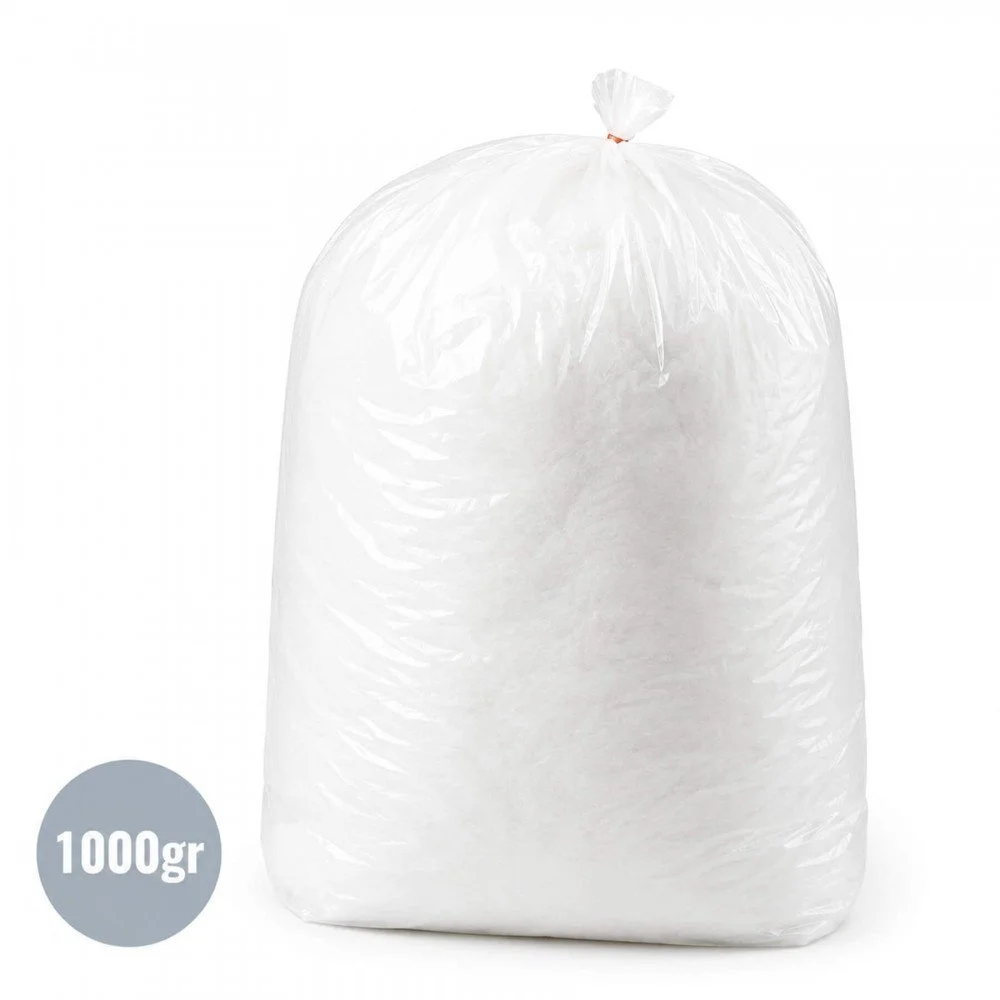
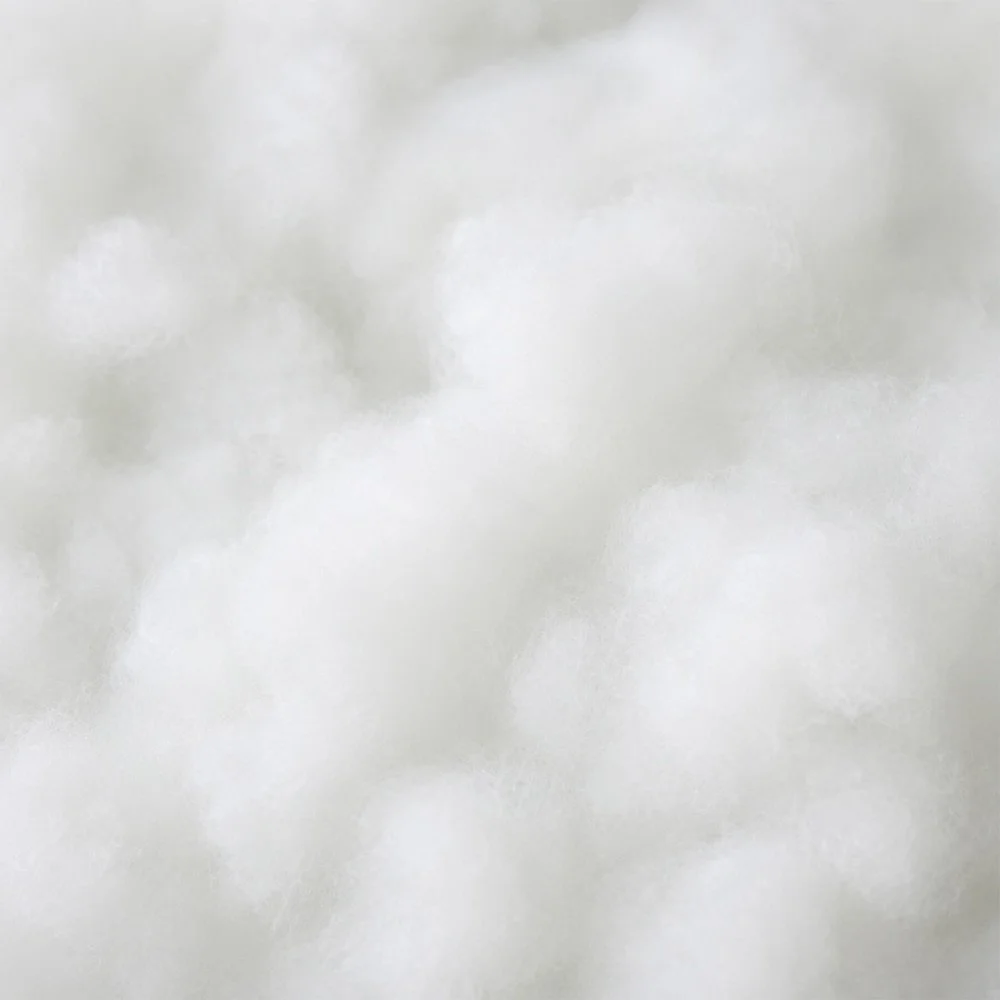
- 350 to 450 grams of polyester stuffing. A 1000 gram bag (€ 11.95) is enough for two cushions.
- Sewing thread in a matching colour
- A universal machine needle 80/12 or 90/14 (90/14 is better for canvas and bouclé)
- Rotary cutter or fabric scissors, ruler, chalk and pins
Count on around 15 to 20 euros in materials, depending on the fabric you choose.
Which fabric works for a cushion?
Almost any sturdy fabric without stretch will do. A few we like to use ourselves:
- Washed linen: soft, slightly crumpled and very natural. It only gets nicer with every wash.
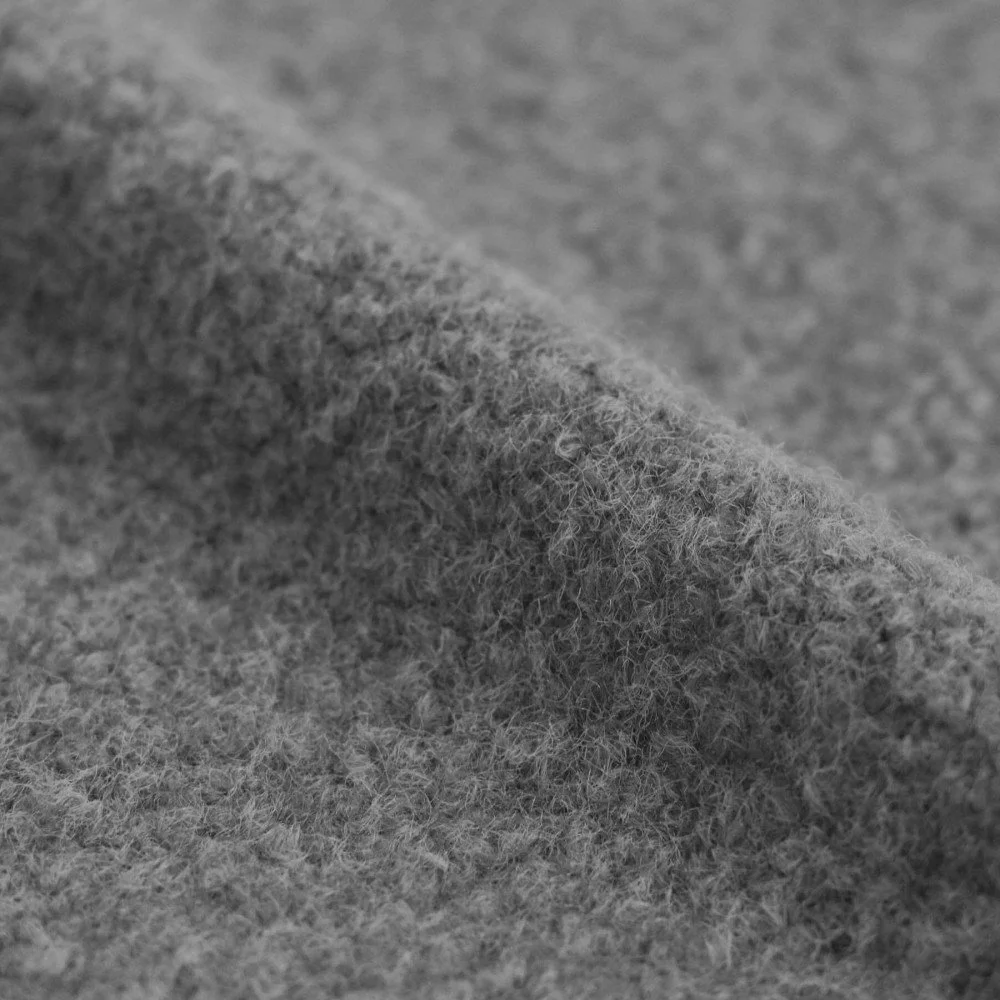
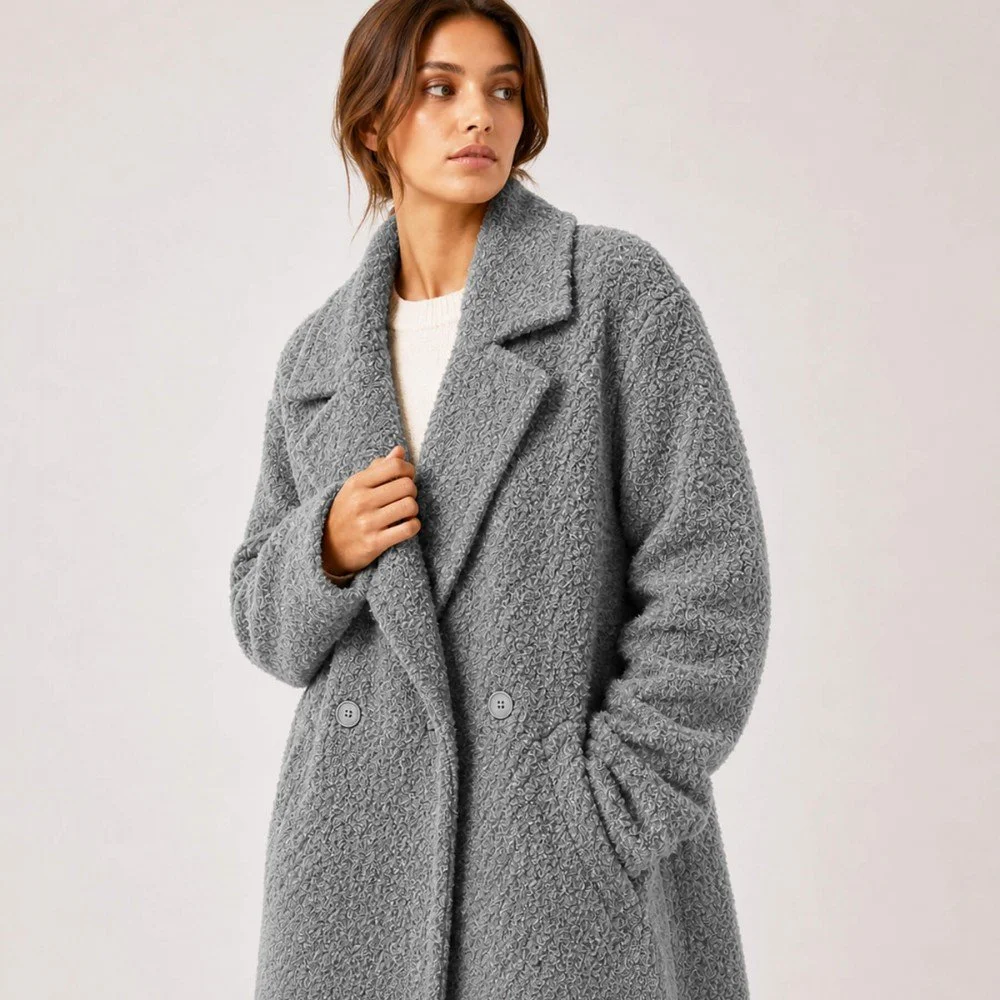
- Bouclé: that curly, woolly texture you see in interior shops. Our guide to bouclé explains what to keep in mind.
- Cotton canvas: sturdy and easy to sew. Ideal for a first cushion, and for cushions that get a lot of use.
- Teddy: warm and soft for winter. Use a 90/14 needle and a slightly longer stitch.
Stretch fabrics such as jersey are trickier: the envelope soon starts to gape.
The free pattern
The pattern is two A4 pages. Page 1 has the measurements, the cutting layouts for the cover and the inner cushion, and the stuffing table. Page 2 shows how to hem, how to layer the pieces and how to get neat corners. Print at 100 % and check that the square measures exactly 5 × 5 cm.
Step 1: cutting
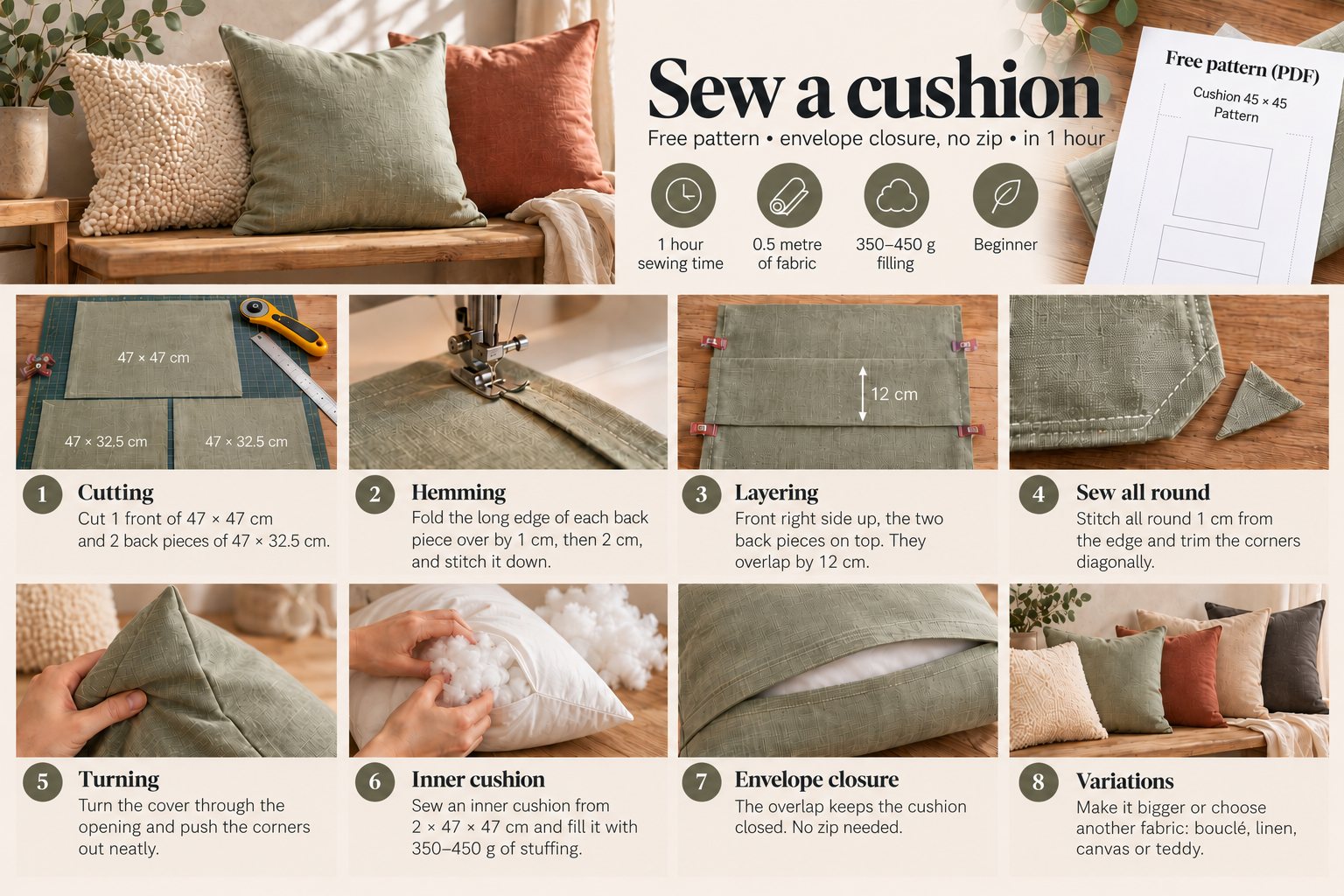
All pieces are rectangles, so you draw them straight onto the fabric with a ruler. The 1 cm seam allowance is already included, as is the hem on the back pieces.
| Piece | Size | Qty | Fabric |
|---|---|---|---|
| A Front | 47 × 47 cm | 1× | cushion fabric |
| B Back piece | 47 × 32.5 cm | 2× | cushion fabric |
| C Inner cushion | 47 × 47 cm | 2× | cotton |
Lay A and the two B pieces side by side across the width of the fabric: together that's 112 cm. So half a metre is enough, even with 135 cm wide linen.
Tip for bouclé, velvet and teddy: these fabrics have a nap, a direction in which the pile lies. Cut all pieces in the same direction. That takes more fabric: get 1 metre in that case.
Step 2: hem the back pieces
Each back piece gets a neat hem along one long edge, because that edge will be visible at the envelope. Fold the edge 1 cm to the wrong side, then fold it again by 2 cm and press it flat. Stitch close to the inner fold. Do the same with the second back piece.
Step 3: layering
- Lay the front A on the table right side up.
- Place the first back piece B on top right side down, hem towards the middle, outer edges level with the top of A.
- Place the second back piece the same way from the bottom edge. The two hems now overlap by about 12 cm.
- Pin all round, with extra pins where the pieces overlap.
Step 4: sew all round
Stitch all round 1 cm from the edge. At each corner leave the needle down, lift the presser foot and turn the work. Backstitch a few times over the overlap: that's where most of the strain goes. Then trim the four corners diagonally, about 3 mm from the seam. If your fabric frays a lot, like linen, finish the seam allowance with a zigzag stitch or an overlocker.
Step 5: turning
Turn the cover right side out through the envelope. Gently push the corners out with a knitting needle or the end of a pencil, and press the edges flat. Careful with bouclé and teddy: don't press them, or only from the wrong side on a low setting.
Step 6: sew and fill the inner cushion
Place the two C pieces right sides together and stitch all round 1 cm from the edge. Leave an opening of about 15 cm on one side. Trim the corners and turn the inner cushion.
Now fill it with polyester stuffing. Tease the stuffing apart first and work it into the corners in small tufts before filling the middle. That way you get no empty corners and no lumps. Close the opening by hand with an invisible ladder stitch, or topstitch it close to the edge.
Slide the inner cushion through the envelope into the cover, and you're done.
How much stuffing do you need?
This is the question we get most. Below are guideline amounts for loose polyester stuffing. Soft means a cushion you can nicely dent, firm means a full, plump cushion. Start with the lower amount and add more until it feels the way you want.
| Cushion (finished size) | Soft | Firm | Front A | Back piece B (2×) |
|---|---|---|---|---|
| 30 × 50 cm (lumbar) | 200 g | 300 g | 52 × 32 cm | 32 × 35 cm |
| 40 × 40 cm | 250 g | 350 g | 42 × 42 cm | 42 × 30 cm |
| 45 × 45 cm | 350 g | 450 g | 47 × 47 cm | 47 × 32.5 cm |
| 50 × 50 cm | 450 g | 550 g | 52 × 52 cm | 52 × 35 cm |
| 60 × 60 cm | 600 g | 800 g | 62 × 62 cm | 62 × 40 cm |
The inner cushion C is always the same size as the front A. On the 30 × 50 cm lumbar cushion, the hem sits on the short edge of the back pieces, so the envelope runs vertically.
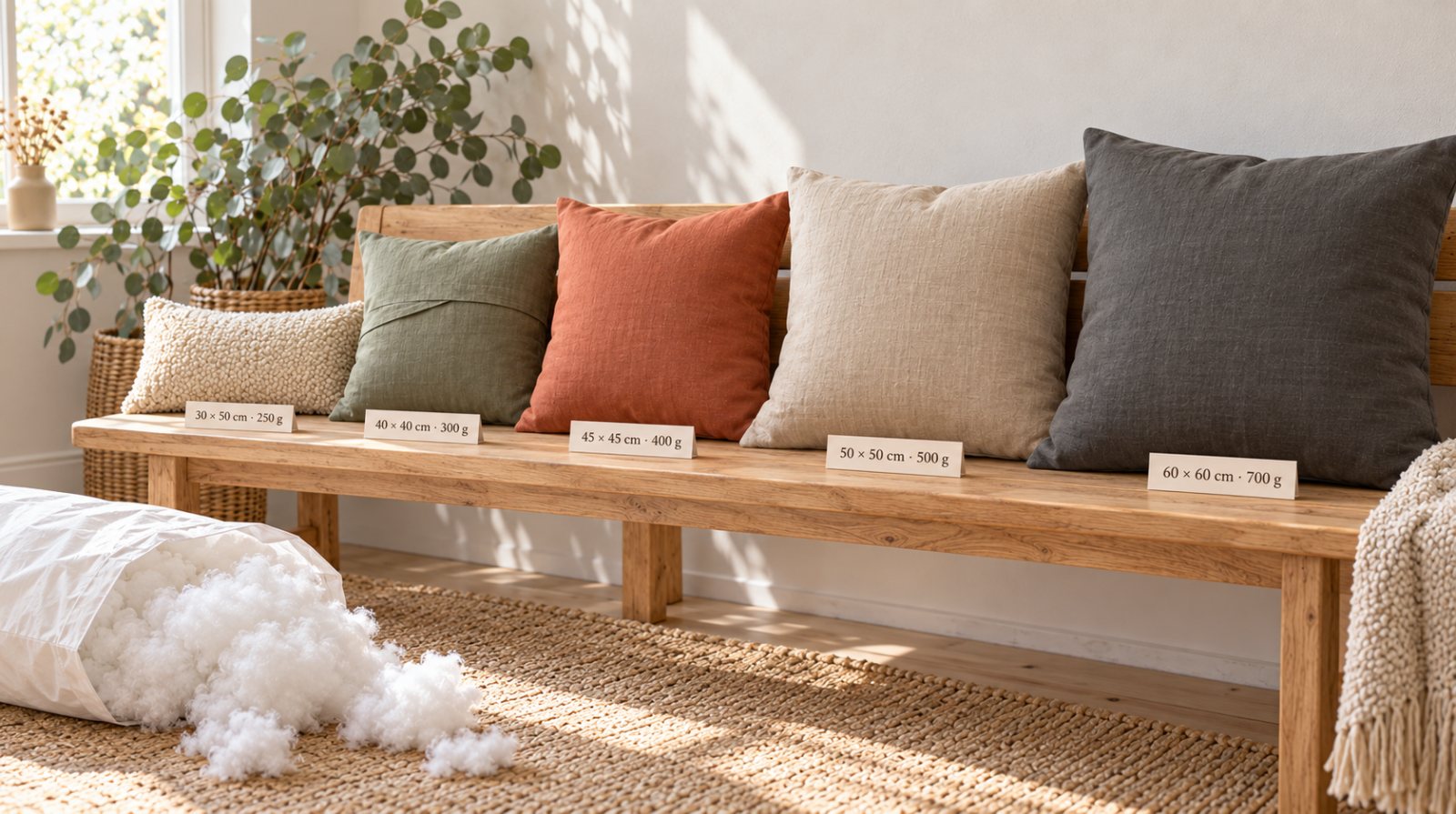
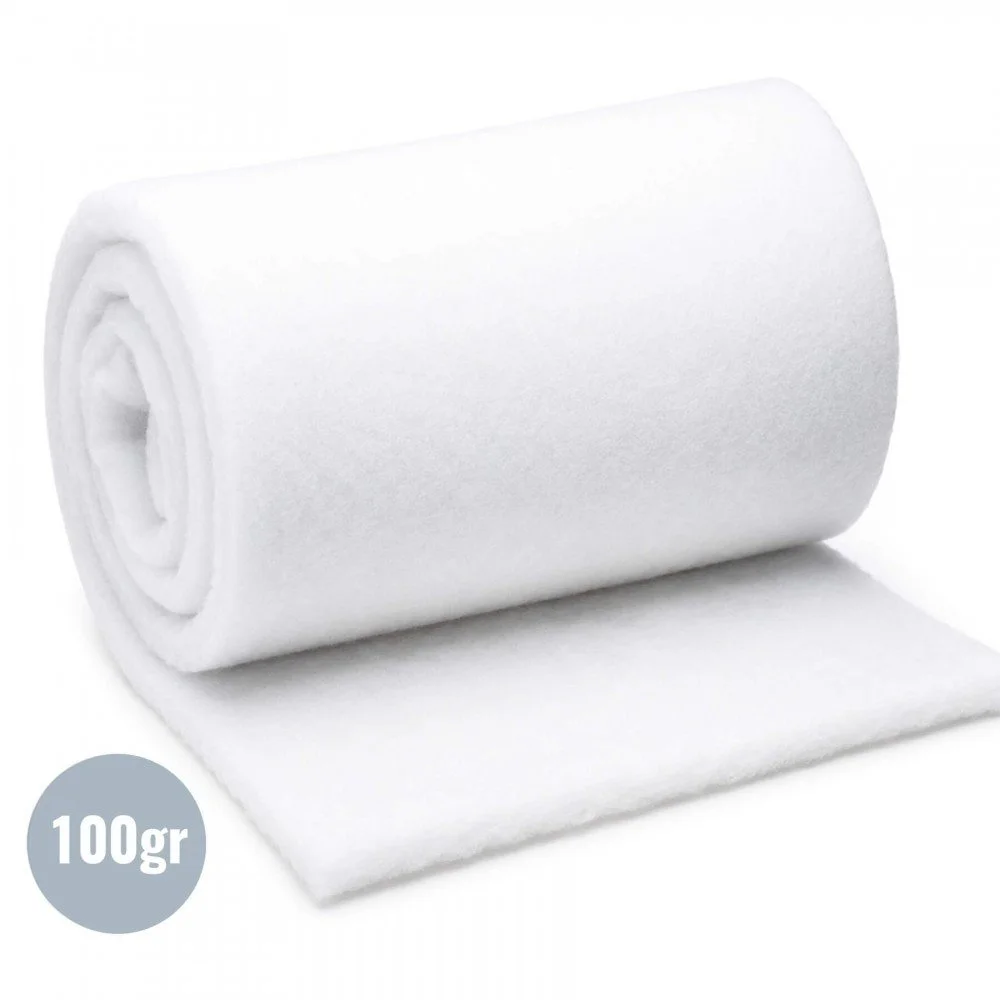
Loose stuffing or wadding on a roll? For a cushion, use loose stuffing: it fills every corner and stays springy. Wadding on a roll is meant for quilts, jackets and flat parts. Our guide to fiberfill and polyester wadding explains the difference.
Variations on the same pattern
- Another size: use the measurements in the table above. For any size: front = finished size + 2 cm, and together the back pieces are 12 cm overlap plus 2 × 3 cm hem larger than the front.
- With a zip: prefer a closed back? Cut two pieces of 47 × 47 cm and put a 40 cm zip in the bottom seam.
- Two fabrics: bouclé on the front, linen or canvas on the back. It looks luxurious and saves bouclé.
- With piping: sew piping cord all round between the front and back for a crisp edge.
Download the free pattern (PDF)
Frequently asked questions
How much stuffing do I need for a 45 × 45 cm cushion?
About 350 grams of loose polyester stuffing for a soft cushion, and about 450 grams for a firm one. A 1000 gram bag is therefore enough for two cushions of this size.
Can I sew a cushion without a zip?
Yes, with an envelope closure. Two back pieces overlap by about 12 cm and keep the inner cushion in place. The cover comes off just as easily as with a zip, and it's much easier to sew.
Why a separate inner cushion?
Loose stuffing straight in the cover falls out of an envelope closure. With an inner cushion the stuffing stays in place, and you can wash the cover on its own.
Can I wash a cushion filled with polyester stuffing?
Polyester stuffing can be washed at 40 °C, but not tumble dried. Let a washed inner cushion dry thoroughly and plump it up afterwards. Wash the cover separately, following the care instructions of the fabric.
How much fabric do I need for a cushion cover?
For a 45 × 45 cm cushion, 0.5 metre of fabric at least 115 cm wide is enough. If you use a fabric with a nap, such as bouclé, velvet or teddy, get 1 metre so you can cut all pieces in the same direction.
≥ 100 Metre roll price € 5.50 € 4.00 Excl. Tax.
≥ 10# € 6.50 Incl. Tax.
≥ Need more? Email us for a quote.
Wholesale prices for this item are directly being applied. Intra-community supply? Register with your VAT number and Select "Wholesale quotation" as payment option.
≥ 100 Metre roll price € 5.50 € 4.00 Excl. Tax.