























What Is Tencel? The Fabric Trees Are Actually Proud Of
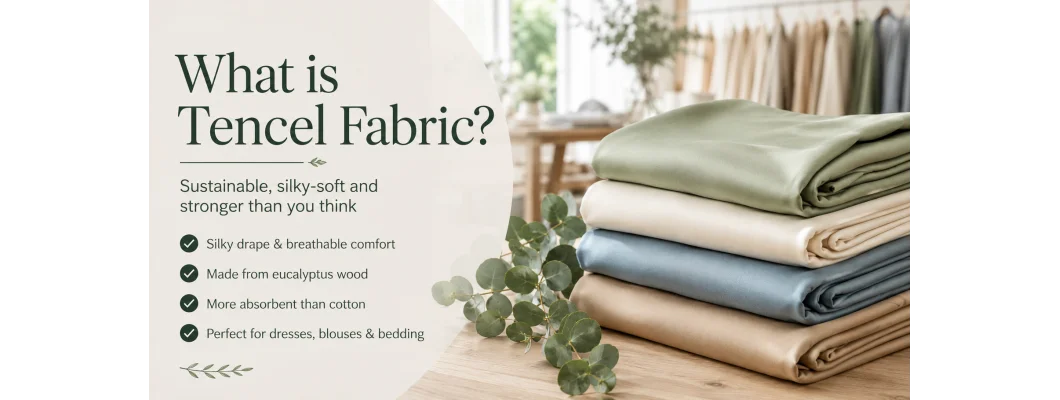
Tencel gets far less credit than it deserves. Everyone's talking about linen this and organic cotton that, while Tencel just sits quietly on the shelf, doing the actual hard work of being soft, breathable and kind to the planet at the same time. If you ask me, that's a shame, because once you've sewn with it, most other drapey fabrics start to feel a bit disappointing.
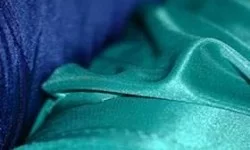
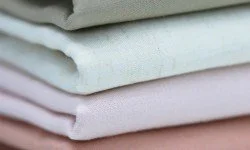
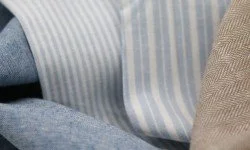
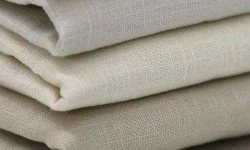
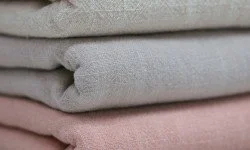
I get why people overlook it. The name sounds a bit clinical, like something out of a chemistry lab rather than a fabric you'd want against your skin. But Tencel is basically wood pulp turned into one of the silkiest, most eco-conscious fibres you can sew with. It sits somewhere between the coolness of linen fabrics and the fluid drape you'd expect from silk, and honestly, I think it deserves a permanent spot in every sewing stash.
What Tencel Actually Is (And Why the Trees Get to Brag)
Tencel is the brand name for lyocell, a fibre made from wood pulp, usually eucalyptus, though sometimes beech or spruce. What makes it special is the production process: the wood pulp gets dissolved in a solvent, spun into fibres, and then that solvent gets recycled and reused in a closed-loop system instead of dumped as waste. Compare that to conventional viscose production, which is notorious for using loads of water and chemicals that often end up polluting rivers, and you start to see why Tencel gets to hold its head up a little higher.
The eucalyptus trees used for Tencel also grow on land that doesn't need irrigation and often isn't suitable for food crops, so it's not competing with farmland. The fibre itself is biodegradable too. So yes, the trees have every right to be smug about it.
Where Tencel Shows Up in Your Fabric Stash
You won't usually find Tencel sold purely under its own name at the fabric counter. Instead, it shows up blended into fabrics you probably already reach for, giving them extra softness, drape and moisture-wicking properties.
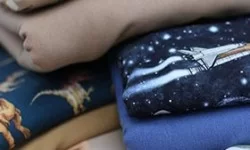
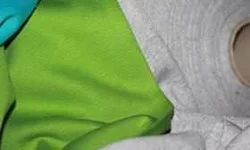
Viscose jersey fabric
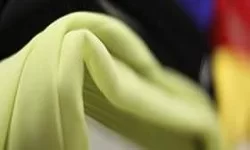
Tencel often gets blended with viscose to create jersey that drapes beautifully but holds its shape better than pure viscose alone. It's the fabric I reach for when a pattern calls for a soft, flowy top that still doesn't sag out of shape after a few wears.
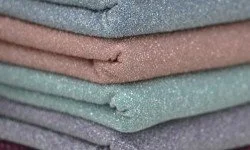
Bamboo jersey fabric
Bamboo and Tencel blends are practically fabric soulmates, both prized for being breathable and gentle on sensitive skin. If you're sewing for someone with eczema or just someone who hates anything scratchy, this combination is worth looking into.
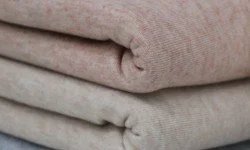
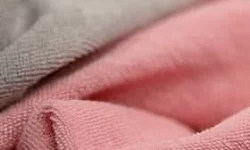
Cotton jersey fabric
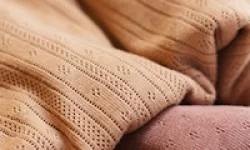
Some cotton jersey blends include a percentage of Tencel to boost the drape and reduce that heavier, sometimes stiffer feel pure cotton can have. It's a subtle upgrade that makes a t-shirt feel more expensive than it actually was.
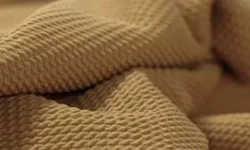
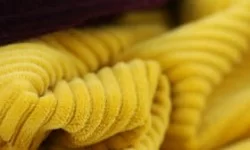
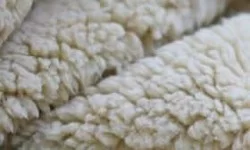
French terry fabric
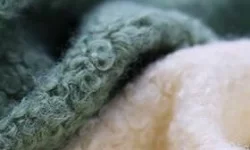
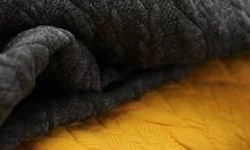
Even cosier fabrics like french terry benefit from a Tencel blend, giving you that brushed, comfortable inside without sacrificing softness on the outside. Great for loungewear that actually feels like a hug.
Practical Tips for Sewing With Tencel Blends
- Use a ballpoint or stretch needle if you're working with a Tencel-jersey blend, since it behaves like knit fabric and a sharp needle can damage the fibres.
- Wash before cutting. Tencel blends can shrink a bit more than you'd expect on the first wash, so pre-washing saves you from an ill-fitting garment later.
- Pin sparingly. Tencel fabrics are often slippery and drapey, so weights and pattern clips work better than pins, which can leave visible holes.
- Cut with sharp scissors or a rotary cutter, because the drape means the fabric shifts easily and you want clean, accurate lines.
- Iron on a low to medium heat with a pressing cloth, since Tencel can scorch more easily than cotton.
- Choose a lightweight thread and a slightly longer stitch length for seams, this keeps the drape intact instead of puckering it.
How to Decide If Tencel Is Right for Your Project
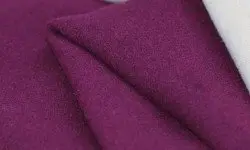
If you're sewing something that needs to drape, like a flowy dress, a wrap top or wide-leg trousers, Tencel blends are worth prioritising over stiffer cottons. It's also a smart pick for anyone sewing summer clothing, since the moisture-wicking properties keep you cooler than most synthetic alternatives.
If your project calls for more structure, like a tailored jacket or something that needs to hold a crisp shape, you're better off looking at fashion fabrics with more body, or even something from the deco fabrics range if you're working on home projects rather than garments. Tencel is a drape fabric through and through, so don't force it into a structured silhouette.
Why I Keep Coming Back to Tencel
Once you understand what Tencel actually is, it's hard not to respect it. It's not just another eco-buzzword thrown onto a fabric label, it's a genuinely well-made fibre that happens to feel incredible against your skin too. Next time you're browsing our new fabrics, keep an eye out for Tencel blends. Once you've sewn with one, you'll understand why the trees have every reason to be proud.
FAQ
Is Tencel the same as lyocell?
Yes, Tencel is actually a brand name for a specific type of lyocell fibre produced by the Lenzing company. All Tencel is lyocell, but not all lyocell is Tencel, since other manufacturers make lyocell under different names.
Is Tencel more sustainable than cotton?
In many ways, yes. Tencel production uses significantly less water than conventional cotton farming and relies on a closed-loop process that recycles the chemicals used to break down the wood pulp, which cotton production doesn't offer.
Can I sew Tencel with a regular sewing machine?
Absolutely, a regular home sewing machine handles Tencel and Tencel blends just fine. Just make sure you're using the right needle for the specific weave or knit, since a woven Tencel needs a different needle than a Tencel jersey blend.
Does Tencel wrinkle easily?
Less than linen, but more than polyester. Tencel wrinkles moderately, though the wrinkles tend to hang out naturally because of the fabric's drape, so you often don't need to iron it as much as you'd think.
Is Tencel good for sensitive skin?
Very much so. The smooth fibre surface means less friction against the skin, which makes it a common choice for anyone with eczema, allergies or general sensitivity to rougher fabrics.