
Natural vs Synthetic Fibres: What Really Matters When You Choose Fabric
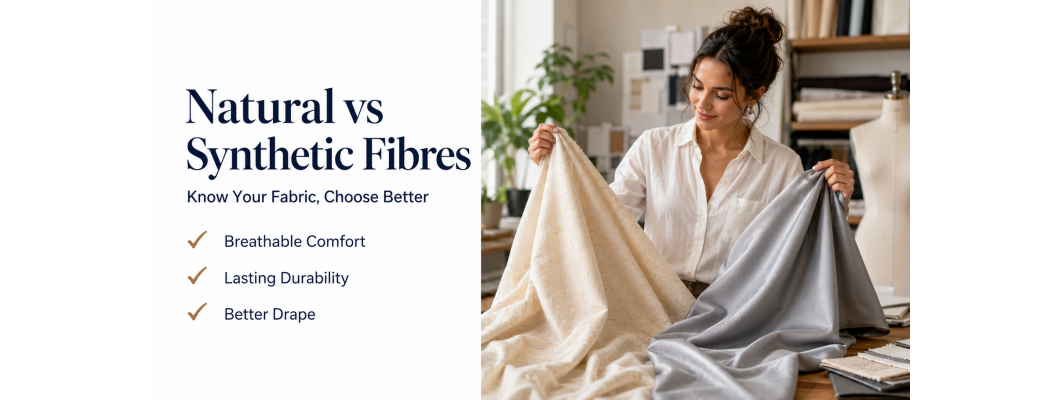
You're standing in front of two fabrics that look almost identical, feel similar under your fingers, and cost roughly the same. One is 100% cotton, the other is a cotton-poly blend. Which one do you grab? This is the moment so many of us hesitate at the cutting table, and honestly, it's a fair question to sit with. Natural versus synthetic fibres isn't just a technical label on a swatch card, it decides how your finished piece breathes, drapes, wrinkles, and survives the wash. Once you understand the basics, picking fabric for your next project stops being a guessing game.
I've spent years sorting through bolts of fashion fabrics, and I still see people choose based on price or print alone. Nothing wrong with that, but if you've ever made a lovely top that turned out to feel like a plastic bag against your skin in summer, you already know why fibre content matters. Let's talk about what's actually going on inside the yarn.
What's the Real Difference, Anyway?
Natural fibres come from plants or animals - think cotton, linen, wool, silk. They grow, they're harvested, spun into yarn, and woven or knitted into fabric. Because they're organic material, they breathe. They absorb moisture, they age with character, and they tend to soften over time rather than pill apart.
Synthetic fibres are man-made, mostly derived from petroleum, things like polyester, nylon, acrylic, elastane. They're engineered in a lab to behave in specific ways: stretch and bounce back, resist wrinkles, dry fast, hold colour brilliantly. There's also a middle category people often forget - regenerated fibres like viscose or bamboo, which start from natural cellulose (wood pulp, bamboo plant) but go through a chemical process to become fibre. They're not quite natural in the traditional sense, but they're not petroleum-based plastic either.
None of these categories is automatically "better." A polyester scuba fabric that holds structure for a fitted dress does something cotton simply can't do. And a linen shirt that gets softer with every wash does something polyester can't replicate. It's about matching fibre to purpose.
The Main Variants You'll Actually Work With
Cotton Jersey Fabric
This is the classic all-natural knit, soft, breathable, and forgiving on the skin. It's what you reach for when you're making t-shirts, baby clothes, or anything that touches sensitive skin for hours. It does wrinkle and it does shrink a bit in the wash, but that's the trade-off for genuine breathability.
Scuba Crepe Jersey Fabric
Almost entirely synthetic, and proud of it. This fabric holds shape in a way natural fibres never will, making it brilliant for structured dresses, pencil skirts, or anything where you want the fabric itself doing the tailoring work instead of relying on darts and boning.
Viscose Jersey Fabric
The in-between option. Made from wood pulp, so it drapes like a dream and feels silky against the skin, closer to natural fibre behaviour, but it's manufactured, so you get more consistency in the weave than you would with raw cotton.
Linen Fabrics
The purest natural option for warm weather. It creases the moment you look at it, and that's actually part of its charm, a lived-in, relaxed texture that no synthetic can convincingly fake. If you're sewing summer trousers or a loose shirt, this is where natural fibre earns its reputation.
Polar Fleece Fabric
Fully synthetic, and it makes no apologies. It's warm, lightweight, dries fast, and doesn't felt or shrink the way wool might. For winter jackets and blankets, this is synthetic fibre doing exactly what it was designed to do.
Practical Tips When You're Sewing With Either
- Always prewash natural fibre fabrics before cutting - cotton and linen can shrink 3-5%, synthetics barely move.
- Use a lower iron setting on synthetics; too much heat and you'll melt or glaze the fibres instead of pressing them.
- Natural fibres take pins and needles more forgivingly, synthetics like scuba or ottoman rib can show pin holes permanently.
- Choose polyester or blends for activewear and swimwear where moisture-wicking and stretch recovery matter.
- Choose cotton, linen, or viscose for anything worn close to skin for long periods, especially in warm climates.
- Check your needle: a ballpoint or stretch needle works best on knits like rib knit jersey fabric, regardless of fibre content.
How to Actually Decide
Ask yourself what the garment needs to do. A cosy loungewear set benefits from teddy fleece fabric, warm, plush, synthetic through and through, and nobody's complaining about breathability on the sofa. A fitted top for a hot summer day wants bamboo jersey fabric or cotton, something that lets your skin breathe. If you're after texture and visual interest, waffle knit jersey fabric or pointelle fabric give you that without sacrificing natural fibre comfort. Don't be afraid of blends either, a small percentage of elastane in an otherwise natural fabric, like in ottoman rib jersey fabric, gives you comfort and recovery without losing the natural feel entirely.
The Bottom Line
There's no universal winner between natural and synthetic fibres, only the right fibre for the right project. Once you start reading fibre content labels the way you'd read an ingredients list, choosing fabric gets so much easier. If you want to feel the difference yourself, browse our fabric outlet and compare a few swatches side by side, nothing teaches fibre behaviour faster than actually running it through your fingers.
FAQ
Is cotton always better than polyester for clothing?
Not always. Cotton breathes better and feels softer against skin, but polyester resists wrinkles and holds shape, which is exactly what you want for structured or activewear pieces. It depends entirely on what the garment needs to do.
Why does viscose feel so soft if it's not fully natural?
Viscose starts from wood pulp, a genuinely natural raw material, but goes through a chemical process to become fibre. That process gives it a smooth, silky hand that behaves more like natural fibre than plastic-based synthetics.
Do synthetic fabrics shrink less than natural ones?
Yes, generally. Synthetic fibres like polyester barely shrink in the wash, while natural fibres like cotton and linen can shrink several percent the first time they're washed. Always prewash natural fabric before cutting your pattern pieces.
Can I mix natural and synthetic fabrics in one garment?
You can, and many sewists do. Just make sure both fabrics have similar care requirements and weight, otherwise one might shrink or stretch differently than the other after washing.