Choosing Fabric for Hoodies and Sweaters: Brushed Fleece, GSM and Composition Explained
Last week a buyer called us about a new hoodie line and opened with: "just send me your fleece." Fair enough, except we sell about six different things people casually call fleece, and they behave completely differently once you're cutting three hundred garments a week. That conversation is basically why we're writing this. Fabric for hoodies and sweaters is one of the biggest questions we get from retailers and ateliers, right up there with the Deyo RFQ that seems to land in our inbox every other week asking the exact same three things: weight, thread count, composition. So let's go through it the way we'd go through it at the counter, question by question, the way it actually comes up with clients.
The questions we actually get asked at the counter
What GSM should I even be looking at for a hoodie?
This is always the first question, and honestly it should be. GSM tells you more about how a hoodie will feel and hold up than almost anything else on the spec sheet. For hoodies and sweatshirts you're generally in the 280 to 380 g/m² range. The lighter end, closer to 280, gives you a hoodie that drapes more and works for warmer seasons or layering pieces. Push toward 380 and you get real structure, a garment that holds its shape on the hanger and feels substantial when a customer picks it up in store. If you're running a year-round collection, it's worth stocking both ends rather than settling on one weight for everything. Buyers who try to make a 300 gsm fabric do the job of a 380 gsm winter hoodie usually end up with returns about the garment feeling thin.
What's the actual difference between french terry and brushed-back fleece?
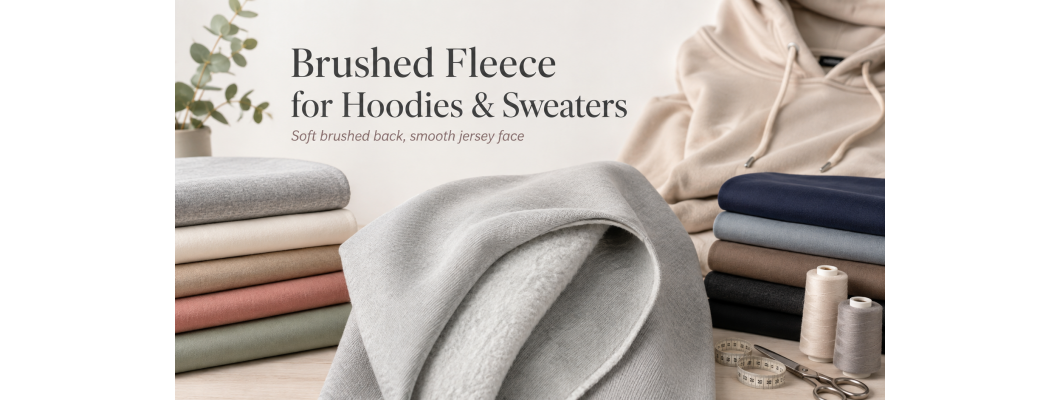
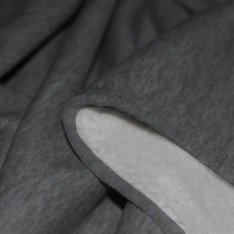
This one trips up a lot of people who are new to sourcing knits. Both are technically fleece-family fabrics built on a similar loop structure, but the back is finished differently. French terry keeps its looped back untouched, so you get that visible loop texture on the inside, a slightly cooler hand feel, and a fabric that suits lighter sweaters, joggers and unisex basics where you don't want bulk. Brushed-back fleece takes that same loop structure and runs it through a brushing process that opens up the fibres into a soft, napped surface. That's your classic cosy hoodie lining. If a client asks for "that soft fuzzy inside," they mean brushed-back, not terry. Worth showing both side by side at the counter because the difference is obvious the second someone touches them, but hard to explain over the phone.
Should I go with 2-thread or 3-thread construction?
Thread count refers to how many yarns are knitted together to build the fabric, and it directly affects weight and warmth. A 2-thread construction is lighter, drapes more, and tends to sit at the lower end of that 280 to 380 gsm window. It's a good call for transitional pieces, spring or autumn sweaters, anything that shouldn't feel heavy. A 3-thread construction adds a third yarn specifically to build up the brushed fleece backing, which is what gives you the thicker, warmer winter hoodie feel and pushes you toward the higher GSM numbers. If a client's brief says "outdoor winter hoodie," 3-thread is almost always the right answer. If it says "lightweight zip-up for spring," steer them to 2-thread before they overspend on a fabric that's warmer than their customer needs.
Cotton or cotton blend, and does it matter for cutting?
It matters more than people expect, mostly for consistency across a production run. A 100% cotton brushed fleece gives you the most natural hand feel and the best breathability, which matters if you're selling into a market that reads labels. An 80/20 cotton-poly blend gives you more dimensional stability across a large cutting table, meaning less shrinkage variance between rolls and a bit more resistance to pilling over repeated washes, which matters if your buyer is running the garment through a lot of wear-and-wash cycles. For a retailer choosing between the two, the honest answer is: 100% cotton for a premium line where feel sells the garment, a blend for a volume line where consistency between batches saves you headaches at the cutting table. Neither is objectively better, they solve different problems.
What about something between a hoodie fabric and an actual coat fabric?
We get this from buyers doing heavier outerwear-adjacent pieces, like a structured zip hoodie that's almost a jacket. That's usually when we point them toward our brushed flannel coat and jacket fabric instead of pushing a fleece past its comfort zone. It's a different construction entirely, woven rather than knitted, and it gives you the structure a heavier outerwear piece needs without trying to force a sweatshirt fabric to do a coat's job.
What we usually tell people before they place the order
Before any client commits to a run, we tell them the same thing: order a swatch card across a few weights and both thread constructions before you commit to a full roll. GSM numbers on paper and GSM in your hand are two different experiences, and the brushed hand feel especially needs to be touched, not described. If you're building out a fuller knitwear range alongside your hoodie fabric, it's also worth browsing our wider fleece fabrics collection and our jersey fabrics range while you're at it, since a lot of hoodie collections pair a brushed fleece body with a jersey-based rib or trim.
FAQ
Is a higher GSM always warmer?
Generally yes within the 280 to 380 g/m² range we work with, but construction matters too. A 3-thread brushed fleece at a mid-range GSM can feel warmer than a 2-thread fabric at a slightly higher GSM, because the brushed backing traps more air against the skin.
Can I use french terry for a hoodie instead of brushed fleece?
Yes, plenty of unisex and streetwear-style hoodies use french terry for a lighter, less bulky result. It won't give you the same cosy brushed interior, so it depends on the positioning of the garment.
Does 100% cotton shrink more than a cotton-poly blend?
100% cotton fabrics generally show more shrinkage variance than blends, which is exactly why blends are popular for large production runs where consistent measurements across batches matter more than the purest natural hand feel.

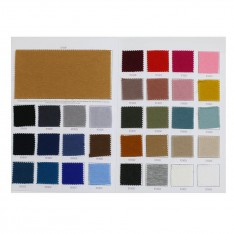
31 Different Colors.