
Mercerised Cotton vs Regular Cotton: What's the Real Difference
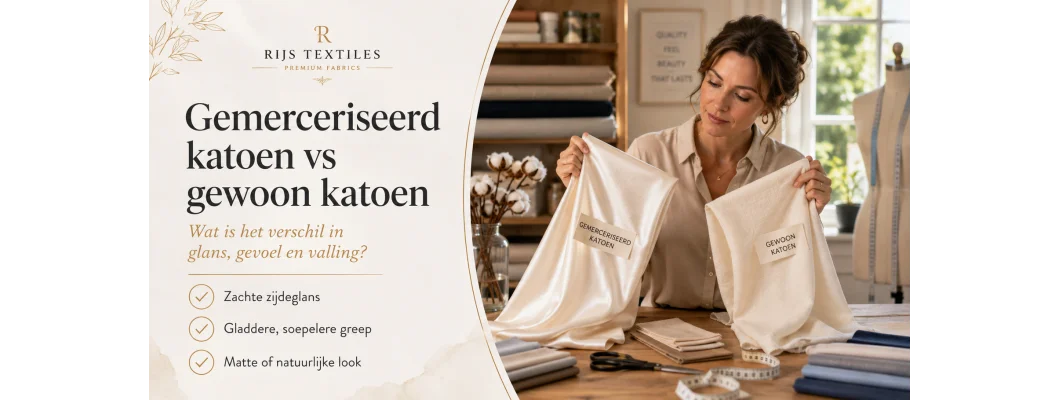
One of the questions we get asked constantly at the shop is: what actually is the difference between mercerised cotton and regular cotton, and does it matter for what I'm making? It's a fair question, because on the bolt they can look almost identical. But once you get your hands on both, and once you start sewing with them, the differences show up fast. In our fashion fabrics range alone we carry a good mix of both, so let's walk through how to pick the right one for your project.
Do you want that subtle sheen or a flat matte look?
This is usually the first thing people notice. Mercerising is a finishing process where the cotton yarn is treated with a chemical bath under tension, which smooths out the fibre surface and makes it reflect light differently. The result is a soft silky sheen instead of the flat, matte surface you get with plain cotton. In our range, 45 of the mercerised articles carry that soft silky sheen, while the plain cotton pieces are mostly matte, around 80 articles. If you want a blouse or dress fabric with a bit of quiet shine, something that catches the light without looking like polyester, go mercerised. If you want that classic, no-fuss cotton look for a shirt or a craft project, stick with regular.
What about that smoother hand feel?
The mercerising process also tightens the weave structure slightly and gives the surface a silkier touch. That's why mercerised cotton often gets described as having a silk finish, and in our assortment 12 articles are labelled exactly that way. Run a plain cotton swatch and a mercerised one between your fingers and you'll feel it immediately: one is crisper and drier, the other glides more. For baby clothes or anything worn close to the skin, that smoother finish is worth chasing.
Does your project need to hold its shape or drape softly?
Both types in our range are no-stretch fabrics, so you're not choosing based on stretch here. But drape is a different story. Most of our cotton, 128 articles, has a medium drape, which is a nice in-between: enough structure to hold a seam, enough movement to hang nicely on a body. A smaller group, 9 articles, has fluid drape, which flows more and works well for softer silhouettes. If your pattern calls for a fitted shirt with clean lines, medium drape cotton, mercerised or not, will behave predictably. If you're after something that moves more like a soft dress, look at the fluid drape pieces first.
Is opacity a dealbreaker for your design?
Most cotton in our shop, 116 articles, is slightly opaque, so you'll want a lining for pale colours or fitted garments where you don't want any shadowing. A smaller set, 12 articles, is fully opaque, handy for structured pieces or home décor projects where you don't want any see-through at all. There's also a group of 9 that's semi-transparent, which some sewists actually seek out for layered blouses or curtains. Hold your swatch up to a window before cutting, that's the fastest way to know what you're really working with.
Is this going on a garment, in your home, or into a craft?
Cotton in our range is genuinely flexible in use. It's suitable for blouses, dresses, shirts, skirts, home decoration, bedding, children's clothing, and general crafts, though not every article covers every category, so check the product page for the specific piece you've picked. If you're making bedding or curtains, opacity and weight matter more than sheen. If you're making a fitted shirt, the weave and drape take priority. And if it's a craft project like a tote bag or patchwork, you've got more room to just pick whatever colour or finish you love.
Which weave structure suits your pattern?
Here's one that surprises people: not all our cotton is a simple plain weave. 84 articles use plain weave, the basic over-under structure most people picture when they think of cotton. But 53 articles are double gauze, two layers of loosely woven cotton lightly connected, which gives a softer, slightly textured result that's brilliant for lightweight summer garments or swaddle-style projects. If your pattern is a classic button-up shirt, plain weave is your safer bet for crisp seams. If you want something breathable and a bit more relaxed, double gauze is worth a look, and you'll find several of those pieces are also mercerised, so you get the softness of the weave plus that subtle sheen.
So, which one do you pick?
Go mercerised cotton when you want sheen, a smoother hand, and a slightly more refined finish on blouses or dresses. Go plain cotton when you want that familiar matte look and don't need the extra shine, especially for shirts, skirts, or craft work. Either way, cotton in our shop is lightweight, breathable, and washes at a gentle 30 degrees, so it's forgiving for a first-time sewist and reliable for someone who's cut through hundreds of metres already. Browse the full range in our fashion fabrics collection and feel the difference yourself before you cut.
FAQ
Is mercerised cotton stronger than regular cotton?
The mercerising process tightens the fibre structure and smooths the surface, which does make the yarn more resistant to abrasion and gives it a slight sheen. It doesn't change the fibre content itself, both are still 100% cotton, it's a finishing treatment applied to the yarn.
Can I use mercerised cotton for a fitted blouse?
Yes, that's actually one of its best uses. The medium drape and soft silky sheen give a blouse a slightly dressier look without adding any stretch, so your pattern pieces behave predictably when cutting and sewing.
Does mercerised cotton need special care when washing?
No, it washes the same as our regular cotton, at 30 degrees. Just treat it gently like any lightweight woven fabric and it'll keep its sheen for a long time.
What needle should I use for cotton fabric?
A universal needle in the 70/10 to 80/12 range works well for both mercerised and regular cotton in our range, since they're lightweight to ultra light weight fabrics that don't need anything heavier.