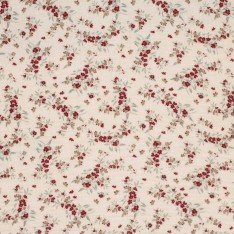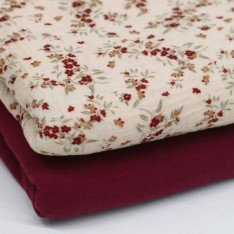
What Is Muslin Fabric? A Baby Blanket Project From Start to Finish
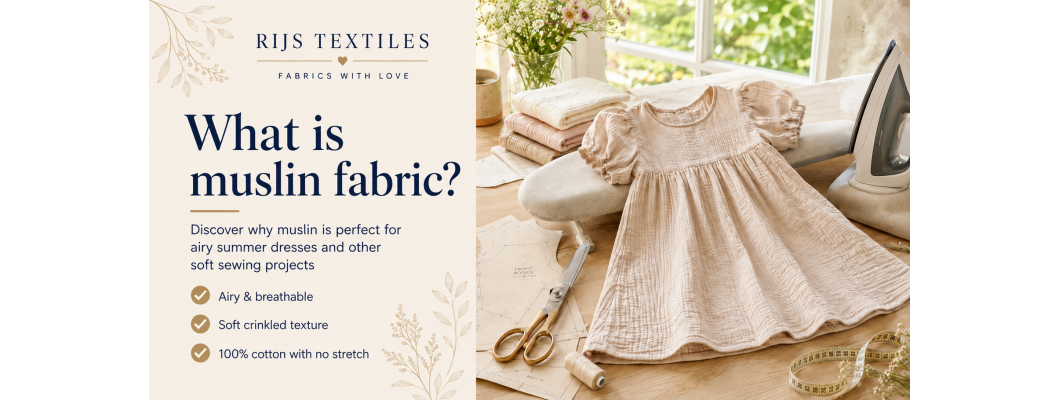
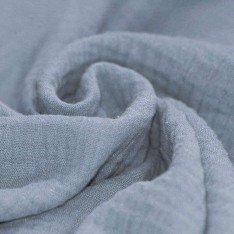
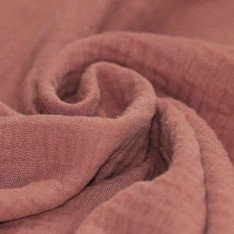
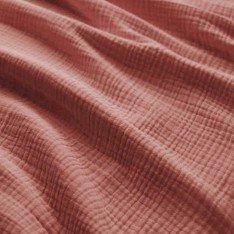
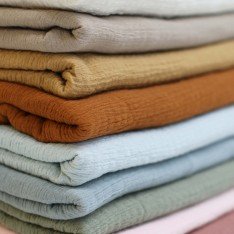
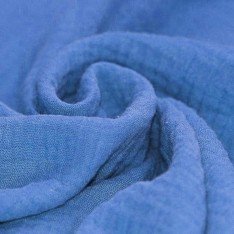
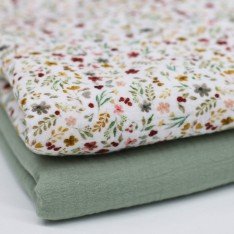
Picture a stack of baby blankets folded on the table, edges finished with a narrow hem, the fabric so light you can see your hand through it if you hold it up to the window. That soft, slightly crinkled texture is the giveaway. This is muslin fabric, or rather its double layer cousin, double gauze, and it's one of the most satisfying materials to turn into a finished project in an afternoon. We're going to make a simple baby blanket with it, and along the way I'll explain exactly what makes this fabric tick.
If you've browsed our fashion fabrics section you've probably already spotted muslin between the cottons. It's not a niche item. We carry 53 active articles of it, and every single one is 100% cotton, woven in a double gauze construction, meaning two thin layers of gauze are stitched together at intervals during weaving rather than sewn afterward. That's what gives it body without adding stiffness.
The Fabric Choice
For a baby blanket you want something breathable, soft against skin, and forgiving if it gets washed a hundred times in its lifetime. Muslin ticks all of those boxes. Ours has a high breathability rating across the whole range, which matters more than people think for babies who overheat easily under blankets. The weight sits at 130 g/m2, light enough to drape softly over a small body without feeling like a duvet.
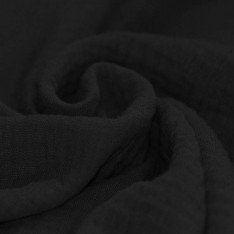
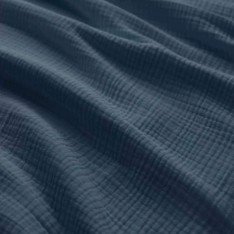
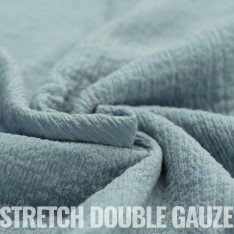
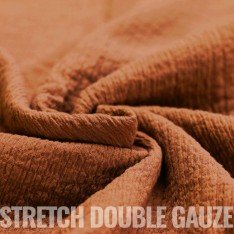
The weave itself is doubled, so even though it's light, it's not see-through in the way a single layer of gauze would be. We class it as slightly opaque rather than sheer. It has a matte finish and a sandwashed treatment, which is exactly what gives it that lived-in crinkle straight off the bolt. You don't need to break it in. It arrives already soft.
If you're deciding between fabric types for baby items, it helps to compare textures side by side. Muslin has zero stretch, unlike a cotton jersey fabric, so it holds its shape as a flat blanket rather than curling at the edges. If you wanted something with more structure and a linen look instead, our stonewashed linen fabric gives a similar washed softness but with a heavier hand, better suited to cushions than swaddles. For baby clothing specifically though, muslin's drape and softness are hard to beat.
Preparation
Wash your fabric before you cut anything. Muslin shrinks a bit on the first wash as the weave settles, and you don't want that happening after you've hemmed a perfectly square blanket. Run it through a 30°C cycle, which is what we recommend for the whole range, and let it air dry or tumble on low. It'll come out even softer and more crinkled than before, honestly one of the nicer surprises in sewing.
For a standard baby blanket you'll want a generous square, so buy with a bit extra to allow for shrinkage and a clean edge. The fabric comes 135 cm wide, which is handy because it means you can often cut a good sized square without any extra seaming down the middle. Press it flat before cutting. It won't need much, but a quick pass with the iron helps you cut a straight edge.
Sewing It Together
This is genuinely one of the easiest sewing projects around, which is part of why I love recommending it to people still finding their feet with a machine. Use a universal needle in the 70/10 to 80/12 range and a straight stitch with a slightly shorter length than usual, since a fine cotton weave like this can fray at the edges if the stitch is too loose.
A few things to watch for:
- Because there's no stretch in this fabric, you don't need a walking foot or any stretch stitch settings, a regular straight stitch handles it fine.
- Double gauze can slip a little under the presser foot since it's so lightweight. Pin generously or use clips along the folded edge.
- If you're double folding the hem for a clean finish, press each fold with the iron before stitching. It makes an enormous difference to how neat the corners turn out.
Sew a narrow double fold hem around all four sides, mitring the corners if you want something tidier, or just overlapping them if you're short on time. Either way looks charming on a fabric with this kind of texture.
Finishing and Care
Once it's hemmed, give it a final press and wash it again before use, mostly to soften it up further and check nothing puckers. This fabric keeps washing well at 30°C throughout its life, and it actually improves with age, getting softer and slightly more textured each time. Don't tumble dry on high heat repeatedly if you can help it. Low heat or air drying keeps the fibres from getting brittle over years of use.
Because the weave is fairly open despite being doubled, avoid ironing directly on high heat for long periods. A medium setting with a bit of steam is enough to smooth it without flattening that nice sandwashed texture you paid for.
Other Ways to Use the Same Fabric
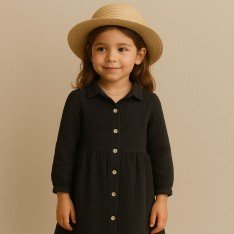
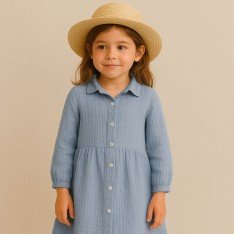
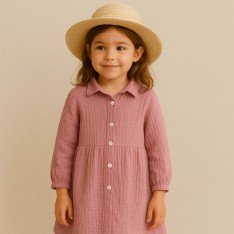
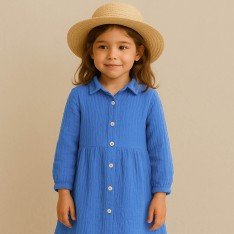
Once you've made one blanket you'll probably want to make five, but muslin doesn't stop there. Because it works across baby clothing, dresses, blouses, tops, shirts, trousers and skirts, the same fabric that made your blanket can just as easily become a lightweight summer blouse or a pair of loose trousers for warm days. The medium drape and matte finish suit garments that need to move with the body rather than cling to it.
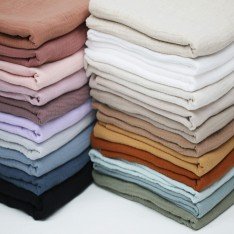
If you want to build a small capsule of breathable summer pieces, pair a muslin top with something structured from our linen fabrics range, or check our new fabrics page for fresh muslin colourways as they land.
FAQ
Is muslin fabric the same as double gauze?
In everyday sewing language, yes, most fabric sold as muslin for garments and blankets today is actually a double gauze weave, two layers of open cotton gauze bound together during weaving. It's different from the stiff, cheap muslin used for dressmaking toiles.
Does muslin fabric need lining?
Not usually. It's slightly opaque rather than fully see-through, so for blankets, tops and trousers it stands on its own. For a fitted dress with a light colour, some sewists add a simple lining, but it's a personal preference rather than a necessity.
Can I use muslin fabric for anything besides baby items?
Definitely. It suits dresses, blouses, shirts and skirts just as well, thanks to its breathability and soft drape. It's a warm weather fabric first and foremost, so think summer garments rather than winter coats.