
Jersey Fabric vs Other Fabrics: What Works Best For Your Project
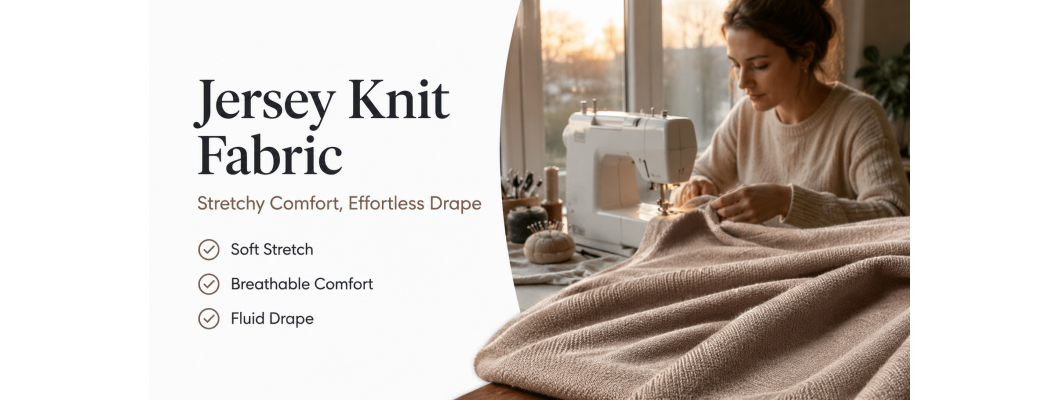
You know that moment when you're standing in front of your stash, pattern in hand, wondering if this project needs a stretchy fabric or something with more structure? You're not alone. Half the emails we get from home sewers start exactly like that. The honest answer is: it depends entirely on what you're making, but understanding the difference between jersey fabric and woven fabrics will save you hours of frustration and quite a bit of unpicking. Once you know what jersey actually does compared to something like linen or a heavier deco fabric, choosing becomes almost instinctive.
At rijstextiles.com we sell a lot of jersey fabrics, and we hear the same questions over and over: why does my t-shirt pattern look wrong in cotton poplin, why does my dress cling in one fabric and hang stiff in another. It all comes down to stretch, drape, and how the fibres are actually constructed. Let's go through it properly, so next time you're at the cutting table you already know what you're reaching for.
What Makes Jersey Different From Woven Fabric
Jersey is a knit fabric, which means it's made by looping yarn continuously rather than weaving two sets of threads over and under each other like you'd find in cotton poplin or linen. That looping structure is exactly why jersey stretches and why it recovers its shape afterwards. A woven fabric like linen fabrics has almost no give at all, which is great for structured trousers or tailored jackets, but completely wrong for a fitted top that needs to move with your body.
This is also why patterns designed for wovens don't work on jersey and vice versa. A woven pattern includes ease built in through darts and seams, while a jersey pattern relies on the fabric's own stretch to hug the body. If you've ever made a top from a knit pattern in the wrong fabric and wondered why it came out tight as a drum, now you know why. Stretch percentage matters more than most beginners realise.
The Different Types of Jersey (And What Each One Is Good For)
Cotton Jersey Fabric
This is the workhorse. Soft, breathable, easy to sew, and forgiving for beginners. It's what most t-shirts, loungewear, and children's clothes are made from. If you're new to sewing with knits, start here before you try anything trickier.
French Terry Fabric
Looped on one side, smooth on the other, this is your go-to for sweatshirts and casual joggers. It has a bit more body than plain jersey, so it holds its shape nicely without feeling stiff.
Ottoman Rib Jersey Fabric
You'll recognise this by its raised horizontal ribs. It's sturdier than standard jersey and holds structure well, which makes it lovely for fitted dresses or trousers that still need a bit of stretch.
Punta di Milano Fabric
This one has a smooth, slightly firmer finish that drapes beautifully without being flimsy. Great choice for tops and dresses that need to look polished rather than casual.
Scuba Crepe Jersey Fabric
Thicker and more structured, scuba holds shape without wrinkling, which is exactly why it turns up in fitted skirts and statement pieces.
Viscose Jersey Fabric
Soft, fluid, and drapey, this is the one for flowy summer dresses and blouses where you want movement rather than structure.
Bamboo Jersey Fabric
Silky soft against the skin and naturally breathable, perfect for babywear and anyone with sensitive skin.
Pointelle Fabric
A pretty openwork knit that adds texture without needing extra trims, lovely for baby clothes and summer tops.
Practical Tips For Sewing Jersey At Home
- Use a ballpoint or stretch needle so you don't snag or split the knit fibres.
- Sew with a narrow zigzag or stretch stitch, never a straight stitch on seams that need to stretch.
- Stabilise shoulder seams with clear elastic or seam tape so they don't sag over time.
- Wash and dry your fabric before cutting, jersey can shrink more than woven fabrics.
- Use plenty of pins or clips rather than pulling the fabric taut while sewing.
- A walking foot makes a huge difference if your machine tends to stretch the layers unevenly.
How To Choose Between Jersey And Other Fabrics
If your project needs movement, comfort, and forgiveness around fit, jersey wins every time. Think leggings, t-shirts, babywear, loungewear. If you're after crisp lines and structure, look at woven options instead, linen for summer pieces with body, or something from our fashion fabrics range for tailored garments. For cosy winter makes, fleece fabrics or a soft teddy fleece fabric beat jersey hands down for warmth. And if home décor is the goal, jersey isn't your fabric at all, that's where our deco fabrics come in.
Wrapping It Up
Jersey and woven fabrics each have their own job to do, and once you understand the difference, picking the right one becomes second nature. Start simple with cotton jersey, build confidence, then branch out into ribs, ottoman, or viscose as your projects get more ambitious. And if you're keeping an eye on your budget, check our fabric outlet and cheap fabrics sections regularly, we restock often and there are proper bargains to be found for anyone sewing on a wholesale-style budget at home.
FAQ
Can I use a regular sewing machine for jersey, or do I need an overlocker?
A regular machine works fine with a stretch stitch or narrow zigzag and a ballpoint needle. An overlocker gives cleaner seams and saves time, but it's not essential to get started.
Why does my jersey fabric curl at the edges when I cut it?
That's completely normal for knits, it's just the structure of the loops relaxing. Weighing down your pattern pieces and cutting on a flat surface helps a lot.
What's the easiest jersey type for a beginner to start with?
Cotton jersey. It behaves predictably, doesn't slip around too much while cutting, and forgives small mistakes better than slippery viscose or thick scuba crepe.
Can I mix jersey with woven fabric in one garment?
Yes, plenty of patterns combine a woven bodice with jersey sleeves or cuffs. Just make sure your seam finish accounts for the different stretch levels so nothing puckers.