
Reupholster a dining chair: which fabric, how many metres and how to fold the corners
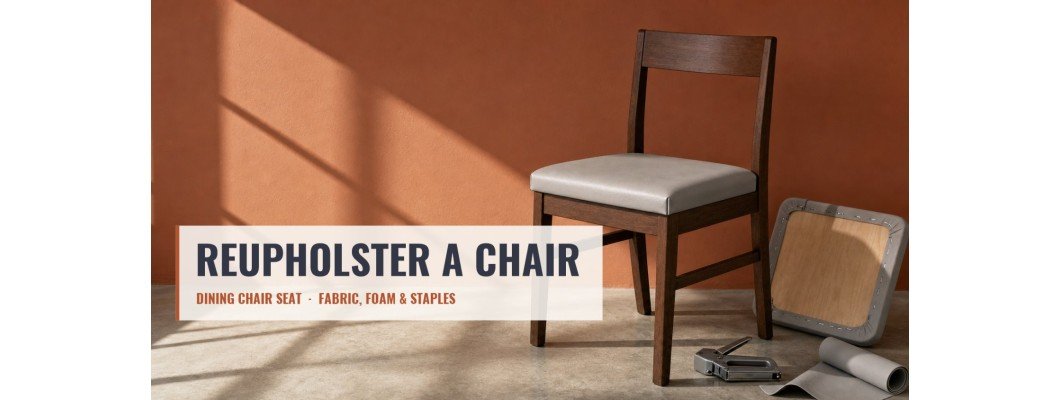
You can reupholster a dining chair with a drop-in seat yourself in about three quarters of an hour per chair. You don't need a sewing machine: the fabric is stapled to the underside of the seat. For each chair you cut a piece that is 10 cm bigger than the seat all round, and one fabric width of 140 cm gives you two seats. For four chairs, 1.4 metres of fabric is enough. In this blog you can read which fabric stands up to daily use, how much you need and how to fold the corners without lumps. The measuring and cutting sheet is free to download.
Download the measuring and cutting sheet (PDF)
Will this work on your chair?
Turn the chair upside down. If you see four screws under the seat that go through the frame into a wooden board, you have a drop-in seat and this is a job a beginner can do. Most dining chairs are made this way.
If the cover is fixed to the frame itself with piping or upholstery nails, or the back is upholstered all the way round, it is a different job. That can be done too, but it is not what this blog is about. For bigger surfaces, such as a headboard or a bed base, read our blog on reupholstering a boxspring.
Which fabric for a dining chair?
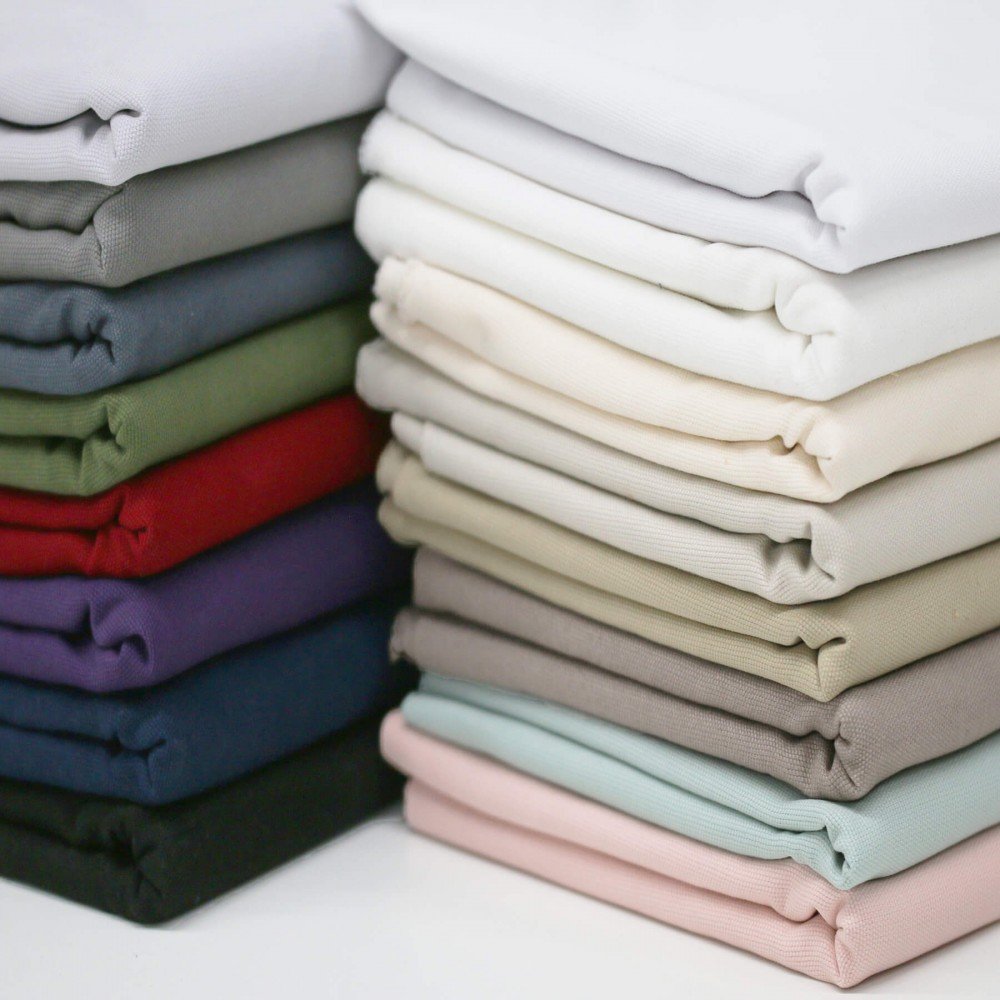
A dining chair gets sat on, spilled on and rubbed every day. The fabric has to be dense and heavy with little or no stretch, or it will go baggy after a few months. A thin cotton or a curtain fabric of 170 g/m² is too light. These are the three fabrics customers use most for chair seats:
| Upholstery leather (faux leather) | Canvas | Bouclé | |
|---|---|---|---|
| Composition | 80% PVC, 20% polyester | 100% cotton | 100% polyester |
| Weight | 650 g/m² | 280 g/m² | 390 g/m² |
| Width | 140 cm | 150 cm | 150 cm |
| Stretch | none | none | a little, across the width |
| Cleaning | wipe with a damp cloth | blot; stains soak into the cotton | blot and brush |
| Folding corners | stiff, takes patience | easy | easy, pleats disappear into the loops |
| Price per metre | €14.95 (incl. VAT) | €12.95 (incl. VAT) | €12.95 (incl. VAT) |
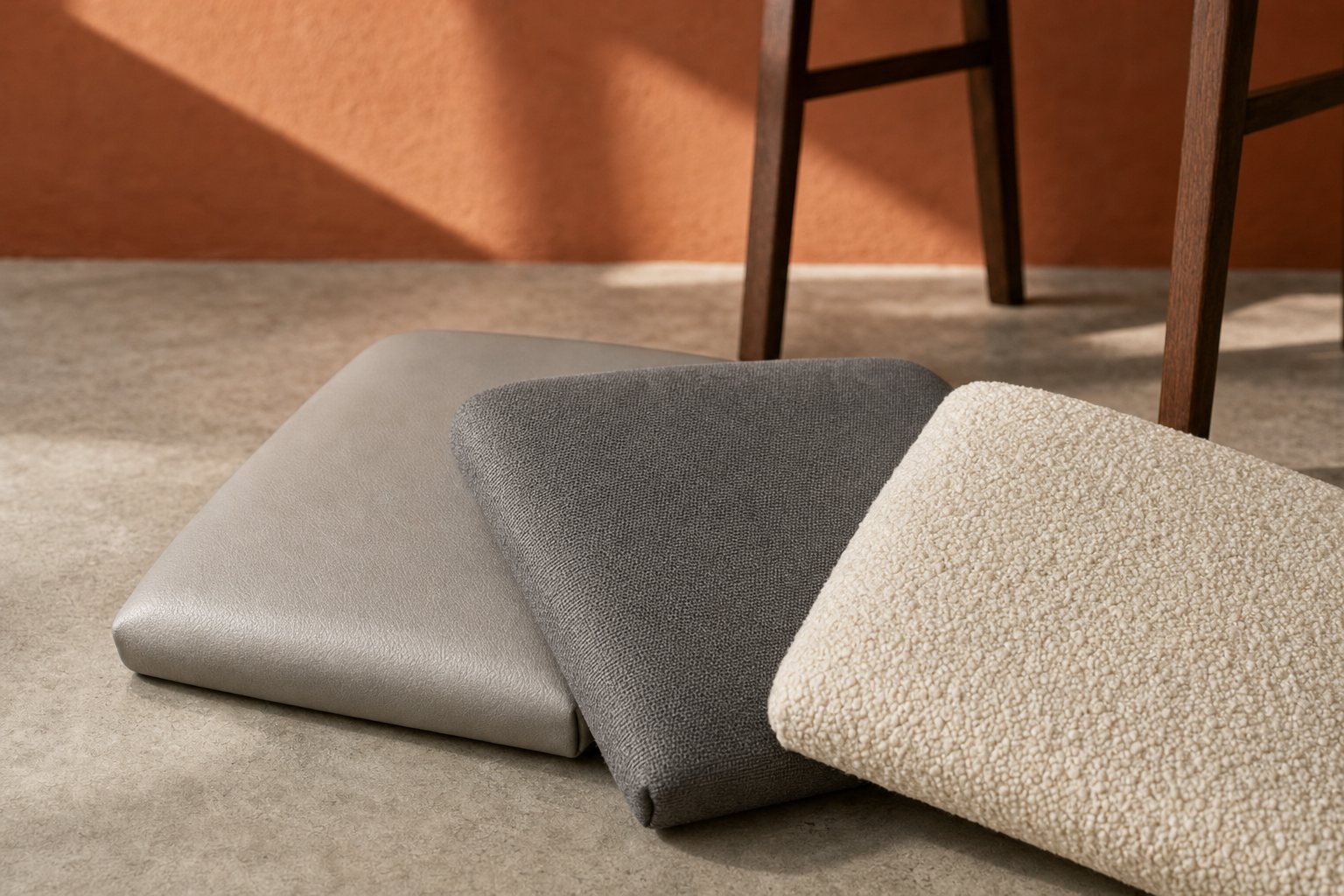
Upholstery leather: for a table where things get spilled
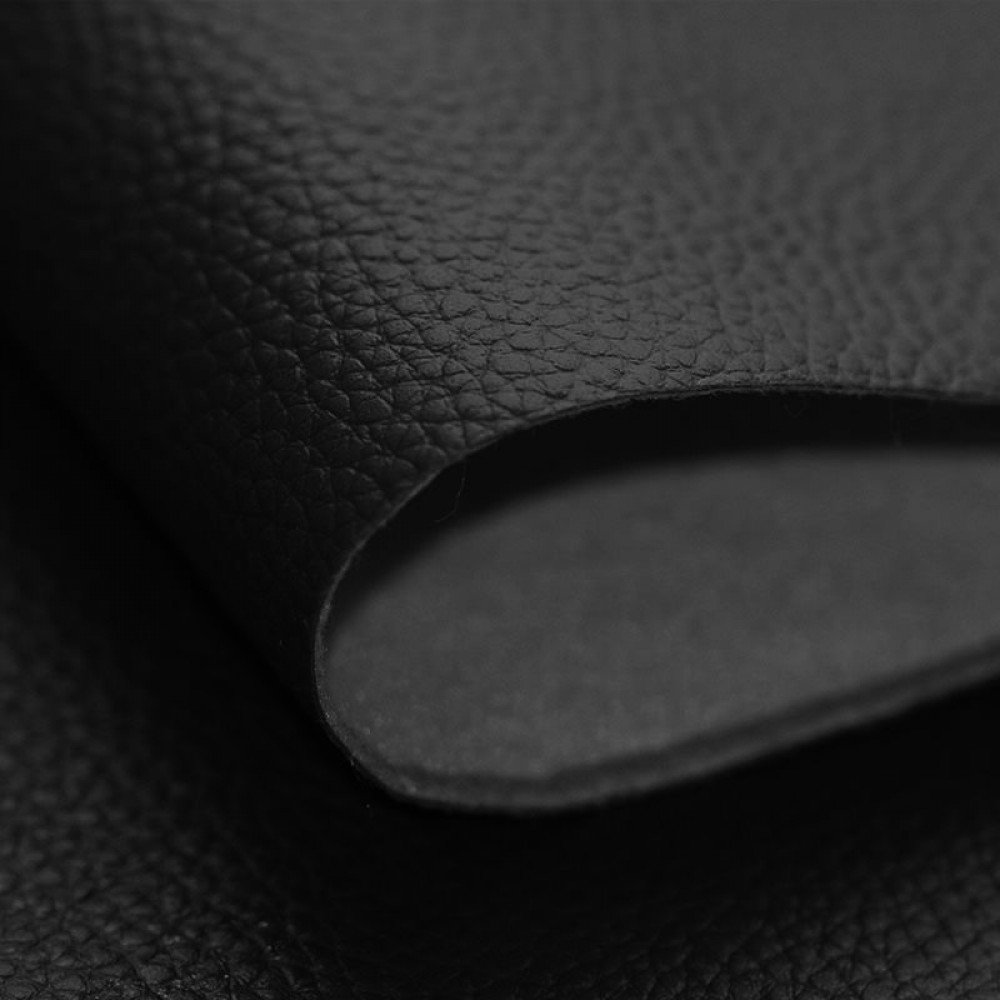
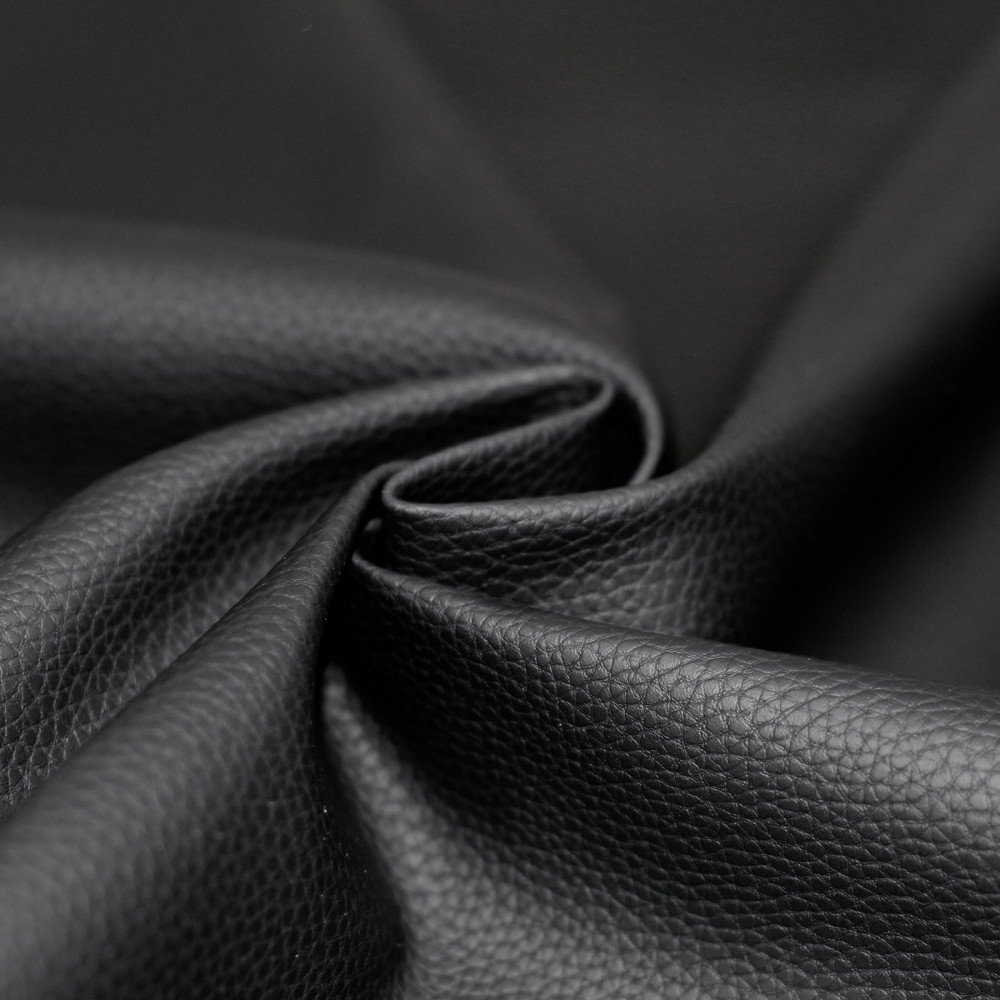
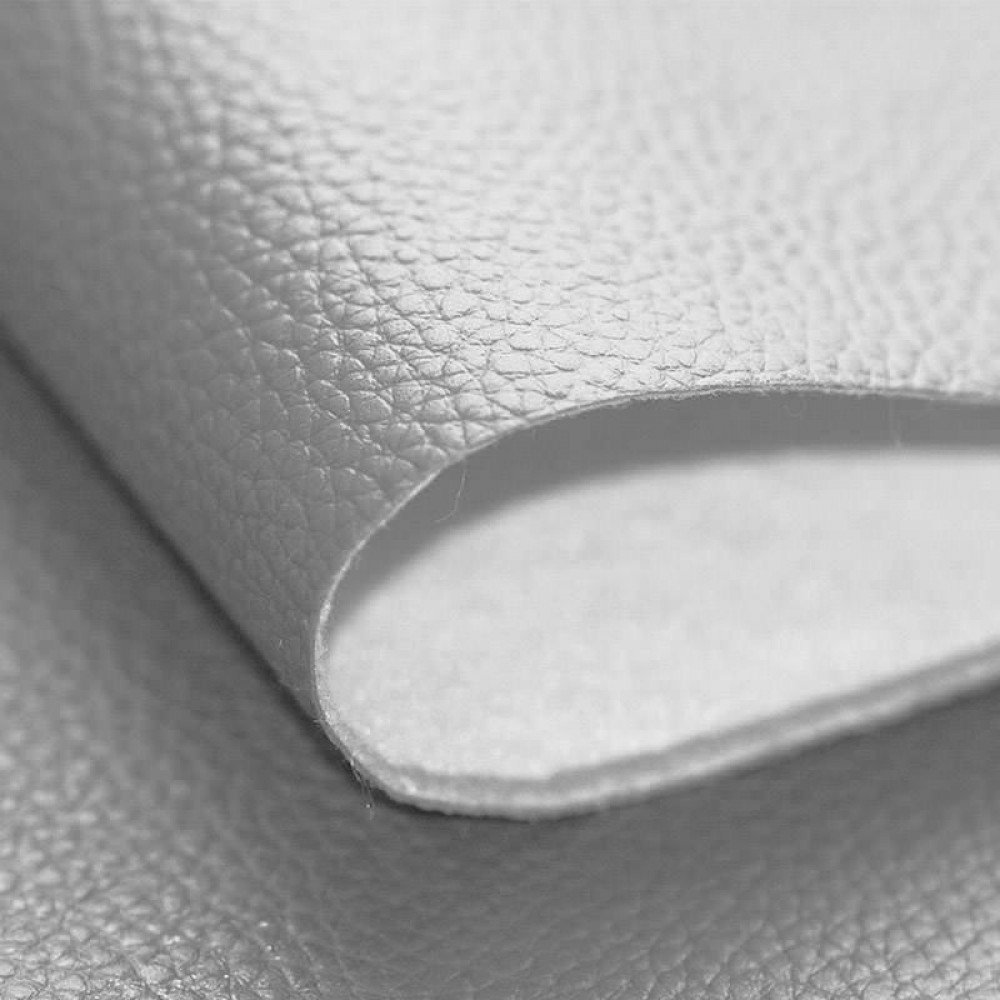
Our upholstery leather by the metre is faux leather: a layer of PVC on a polyester backing. So it is not animal hide, whatever the name suggests. At 650 g/m² it is the heaviest of the three and the only one you can simply wipe tomato sauce off. That is why it is the first choice for a family with small children, a canteen or a waiting room.
You notice the downside at the corners. Upholstery leather is stiff and every pleat stays visible. Warm the corner with a hairdryer for half a minute and it becomes more supple, so you can pull it tighter round the curve. Get your staples right first time: holes in faux leather do not close up again. We mainly stock upholstery leather in black and upholstery leather in light grey.
Don't confuse it with vegan leather. At 240 g/m² that is much thinner and it stretches across the width. It is made for clothing and bags, not for a seat.
Canvas: the easiest one to start with
Cotton canvas is a dense plain weave of 280 g/m² with no stretch. You can pull it tight without it going out of shape, it folds sharply at the corners, and a staple in the wrong place comes out again without leaving a mark. For a first chair this is the fabric that fights you least. There are 12 colours in stock, from ecru to dark grey.
Cotton absorbs moisture. A glass of red wine on ecru canvas never comes out completely, and wiping with a cloth works less well than on faux leather. For a dining table, choose a mid-tone or a dark colour, or treat the seats with a fabric protector spray.
Bouclé: soft and forgiving
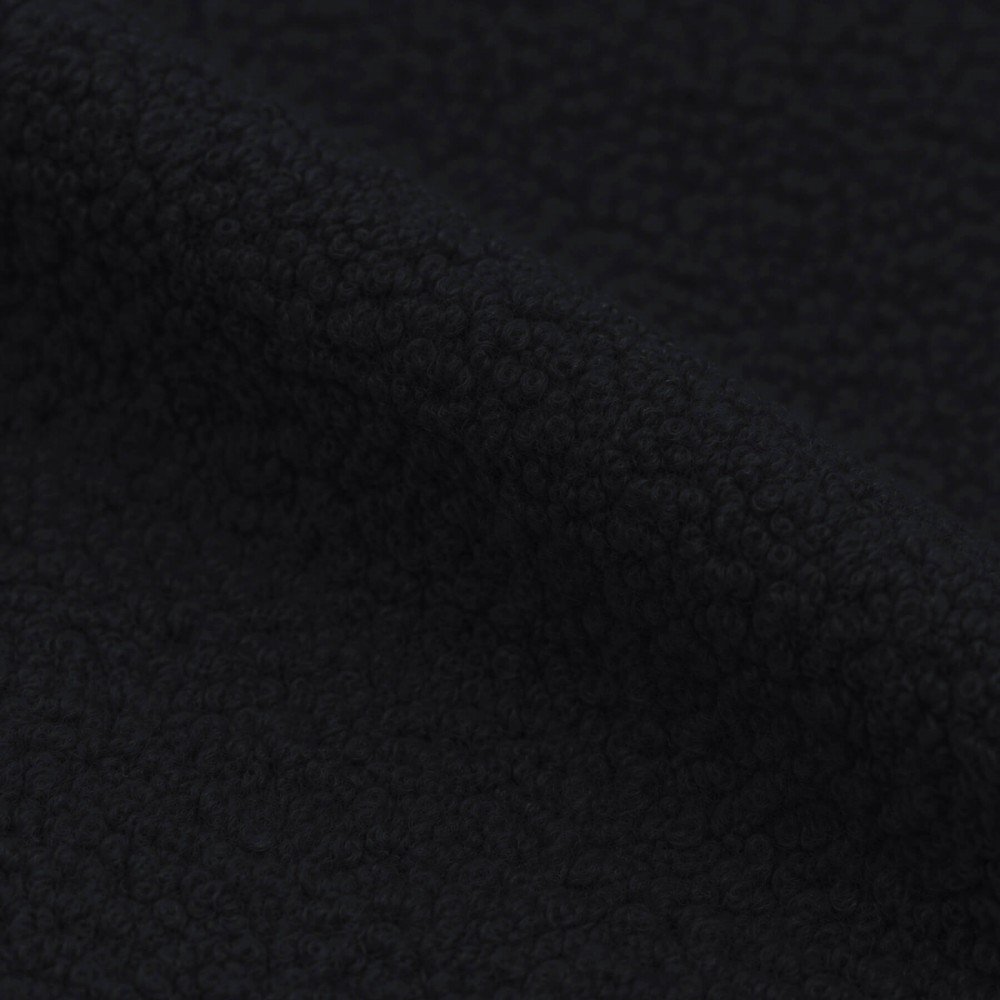
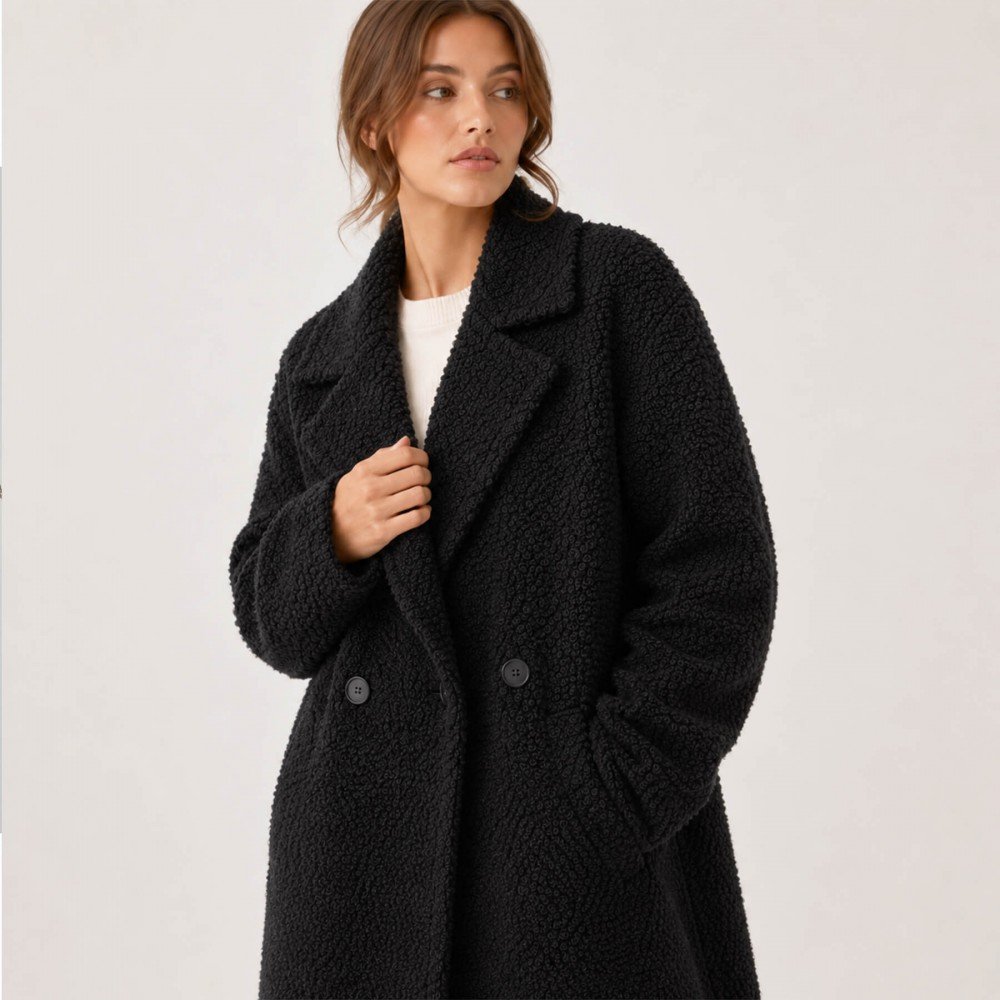
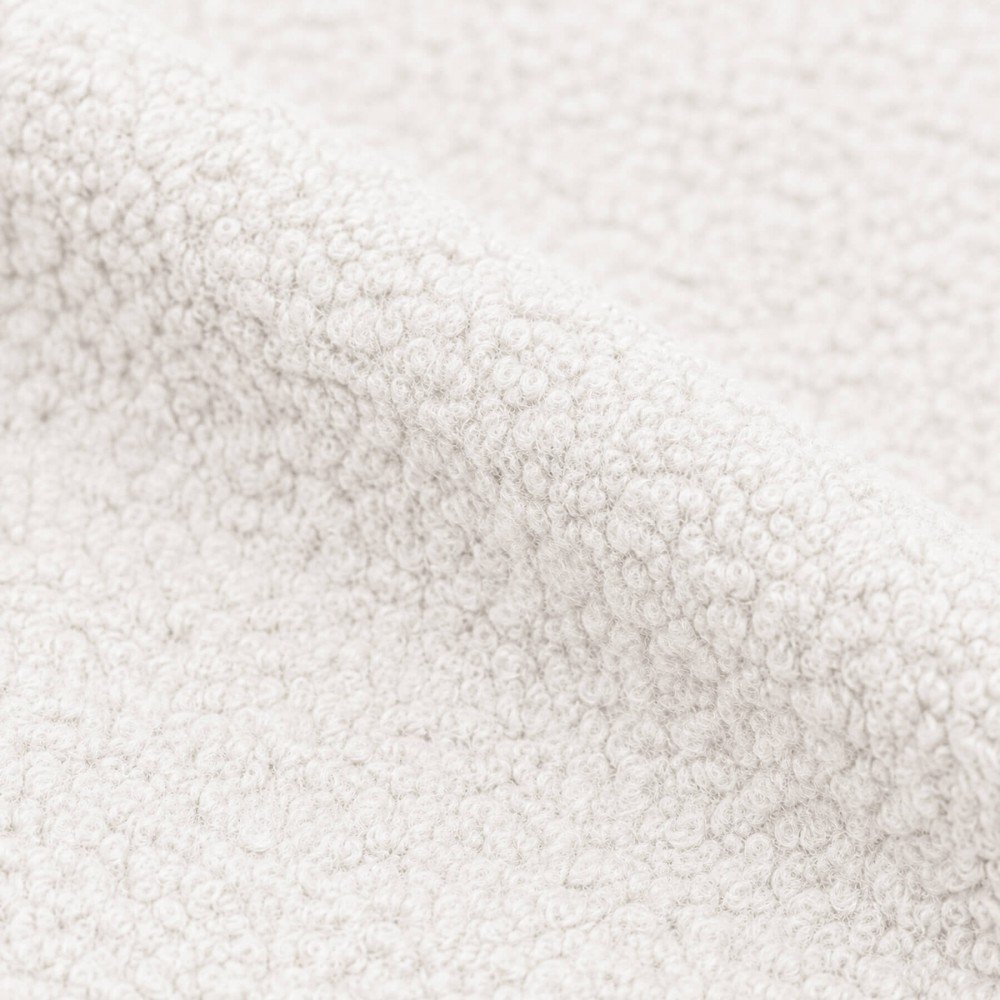
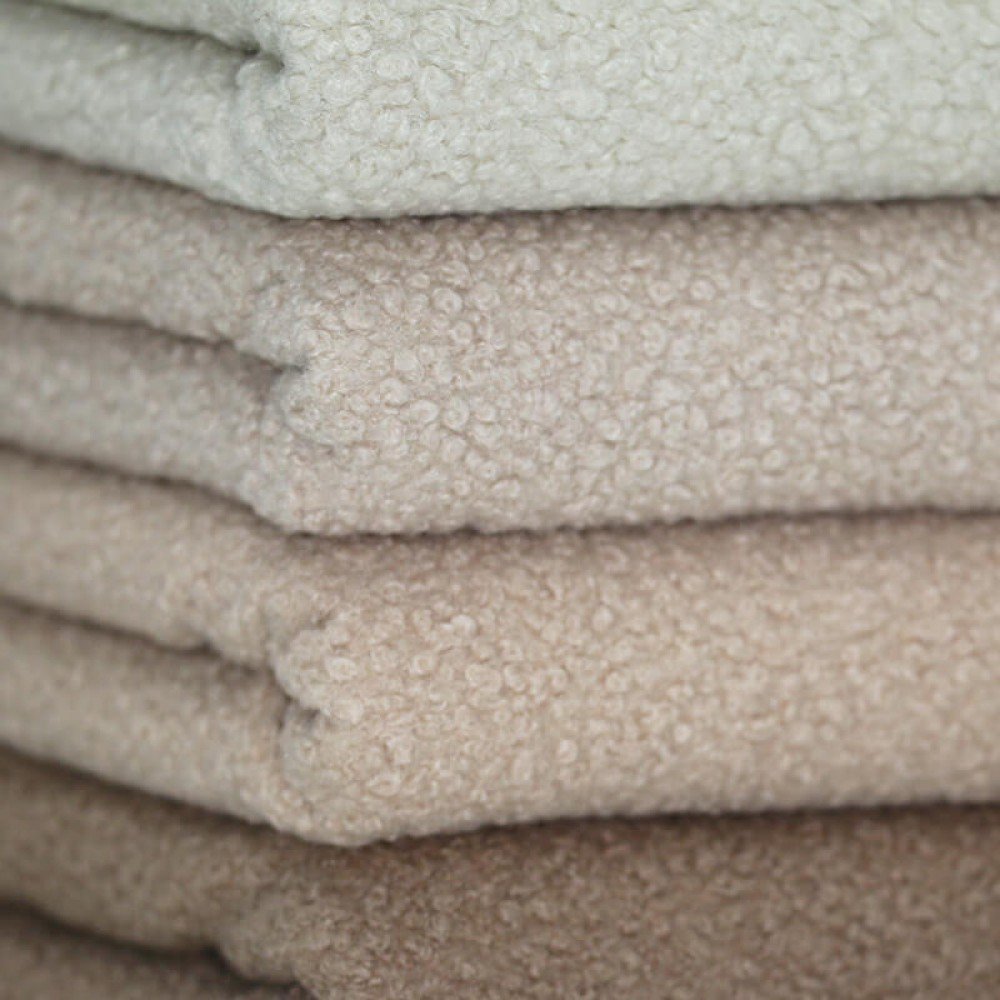
Bouclé has small loops on the surface. Because of them you hardly see the little pleats at the corners, and crumbs and small stains show less. Our bouclé weighs 390 g/m² and is knitted, with a little stretch across the width. When you staple it, pull equally hard on all sides and not as far as it will go, or the loops will be dragged out of line. Bouclé in ecru is the colour you see in interiors shops; at a dining table, sand beige or a mottled grey is more practical.
A cat scratching at the chair or a pair of trousers with Velcro will pull loops loose. If you have pets with sharp claws, go for canvas or upholstery leather. There is more about this fabric in our guide to bouclé fabric.
How much fabric do you need?
Measure the seat at its widest and its deepest point. Add 20 cm to both measurements: that is 10 cm per side, enough for 4 cm of foam, the thickness of the board and a 5 cm turn-under for the staples to go into. So a seat of 45 × 42 cm needs a piece of 65 × 62 cm.
A fabric width of 140 or 150 cm gives you two of these pieces side by side. For every two chairs you then need 65 cm of fabric. Round up:
| Number of chairs | Fabric (140–150 cm wide) | Polyester wadding (160 cm wide) |
|---|---|---|
| 2 | 0.7 m | 0.6 m |
| 4 | 1.4 m | 1.2 m |
| 6 | 2 m | 1.8 m |
| 8 | 2.7 m | 2.3 m |
The table assumes seats up to 48 cm wide and 45 cm deep. If your seat is wider than 50 cm, only one piece fits across the width and you need the depth plus 20 cm per chair. With a striped or checked fabric you cut all the pieces in the same direction; allow 10% extra. For other projects, work it out with our blog how much fabric do I need.
Foam and padding: what goes underneath?
Press your fist into the old foam. If it springs straight back, it can stay. If a dent stays behind, or it crumbles, replace it. Use high-density foam (around 40 kg/m³ or more), 3 to 4 cm thick. You can have it cut to size at a DIY store or a foam supplier; we do not sell foam. Draw round the board on the foam and cut it with a bread knife just slightly bigger than the board, half a centimetre all round.
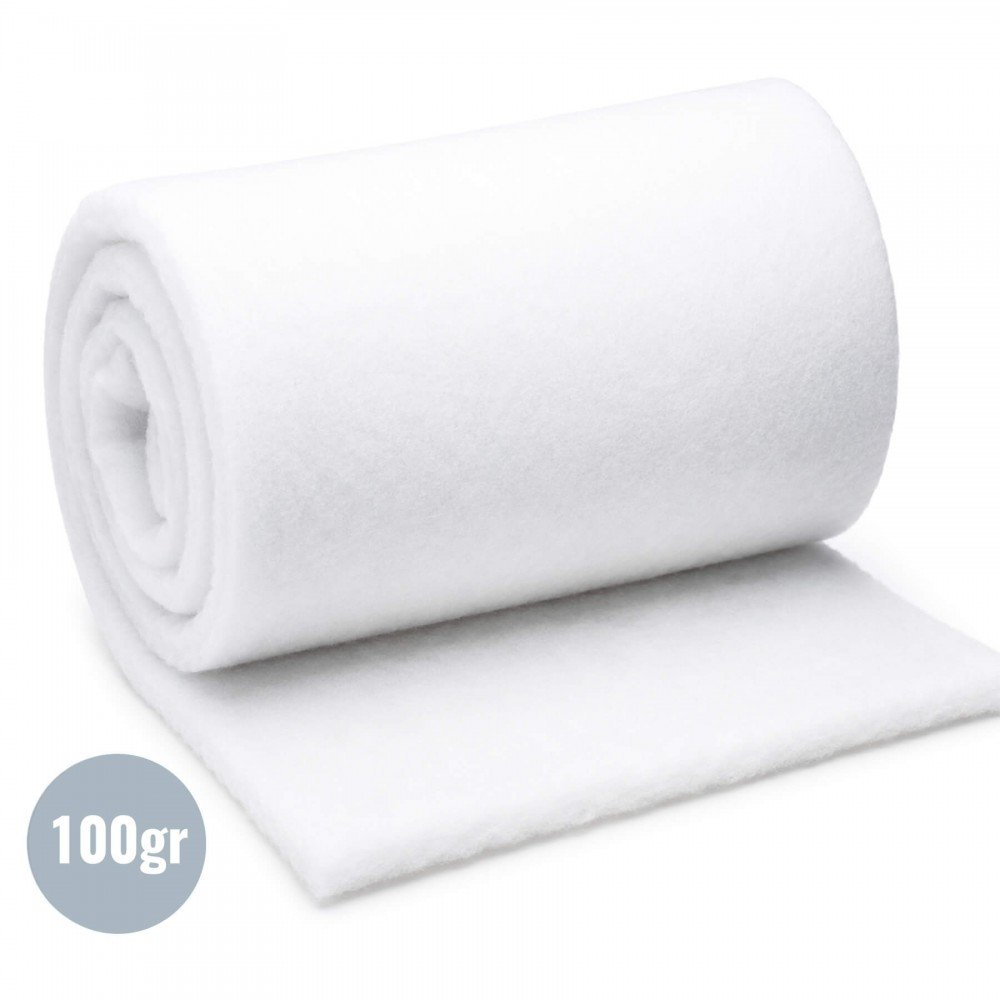
A layer of wadding goes over the foam. It rounds off the edges so that you don't see the edge of the board through the fabric, and it lets the fabric slide over the foam more easily when you pull it tight. Polyester wadding of 100 gram is 10 mm thick and 160 cm wide and costs €2.95 per metre (incl. VAT). Cut the wadding 6 cm bigger than the seat all round, so that it just wraps over the edge of the board. Thicker types are listed under polyester wadding and pillow stuffing; for a chair seat 100 gram is enough.
What you need
- fabric and polyester wadding as in the table above
- new foam, 3 to 4 cm thick, if needed
- a staple gun with 6 or 8 mm staples (6 mm for a board up to 9 mm thick, 8 mm for thicker wood)
- a flat-head screwdriver and pliers to get the old staples out
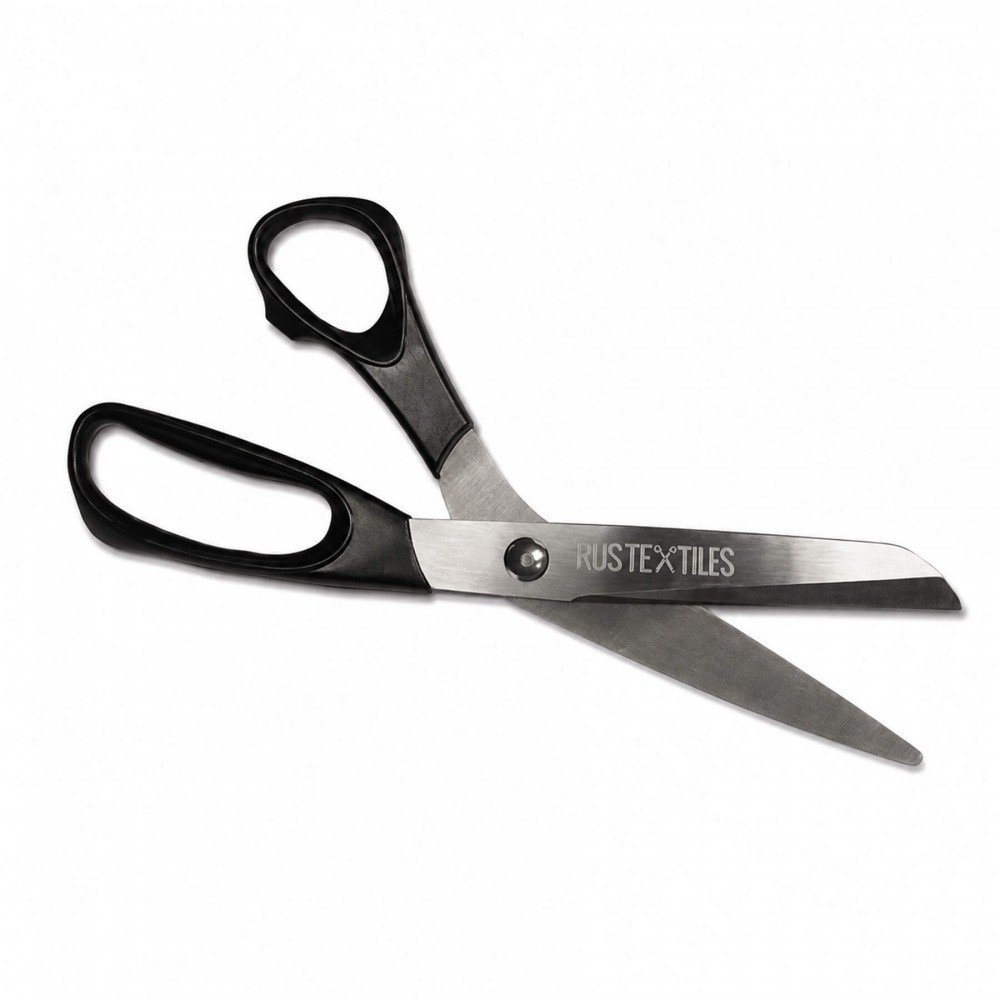
- fabric scissors (€12.95 incl. VAT), a tape measure and a pencil
- a screwdriver or drill for the seat screws
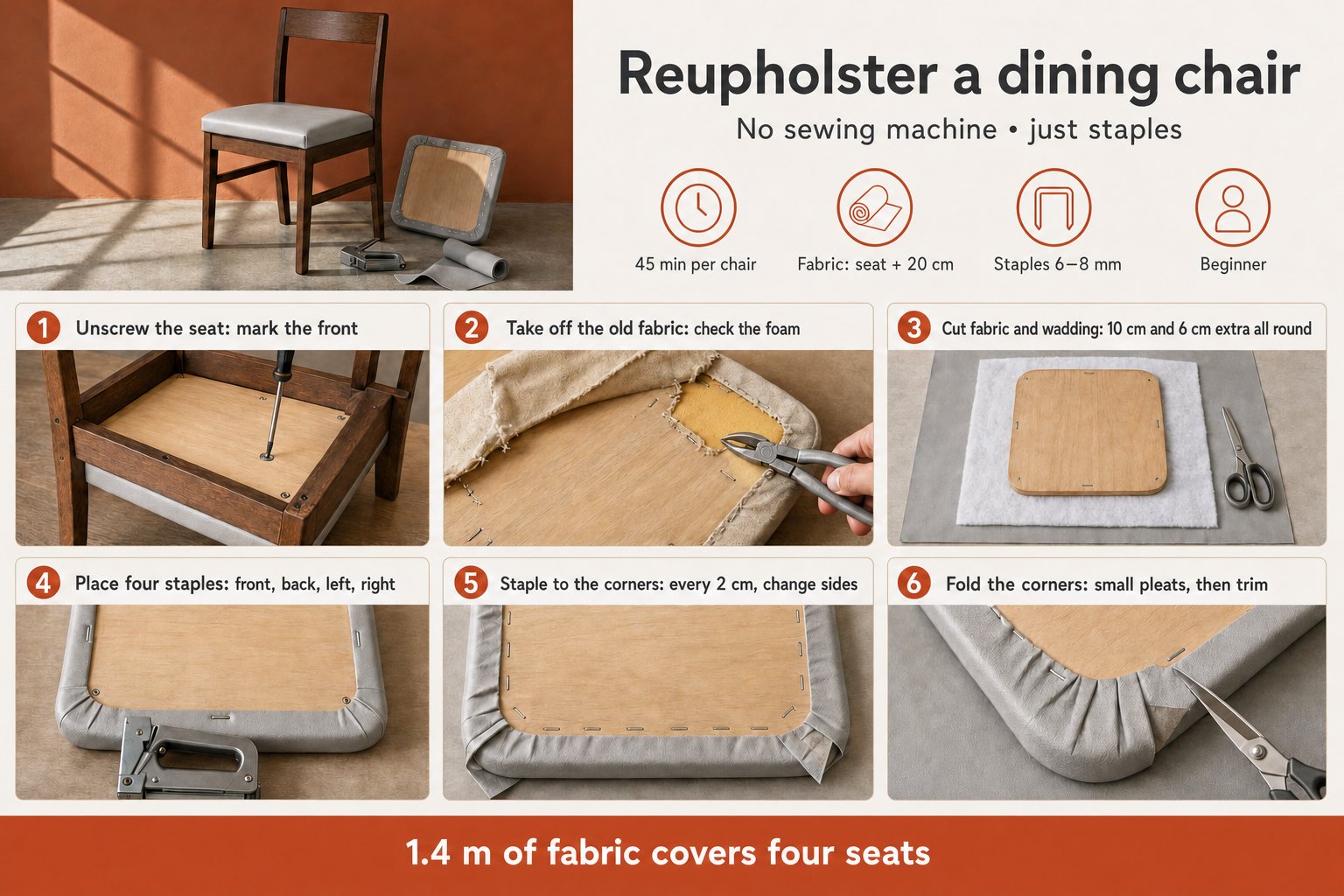
Reupholster a chair in eight steps
- Unscrew the seat. Draw a pencil arrow on the underside of the board pointing to the front, and number the seats if you are doing more than one chair. The boards look the same, but the screw holes are rarely in the same place.
- Take off the old fabric. Lever the staples up with the screwdriver and pull them out with the pliers. Keep the old piece: you can use it as a template. If the old fabric is smooth, undamaged and thin, the new fabric can go over the top.
- Check the foam and replace it if it has sagged.
- Cut the fabric and the wadding. Fabric 10 cm bigger than the seat all round, wadding 6 cm bigger all round.
- Stack the layers. Lay the fabric right side down on the table. On top of that the wadding, then the foam, then the board with its underside facing up. Check that everything is centred and that the grain of the fabric runs straight along the front edge.
- Place four staples: front, back, left and right. Fold the fabric over at the middle of the front edge and put in one staple, 2 cm from the edge. Pull the fabric tight at the back and put one staple there. Do the same on the left and right. Turn the seat over and check that the fabric lies smooth and straight. At this point it is still easy to put right.
- Staple from the middle towards the corners. Put in a staple every 2 cm and keep changing sides: a few at the front, a few at the back. Stop 5 cm before each corner.
- Fold the corners. Pull the point of the fabric straight over the corner towards the middle of the board and fix it with one staple. A flap of fabric now sticks up on either side. Fold each flap towards the corner in two or three small pleats and staple each pleat down. On a square corner one fold per side will do, as with wrapping paper. Trim the spare fabric to 1 cm outside the staples and screw the seat back on.
The first seat takes an hour, mostly because of the old staples. From the second one on it takes half an hour to three quarters of an hour. Finish one chair completely before you cut all the pieces. Then you know for certain that the size is right.
Download the measuring and cutting sheet (PDF)
What often goes wrong?
- Drag lines running diagonally across the seat. You pulled harder at a corner than in the middle. Take out the staples on that side and pull again, from the middle outwards.
- A thick lump under the corner. There is too much fabric in one spot. Spread it over more, smaller pleats and cut away what overlaps.
- The seat no longer fits in the frame. This happens with thick faux leather over an old layer of fabric. Take the old fabric off after all.
- Staples sticking out. The wood is too hard for the staple gun. Tap them in with a hammer, or use shorter staples.
- The stripe runs crooked. Always look at the top after the first four staples, not only at the end.
What does it cost?
For four dining chairs with seats up to 48 × 45 cm, at the regular prices at the time of writing:
| Fabric | 1.4 m fabric | 1.2 m polyester wadding | Total (incl. VAT) |
|---|---|---|---|
| Upholstery leather | €20.93 | €3.54 | €24.47 |
| Canvas | €18.13 | €3.54 | €21.67 |
| Bouclé | €18.13 | €3.54 | €21.67 |
That is about €6 per chair, not counting foam and staples. If you have fabric left over, the remnant will make a matching cushion for the sofa: the pattern is in sew an envelope cushion.
Frequently asked questions
How much fabric do I need for a dining chair?
Measure the seat and add 20 cm to the width and to the depth. For a seat of 45 × 42 cm that is a piece of 65 × 62 cm. Fabric 140 or 150 cm wide gives you two pieces side by side: 0.7 m for two chairs, 1.4 m for four and 2 m for six.
Which fabric is suitable for dining chairs?
A dense, heavy fabric with no stretch. Upholstery leather (faux leather of 650 g/m²) wipes clean, so it is the most practical at a dining table. Cotton canvas (280 g/m²) is the easiest to work with. Bouclé (390 g/m²) is soft and hides pleats, but it snags easily.
Can I put the new fabric over the old cover?
Yes, if the old fabric is thin, smooth and undamaged. Remove any staples that stick out. With thick faux leather or a thick old fabric the seat becomes too wide for the frame; in that case take the old layer off.
Which staples do I use to reupholster a chair?
For a staple gun, use 6 mm staples for a board up to 9 mm thick and 8 mm staples for thicker wood. Space them 2 cm apart, 2 cm from the edge of the board.
Is upholstery leather real leather?
The upholstery leather from Rijs Textiles is faux leather: 80% PVC on a backing of 20% polyester, 140 cm wide and 650 g/m² in weight. It looks like leather, is sold by the metre and you wipe it with a damp cloth. It is not animal leather.
≥ 100 Metre roll price € 5.50 € 4.00 Excl. Tax.
Wholesale prices for this item are directly being applied. Intra-community supply? Register with your VAT number and Select "Wholesale quotation" as payment option.
Leave a Comment