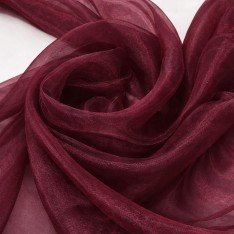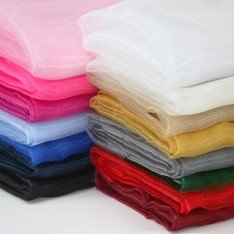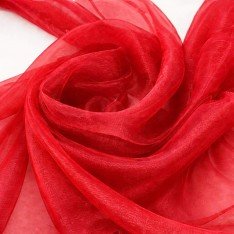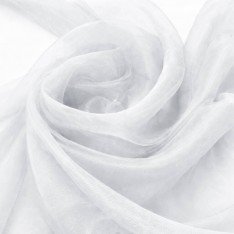
Organza Fabric: The Complete Guide to Buying Organza by the Metre
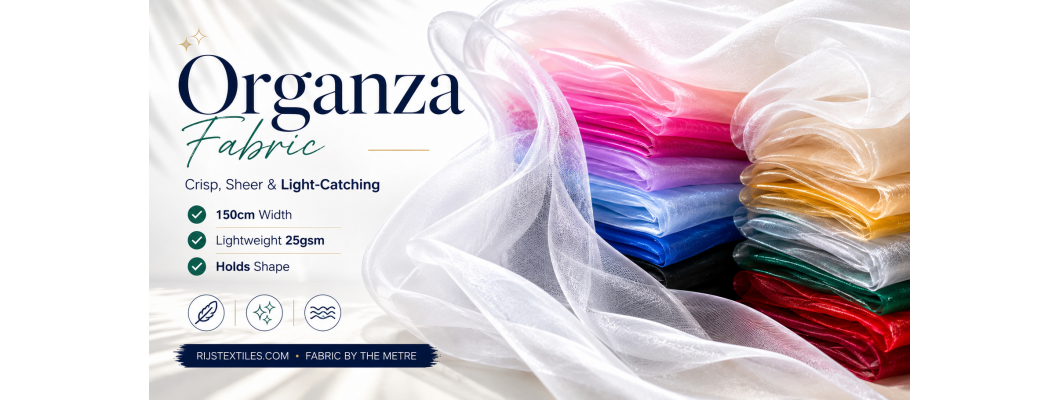
If you've ever worked with organza fabric, you know it has this magical quality that catches the light just right. It's that crisp, sheer material you see in evening gowns, wedding dresses, and fancy decorations. But here's the thing: not all organza behaves the same way, and buying it by the metre requires some knowledge about what you're actually getting.
At Rijs Textiles, we stock organza in 150 cm width, made from 100% polyester at 25 grams per square metre. That's quite lightweight, which makes it wonderful for layering but also means you need to handle it carefully. Unlike heavier materials in our fashion fabrics collection, organza demands a different approach from start to finish.
What Makes Organza Different from Other Sheers
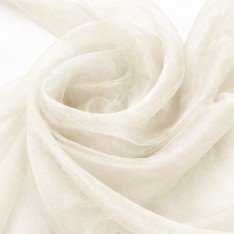
Organza has this distinctive crisp hand that sets it apart from other sheer fabrics. While chiffon drapes softly and tulle has that netting structure, organza holds its shape. This comes from the way it's woven—tightly twisted yarns in a plain weave create that signature stiffness and slight sheen.
The polyester version we carry gives you better durability than silk organza, and honestly, for most projects it's the smarter choice. Silk organza costs significantly more and requires dry cleaning, while polyester organza can be hand washed (though you need to be gentle). You won't find the stretch you'd get with jersey fabrics, so pattern choice matters here.
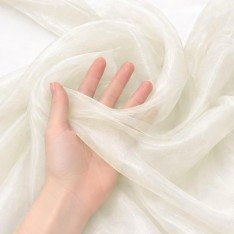
That 25 grams per square metre weight is quite sheer. You can easily read text through a single layer. This transparency makes it brilliant for overlays and decorative applications, but you'll need lining for garments where you want coverage.
Common Uses for Organza Fabric
Bridal wear is probably the most popular use. You see organza in everything from full skirts with loads of volume to delicate cap sleeves and decorative overlays. The fabric gives that romantic, ethereal look without the weight of satin or taffeta. One of our customers mentioned using it as a lining fabric for decoration, which is actually quite clever for adding subtle shimmer under semi-sheer garments.
Evening wear designers love organza for similar reasons. It creates drama without bulk. Think statement sleeves, ruffled details, or entire overlay skirts that let an underdress peek through. The crisp nature means ruffles and gathers hold their shape rather than collapsing like softer fabrics would.
For home decorating, organza works beautifully as sheer curtains that filter light, table runners for special occasions, or chair sashes. It's quite different from the heavier materials you'd find in our deco fabrics range, but that's exactly why it's useful—sometimes you want that ethereal quality rather than substantial weight.
Craft projects are another big area. Hair accessories, gift wrapping, flower making, and costume elements all benefit from organza's body and sheen. Because it's lightweight, you can layer it extensively without things getting too heavy.
Working with Organza: What You Actually Need to Know
Right, let's talk about the practical side, because organza can be frustrating if you're not prepared:
- This fabric frays like crazy. The moment you cut it, threads start escaping. French seams work well for managing this, or you can use a very narrow rolled hem. Some people use pinking shears, though that only slows things down rather than stopping fraying entirely.
- Pinning leaves permanent holes, so pattern weights are your friend here. If you absolutely must pin, do it within seam allowances only.
- A sharp rotary cutter and cutting mat give you much cleaner edges than scissors. The fabric shifts easily, so you want to cut in one smooth motion rather than multiple snips.
- Needle size matters. Use a fresh 60 or 70 size needle—anything damaged or dull will snag the fibres. A smaller stitch length (around 2mm) also helps prevent puckering.
- Iron on low heat only, 110°C maximum. No steam. The polyester can melt or get shiny marks that won't come out. Test on scraps first.
- Hand washing in cool water is safest. Never tumble dry. The fabric dries quickly anyway because it's so light.
Thread choice matters too. Fine polyester thread in a colour that matches or goes slightly lighter works best. The fabric is sheer enough that thread shows through, so you can't fudge colour matching the way you might with fleece fabrics or other opaque materials.
Choosing the Right Organza for Your Project
At 25 grams per square metre, our organza sits in the lighter range. This makes it suitable for projects where you want lots of volume without weight—think full circle skirts or dramatic sleeves. For structured bodices or areas that need more body, you might want to layer it or use a stiffer underlining.
The 150 cm width is generous, which means you can often cut garment pieces without seaming. For home decorating projects like curtains, that width covers most windows without needing to piece panels together.
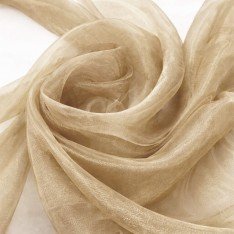
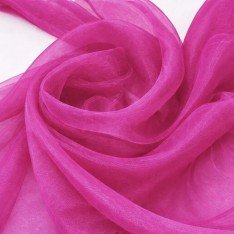
If you're uncertain about colour or how the fabric will work for your project, we offer a colour sample card. This is genuinely useful because organza looks quite different in person than on screen—the sheen and transparency don't photograph accurately.
For large projects, our minimum wholesale order is 6 metres, or you can order full rolls of 50 metres. That might sound like a lot, but if you're making a big ballgown skirt or decorating for an event, you'll use more fabric than you expect. The sheerness means you often need multiple layers to get the effect you want.
Final Thoughts on Buying Organza by the Metre
Organza is one of those fabrics that rewards patience and practice. Your first project might involve some swearing when seams pucker or edges fray unexpectedly. But once you get the hang of handling it, the results are really special. That crisp sheen and the way it holds shape create effects you simply can't achieve with softer sheers or heavier wovens.
At Rijs Textiles, we keep our organza in stock for both wholesale customers and individual sewists. Whether you're working on a single special occasion dress or producing a line of evening wear, buying by the metre gives you control over how much you order. And if you're browsing our new fabrics or checking the fabric outlet for deals, remember that organza complements so many other materials—it layers beautifully over everything from lining fabrics to heavier fashion fabrics.
Frequently Asked Questions About Organza Fabric
Can you wash organza fabric at home?
Yes, you can hand wash polyester organza in cool water with mild detergent. Gently swish it around rather than wringing or twisting. Never put it in the washing machine or tumble dryer. Hang it to dry away from direct heat—it dries quickly because it's so lightweight.
Why does my organza pucker when I sew it?
Puckering usually happens when your needle is too large, your stitch length is too long, or you're pulling the fabric as it goes through the machine. Use a size 60-70 needle, set your stitch length to about 2mm, and let the feed dogs move the fabric without any help from you. Lowering the presser foot pressure can also help.
How do I stop organza from fraying so much?
Organza frays aggressively because of its plain weave structure. French seams work well for enclosed edges. For hems, try a narrow rolled hem or fold the edge twice very narrowly. Some people carefully run a thin line of fray check along cut edges, though test this on scraps first as it can create stiffness or discolouration.
What's the difference between polyester and silk organza?
Silk organza has a softer hand and more luxurious drape, with a subtle matte-to-shine quality that shifts in different light. Polyester organza is crisper, more affordable, and easier to care for. For most projects, especially if they'll need washing or involve beginners, polyester makes more sense. Silk is really only necessary if you're doing haute couture work or museum-quality historical reproduction.
How much organza do I need for a full skirt?
That depends on the skirt's fullness and length. A basic gathered skirt at knee length might use 2-3 metres for a size medium. A full circle skirt to the floor could easily take 5-6 metres. Because organza is sheer, many designs use multiple layers, which doubles or triples your fabric requirement. Always buy extra—this fabric is difficult to match dye lots later.