
Cotton Jersey vs Viscose Jersey: Which Fabric Wins for Dressmaking?
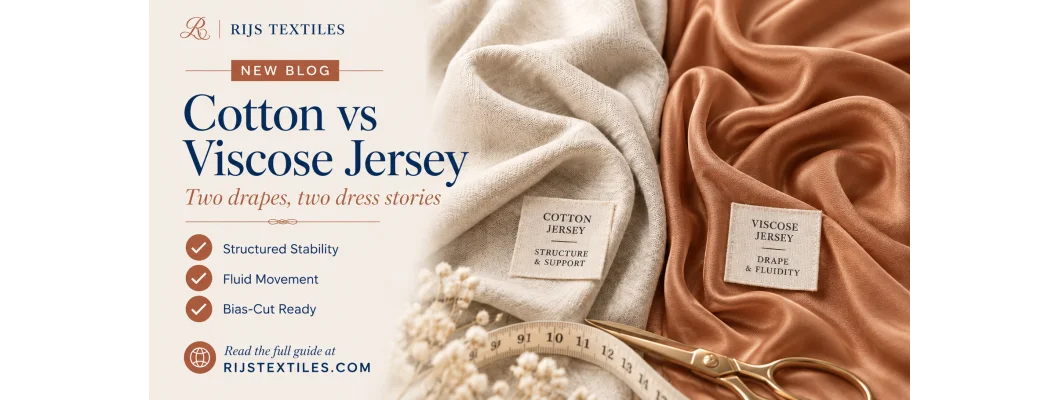
Two rolls on the cutting table, both called "jersey", both perfectly happy to become a dress. That's exactly what makes this choice annoying. If you're picking fabric for your next dress project, the two names that come up again and again are cotton jersey and viscose jersey, and they behave nothing alike once you get them under the needle. One holds its shape, the other flows off your hips like water. Let's put them side by side and see who actually wins for dressmaking, because "it's all jersey" is not an answer, it's a shrug.
Before we dig in, it helps to know what's out there. We stock a wide range of jersey fabrics, from cotton to viscose to more technical knits, so this comparison isn't theoretical. It's based on what actually comes off our shelves and what customers tell us afterwards.
Drape: how the fabric falls on a body
Cotton jersey has body. The knit structure, meaning the way the loops of yarn interlock instead of crossing like a woven, gives it a slight bounce and a stable hand. A cotton jersey dress skims the body rather than clinging to it. It holds a silhouette, which is exactly why so many t-shirt dresses and casual shift dresses are cut from it.
Viscose jersey is a different animal entirely. Viscose fibre is made from wood pulp, and it takes on a fluid, almost liquid drape that cotton simply can't match. Wrap dresses, slip dresses, anything with soft gathers or a bias-cut skirt panel, that's viscose territory. It moves when you walk, it pools slightly at hemlines, and it photographs beautifully on a hanger.
Winner here: viscose jersey, if drape and movement are what you're after. Cotton jersey wins if you want the dress to keep its shape rather than flow.
Sewing and handling on a home machine
Cotton jersey is forgiving. It doesn't slip around on the cutting table, it doesn't curl aggressively at the edges, and a regular ballpoint or stretch needle on your home sewing machine handles it without fuss. Beginners usually get on with cotton jersey much faster than with any other knit, simply because it stays put while you pin and cut.
Viscose jersey is slippery. It shifts under the scissors, it can stretch out of shape if you pull it while sewing, and it needs a lighter hand at the ironing board too, since too much heat can leave shine marks. Pattern weights instead of pins, a walking foot if you have one, and patience: that's the viscose approach. It's not hard, but it does ask more attention.
Winner: cotton jersey, hands down, for ease of handling. Viscose asks more of you, but rewards you with a finish that looks far more expensive than the fabric cost.
Weight and season
Cotton jersey generally runs medium weight and breathes well, so it works for spring and summer dresses, and layers fine under a cardigan in cooler months. It has enough substance to not feel flimsy, but it's not warm in the way a heavier knit is.
Viscose jersey tends to be lighter and drapier by nature, and that lightness is part of why it flows the way it does. It's a strong choice for warm weather dresses and for anything worn close to the skin, since it doesn't add bulk. If you want something with real structure and a bit more weight, that's where cotton pulls ahead again.
Care and everyday practicality
Cotton jersey washes like a cotton t-shirt because, structurally, that's basically what it is. Machine wash, tumble dry on low, done. It holds up to repeated washing without much fuss, which matters if the dress is going into regular rotation rather than staying a special-occasion piece.
Viscose needs a gentler cycle, cooler water, and ideally hanging to dry rather than tumbling, or it can lose its shape over time. It's not high-maintenance exactly, but it's not a throw-it-in-with-everything fabric either.
Winner: cotton jersey for low-maintenance everyday wear.
When do you choose which
Say you're making a weekend dress for a toddler's birthday party, something that needs to survive juice spills, a hot wash and being worn again next week. Cotton jersey is the obvious pick. It sews up fast, it's sturdy, and nobody's going to notice if the drape isn't dramatic.
Now say you're making a slip dress for a summer wedding, cut on a soft bias with a bit of movement in the skirt. That's the moment to reach for viscose jersey. The extra care in cutting and pressing pays off the second you put it on and it moves the way you hoped it would.
Our take
If I had to pick one to keep in my own stash permanently, it's cotton jersey, purely because it's the fabric I reach for most often and it never lets me down on a deadline. But viscose earns its spot for the dresses that need to feel special. Don't feel like you have to commit to just one either. Browse our full range of fashion fabrics and keep a bit of both on hand, plus check the fabric outlet for offcuts to practice your bias-cutting before committing to a full length.
FAQ
Can I use viscose jersey for a first dressmaking project?
You can, but expect it to move around more than you'd like while cutting. Use pattern weights instead of pins, cut on a single layer if possible, and go slow. If that sounds like a lot, start with cotton jersey and move to viscose once you're comfortable with a stretch needle and a walking foot.
Do I need a special needle for jersey fabrics?
Yes, use a ballpoint or stretch needle rather than a universal one. The rounded tip slides between the knit loops instead of piercing them, which stops small holes and skipped stitches on both cotton and viscose jersey.
Which fabric holds colour better after washing?
Cotton jersey generally holds its colour well through repeated machine washes. Viscose can dull slightly faster if washed too hot or tumble dried, so a cooler wash and air drying keeps the colour looking fresher for longer.